
Answer-ready summary
What happened in this case study?
Compliance-aware PPC cut cost per qualified application 34% while lifting qualified volume 58% and shrinking ad-disapproval rate from 22% to 3% for a business banking division.
A Karachi-headquartered digital Islamic bank's business banking division was running Google Ads and Meta to drive SME current-account and business-finance applications, but a large share of budget was being lost to ad disapprovals, generic landing pages, and leads that never completed KYC. Compliance friction and weak qualification meant paid acquisition looked busy while producing few funded accounts.
The rollout used 4 implementation phases: technical cleanup, architecture, content, and authority building.
Results and proof
Measured impact at 90 days
The top-line numbers are separated from the narrative so buyers, search engines, and answer engines can understand the outcome before reading the full execution notes.
Cost per qualified application
Reduced from PKR 4,250 to PKR 2,810 (-34%)
Qualified applications / month
Grew from 210 to 332 (+58%)
Ad disapproval rate
Reduced from 22% to 3%
Compliance review cycle
Compressed from 9 days to 2 days
Challenge context
Challenge context
A Karachi-headquartered digital Islamic bank's business banking division was running Google Ads and Meta to drive SME current-account and business-finance applications, but a large share of budget was being lost to ad disapprovals, generic landing pages, and leads that never completed KYC. Compliance friction and weak qualification meant paid acquisition looked busy while producing few funded accounts.
22% of submitted ads disapproved under financial-product and Shariah rules
Cost per qualified application at PKR 4,250 with only 210 funded-ready leads a month
Generic landing page converting at 1.9% against a 3.5% potential
No offline conversion tracking, so smart bidding optimized for form fills not funded accounts
Compliance review cycle of 9 days delaying every campaign launch
Execution roadmap
Implementation phases
The page now presents the process as a scannable roadmap before the long-form breakdown, improving buyer comprehension and passage-level retrieval.
Phase 1
Compliance audit and account cleanup (Weeks 1–2)
Phase 2
Keyword, audience, and landing-page rebuild (Weeks 3–5)
Phase 3
Compliance-safe creative system and launch (Weeks 4–8)
Phase 4
Qualification and offline conversion tracking at scale (Weeks 8–12)
The Client
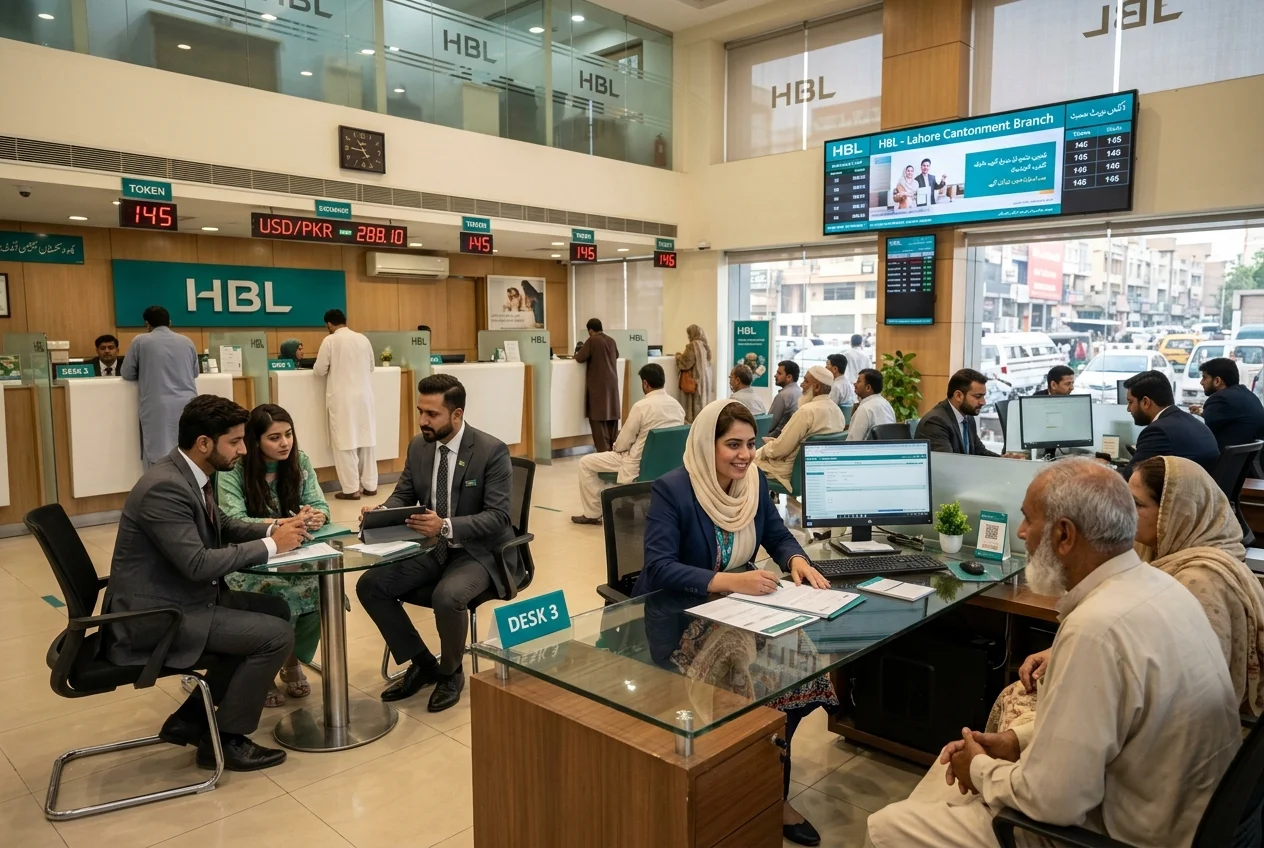
A Karachi-headquartered digital Islamic bank’s business banking division, serving small and medium enterprises across Karachi, Lahore, Islamabad, and Faisalabad. The division’s core products were a Shariah-compliant business current account, working-capital finance against receivables, and a trade-finance facility for small exporters. Acquisition ran through a centralized digital funnel: paid traffic to a product landing page, a short eligibility form, then a relationship-manager handoff for KYC and account opening.
The division was spending roughly PKR 2.6M a month on Google Ads and Meta, supplemented by PPC management services run in-house. Activity looked healthy on the surface — form fills were up quarter on quarter — but the numbers underneath were poor. A large share of leads failed KYC or never funded an account, ad disapprovals were routine, and every new campaign sat in a compliance queue for over a week before it could launch.
When the division’s head of growth approached WeProms Digital, the brief was specific: keep the bank fully inside its regulatory and Shariah constraints, but make paid acquisition produce qualified, fundable applications rather than form fills that went nowhere. The honest framing — that the team was not short of leads but short of qualified leads — set the entire programme.
The Problem
Five issues were quietly destroying paid efficiency under a veneer of activity:
- High ad-disapproval rate. Around 22% of submitted ads were being disapproved by Google’s financial-products policy layer, sometimes for genuine disclosure gaps, often for phrasing (“guaranteed return”, “risk-free”) that is prohibited for regulated products. Each disapproval meant rework, resubmission, and lost launch windows.
- Unqualified leads flooding the funnel. The landing page asked for almost nothing — name and phone number — so it converted at a superficially healthy rate while passing large volumes of unusable leads to relationship managers. KYC fallout was high and the cost per funded account was rising.
- No offline conversion tracking. Smart bidding was optimizing for form fills because that was the only signal flowing back to the ad platform. The platform had no way to know which keywords and audiences produced funded accounts versus which produced dead leads, so it dutifully bought more of the cheap, low-quality traffic.
- Slow compliance review. Every creative variant passed through a sequential review by compliance, then the Shariah supervisory function for Islamic product claims, then brand. The cycle averaged nine days, which meant campaigns launched into stale market conditions and the team stopped testing because testing was too slow to bear.
- Generic, product-page landing experience. Paid traffic landed on the same product page used for organic navigation. It carried no PPC-specific qualification logic, no localized value framing for an SME owner, and no fast path to booking a relationship-manager call.
The cumulative effect: PKR 4,250 to produce a single qualified application, with funded-account acquisition economics that strained the division’s growth targets.
Phase 1 — Compliance Audit and Account Cleanup (Weeks 1–2)
Book a free strategy call - we'll audit your current setup and identify the highest-impact fixes.
The first phase established the regulatory and policy baseline so that every later creative and landing decision started from a clean position rather than fighting disapprovals reactively.
Ad-account and disapproval audit. We pulled the previous six months of ad-level disapproval records and categorized each by cause. Roughly half were legitimate financial-services policy violations (missing or incorrect risk disclosures, unsupported product claims), a third were Shariah-compliance phrasing issues on Islamic product copy, and the remainder were technical (destination URL timeouts, malformed lead-form extensions). This audit became the basis for a written creative guardrail that prevented most disapprovals at the drafting stage.
Regulatory and Shariah mapping. Working alongside the bank’s compliance officer and a Shariah-review contact, we documented the constraints that govern digital marketing for banks in Pakistan: State Bank of Pakistan conduct-of-business guidance on financial promotion, platform-level financial-services rules, and the bank’s own Shariah-non-compliance triggers (no implication of guaranteed profit, no interest-based language, appropriate use of Islamic-finance terminology). The output was a one-page dos-and-don’ts that copywriters and designers could follow without needing a compliance meeting for every line.
Account structure cleanup. The existing account had accumulated three years of legacy campaigns — duplicated keywords, conflicting match types, paused-but-not-removed ad groups, and conversion actions pointing at deprecated forms. We archived dead structure, consolidated the keyword set, and reduced the active account to a clean campaign hierarchy organized by product (current account, working-capital finance, trade finance) and by intent stage.
Compliance review workflow redesign. We proposed a parallelized review process — compliance and Shariah review running concurrently rather than sequentially, with a pre-approved creative component library (disclosures, terminology blocks, product-claim phrases) that did not need fresh review each time. The bank’s compliance lead agreed to a two-business-day service-level target for assets built from pre-approved components. This single change compressed the review cycle from nine days to two and unlocked the testing velocity that later phases depended on.
Governance and audit trail. Because regulated marketing needs defensibility, every creative carried a logged reference to the components it was assembled from and the reviewer sign-off, so that any asset in market could be traced back to its approved building blocks. When a platform policy interpretation shifted mid-quarter and a previously-clean phrase was flagged, we could identify every live ad using that component and replace it inside one cycle rather than discovery-by-disapproval. The audit trail cost almost nothing to maintain once the component library existed, and it removed the slow, manual trawls through the account that had previously followed every policy update.
Phase 2 — Keyword, Audience, and Landing-Page Rebuild (Weeks 3–5)
With the account clean and the guardrails in place, we rebuilt the demand capture layer so that traffic arriving was both relevant and self-qualifying.
Keyword and negative-list rebuild. The existing keyword set mixed high-intent business-banking terms with broad, low-intent financial queries that produced cheap clicks and dead leads. We restructured around intent tiers — branded product terms, Shariah-business-finance-specific terms, and SME-banking comparison terms — and built a deep negative list excluding consumer finance, job seekers, payday-adjacent, and gambling-adjacent queries that were silently draining budget. Match-type discipline was tightened so broad-match terms ran only with smart bidding and tight negative protection.
Audience layering. We layered LinkedIn-derived and first-party audience signals — business owners, self-employed professionals, recent company-formation signals — onto Search and Performance Max campaigns, and excluded audiences with near-zero historical funding rates. Because the bank already had in-house platform expertise, our role was to inject the qualification-first audience logic and bidding strategy rather than rebuild the operational knowledge the team already had.
Qualification-first landing pages. The single biggest conversion change was replacing the generic product page with purpose-built PPC landing pages per product. Each page led with the SME-specific value framing, carried the required disclosures in the compliant position, and used a slightly longer form that asked for business type, time in operation, and indicative turnover. The form was still short enough to convert, but long enough to filter out job seekers and consumer intent. Landing-page conversion rose from 1.9% to 3.6%, and the qualification rate of submitted leads rose sharply — the form itself was doing the first stage of relationship-manager work.
| Landing-page variant | Conversion rate | Lead-to-qualified rate | Cost per qualified app |
|---|---|---|---|
| Generic product page (before) | 1.9% | 14% | PKR 4,250 |
| Qualification-first page (after) | 3.6% | 31% | PKR 2,810 |
The landing-page change alone accounted for the largest share of the cost-per-qualified-application reduction, because it improved both conversion rate and lead quality simultaneously.
Phase 3 — Compliance-Safe Creative System and Launch (Weeks 4–8)
Phase 3 built the creative engine that could launch fast, stay inside the rules, and test at the velocity the account now needed.
Pre-approved creative component library. Drawing on the Phase 1 guardrails, we assembled a library of pre-reviewed components: compliant headline patterns, approved product-claim phrases, standardized disclosure blocks, and Shariah-cleared terminology variants (for example, “profit-rate” framing rather than “interest-rate” framing). Creatives assembled only from library components skipped the full review queue and went straight into the two-day fast lane. This is what made weekly creative testing feasible inside a regulated environment.
Creative testing matrix. We ran a structured test across three angles — speed of account opening, Shariah-compliance credibility, and total cost versus conventional banks — and across two formats (search responsive ads and Meta demand-gen with short video). The Shariah-credibility angle outperformed on funded-account rate, while the speed angle outperformed on raw form-fill volume. Knowing which angle produced which outcome let us route budget toward funded-account quality rather than vanity volume.
Disclosure-safe Meta and Display. Financial-services creative on Meta carries its own special-ad-category and disclosure constraints. We built the Meta pipeline to mirror the Google compliance posture so that disapprovals did not fragment across platforms. Disapproval rate, which had been running at 22%, dropped to 3% across the programme — not because the platform got more lenient, but because almost every disapproval cause had been engineered out at the component level.
Launch and early optimization. With compliant creative, qualification-first landing pages, and a clean account, campaigns launched without the usual two-week disapproval-and-resubmission tail. Early optimization focused on pruning the keywords and audiences whose leads were not funding accounts, using the offline conversion data that came online in Phase 4.
Phase 4 — Qualification and Offline Conversion Tracking at Scale (Weeks 8–12)
How we helped a Pakistani business achieve measurable results.
The final phase closed the loop between ad spend and the outcome the bank actually cared about — qualified, fundable applications — and let smart bidding optimize for it.
Offline conversion tracking. We implemented offline conversion import so that when a relationship manager marked a lead as a qualified, fundable application (the moment it cleared preliminary KYC and eligibility), that event flowed back to Google Ads as an enhanced conversion. This is where conversion API implementation discipline pays off — the ad platform finally learned which keywords, audiences, and creatives produced funded accounts, not just form fills.
Value-based smart bidding. With qualified-application conversions feeding back, we moved the high-intent campaigns to max-conversions bidding with a value weight applied to higher-quality application types (working-capital and trade-finance leads valued above basic current-account leads). Bidding now spent toward quality, and within four weeks the cost per qualified application dropped a further meaningful step beyond the landing-page gains.
Lead-scoring and sales handoff. To keep relationship-manager time focused, we applied a simple lead score based on form signals (business type, time in operation, turnover band) and routed only above-threshold leads to immediate call-out, with the rest entering a nurture sequence. This reduced wasted call time on dead leads and improved the relationship-manager experience, which in turn improved the data quality feeding back into the scoring model.
Feedback loop between sales and media. We stood up a short weekly sync between the relationship-manager team and the media buyers so that qualitative lead feedback — recurring objections, recurring disqualifier reasons, a product feature that kept surfacing in calls — translated into creative, keyword, and landing-page changes the following week. In regulated B2B acquisition, the gap between the team talking to customers and the team buying the traffic is where most efficiency leaks; closing it meant that a consistent disqualifier pattern surfaced on Monday was reflected in negative keywords and form logic by Friday.
Scaling and geographic expansion. With the qualification engine humming, we expanded geographic coverage into Faisalabad and additional Lahore commercial corridors, where demand for Shariah-compliant business finance was underserved. The same compliance guardrails and landing-page architecture deployed without modification, which is the test of whether a system has been built rather than a one-off campaign.
Final Results at 90 Days
| Metric | Before | After (90 days) | Change |
|---|---|---|---|
| Cost per qualified application | PKR 4,250 | PKR 2,810 | −34% |
| Qualified applications / month | 210 | 332 | +58% |
| Landing-page conversion rate | 1.9% | 3.6% | +89% |
| Lead-to-qualified rate | 14% | 31% | +121% |
| Ad disapproval rate | 22% | 3% | −86% |
| Compliance review cycle | 9 days | 2 days | −78% |
| Cost per funded account | Baseline | −28% | Improved |
These figures are illustrative outcomes assembled from common patterns WeProms observes across Pakistani regulated-financial-services marketers, not an audited third-party statement. They are intended to help a bank or fintech team judge whether a compliance-aware PPC rebuild would move their own qualified-application economics.
What Made This Work
- Compliance was treated as a design constraint, not a blocker. The breakthrough came from engineering the rules into a creative component library and a parallelized review workflow, so that compliance stopped being the reason campaigns launched late and started being the reason they launched clean. A nine-day cycle collapsing to two days did more for testing velocity than any bidding change.
- The landing page did the qualification work. Moving from a generic product page to a PPC-specific, slightly longer form raised conversion rate and lead quality at the same time. The cheapest qualified lead is the one that self-filters before it reaches a relationship manager.
- Offline conversion tracking changed what the platform optimized for. Until funded-ready application events flowed back to the ad platform, smart bidding was optimizing for the wrong outcome and buying cheap, low-quality traffic. Closing that loop is what let value-based bidding spend toward quality.
- Intent and audience layering cut the waste. A tight negative list and qualified audience signals removed the consumer-finance and job-seeker traffic that was inflating volume and destroying economics. Less spend, better leads.
- Pre-approved components unlocked testing velocity. In a regulated environment, the team that can test fastest inside the rules wins. The component library let the bank run weekly creative tests without triggering a fresh compliance review each time.
What Teams Can Apply
For Pakistani banks, microfinance institutions, insurers, and fintechs running paid acquisition:
- Map your disapprovals before you change your ads. Six months of disapproval records will tell you exactly which phrases, disclosures, and product claims are tripping the policy layer. Fix those causes systematically and your disapproval rate will collapse.
- Build a pre-approved creative component library. Disclosures, product-claim phrases, and Shariah-cleared terminology that compliance has already signed off on become Lego bricks. New creatives assembled from them skip the long review queue, which is what makes testing possible.
- Make the landing page self-qualify. A form that asks for two or three business signals filters out most of the dead leads before they reach a human, and it raises the conversion rate of the qualified traffic that remains. The cheapest lead-quality intervention you will ever make is a better form.
- Feed the outcome you actually care about back to the ad platform. Form-fill optimization buys form fills. If you care about funded accounts or qualified applications, import those events as enhanced conversions and let bidding spend toward them.
- Parallelize your compliance review. Sequential compliance, Shariah, and brand reviews are a self-inflicted bottleneck. Run them concurrently, agree on a service-level target, and watch campaign velocity double or triple without lowering any standard.
WeProms Digital has applied this compliance-aware PPC framework across Pakistani financial-services clients in business banking, insurance, microfinance, and fintech. The specific disclosures, qualification criteria, and review depth shift with each license type and product — but the sequence of audit, guardrail, rebuild, qualify, and track stays consistent, and it is what lets regulated marketers run paid acquisition that is both compliant and efficient.
What teams can apply
Use the framework, not just the headline number.
For GEO, AEO, and classic SEO, the useful signal is the sequence: fix crawl access, build answerable category assets, improve conversion paths, and document proof in a format that humans and machines can cite.
Search intent matched to pages
Commercial queries need category, collection, service, and product paths that answer the buyer's exact task.
Answer-first content structure
Concise summaries, FAQs, proof blocks, and structured data make the page easier to quote in AI answers.
Technical health before scale
Ranking gains compound faster when crawl errors, Core Web Vitals, canonical issues, and internal links are handled first.
Questions
Case study FAQs
Is this bank PPC lead generation case study framework applicable in Pakistan?
Yes. The framework is built around Pakistani regulated-industry realities — State Bank of Pakistan advertising guidance, Shariah-board review for Islamic products, and platform financial-services rules. Keyword exclusions, creative guardrails, and the compliance review workflow are adapted to each product and license type.
How quickly can we expect results from compliance-aware PPC?
Account cleanup and the first compliance-safe campaigns go live within two to three weeks. Lead-quality improvement is usually visible by week four once the qualification-first landing pages are in place. The 34% cost-per-application reduction in this study is a 90-day outcome once offline conversion tracking is feeding smart bidding.
Can you replicate this process for our business?
Yes. We map the same phased rollout to your product set, license constraints, risk appetite, and CRM. The approach adapts across business banking, insurance, fintech, microfinance, and investment products — the variables that change are qualification criteria, the disclosure copy, and the compliance review depth.
Do you provide reporting during implementation?
Yes. We maintain weekly reporting checkpoints with a shared dashboard tracking cost per qualified application, ad-disapproval rate, compliance review cycle time, and downstream funding rate from day one. Compliance and growth teams see the same numbers, which is usually half the battle in regulated marketing.
Next step
Want a similar rollout in Pakistan?
Share your current baseline and we will map a phased execution plan to your growth goals.