Answer-ready summary
What happened in this case study?
90-day repeat rate up from 21% to 34%, discount-code orders cut from 41% to 17%, and referral driving 11% of new orders within one quarter.
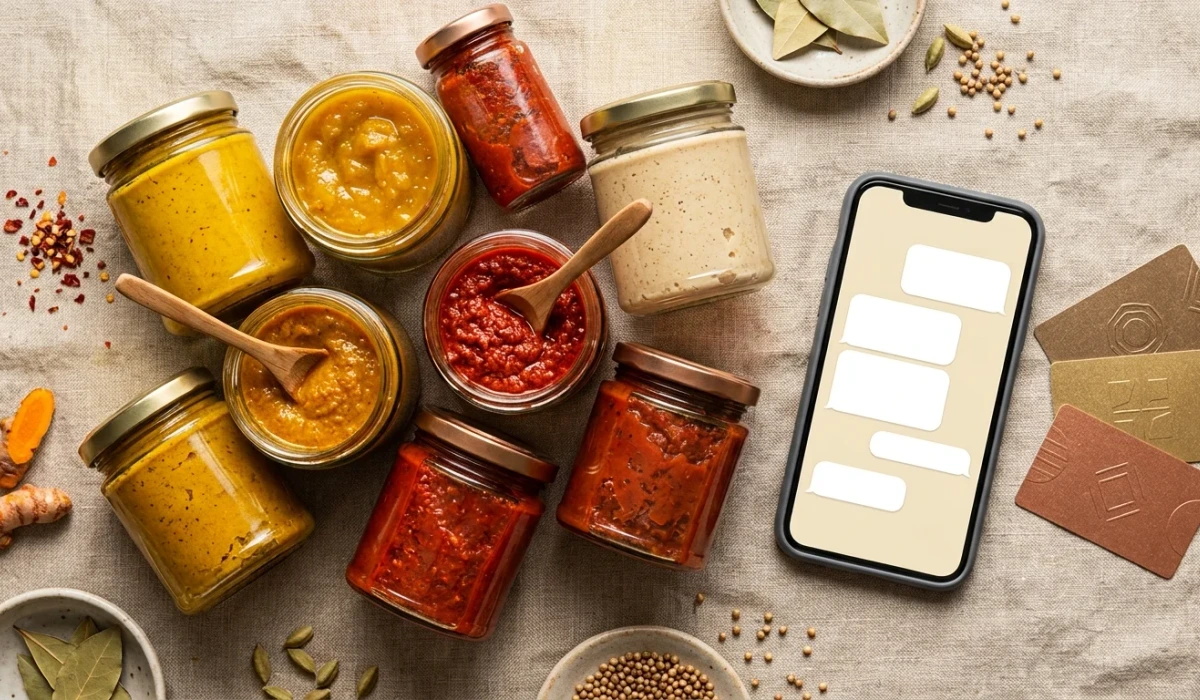
A Faisalabad-based D2C brand selling preservative-free cooking pastes, chutneys, and snack kits was acquiring customers steadily on Meta but losing them after the first jar. With a naturally recurring pantry category, a 21% 90-day repeat rate, and discount codes leaked across coupon groups, the brand needed a retention system rather than another acquisition campaign. This engagement is an illustrative composite built from the patterns WeProms sees across Pakistani D2C food brands.
The rollout used 4 implementation phases: technical cleanup, architecture, content, and authority building.
At a glance
Case summary
- Industry
- D2C Food and Condiments (Ready-to-Cook)
- Market
- Pakistan (Faisalabad)
- Duration
- 12 weeks
- Client type
- D2C Brand
- Services used
- Loyalty and referral programme setup, Email and WhatsApp lifecycle flows, Customer win-back campaigns
- Starting problem
- A ready-to-cook pastes and chutneys brand had a 21% 90-day repeat rate, heavy public-code discounting, and no loyalty infrastructure despite a naturally recurring pantry category.
- Work completed
- Built a margin-priced three-tier points programme with cash-on-delivery clawback rules, a double-sided WhatsApp referral scheme, and lifecycle flows timed to the brand's restock cycle.
- Evidence type
- illustrative_composite
Results and proof
Measured impact at 90 days
The top-line numbers are separated from the narrative so buyers, search engines, and answer engines can understand the outcome before reading the full execution notes.
90-day repeat purchase rate
Grew from 21% to 34% of first-time buyers
Discount-code share of orders
Cut from 41% to 17% as points replaced coupons
Referral share of new orders
From untracked to 11% of new orders
Average order value
PKR 2,900 to PKR 3,350 (+16%) on tier-adjacent bundles
Measured metrics
Before and after
Challenge context
Challenge context
A Faisalabad-based D2C brand selling preservative-free cooking pastes, chutneys, and snack kits was acquiring customers steadily on Meta but losing them after the first jar. With a naturally recurring pantry category, a 21% 90-day repeat rate, and discount codes leaked across coupon groups, the brand needed a retention system rather than another acquisition campaign. This engagement is an illustrative composite built from the patterns WeProms sees across Pakistani D2C food brands.
90-day repeat purchase rate stuck at 21% in a category with a natural three-to-four week pantry restock cycle
41% of orders carried a public discount code leaked to coupon aggregators and WhatsApp deal groups
New-customer CAC up 38% across three quarters as Meta costs rose for Pakistani food advertisers
78% cash-on-delivery orders with a 9.3% refusal rate, and no mechanism to stop rewards on refused parcels
72% of customers ordered via WhatsApp at least once, but no loyalty data flowed back to the store
An 18,000-contact list with zero lifecycle segmentation and no loyalty infrastructure of any kind
Execution roadmap
Implementation phases
The page now presents the process as a scannable roadmap before the long-form breakdown, improving buyer comprehension and passage-level retrieval.
Phase 1
Diagnosis and margin math (Weeks 1-2)
Phase 2
Programme design and build (Weeks 3-5)
Phase 3
Launch and optimize (Weeks 4-8)
Phase 4
Measure and compound (Weeks 8-12)
The Client
A Faisalabad-based D2C brand, founded in 2021, selling preservative-free cooking pastes — karahi, tikka, and qorma bases ready to cook in twenty minutes — alongside chutneys, spice-seasoned snack kits, and gift bundles for the Eid season. The catalogue ran to about 60 SKUs, average order value sat near PKR 2,900, and the store processed roughly 2,600 online orders a month across its own Shopify storefront and a busy WhatsApp ordering desk staffed by a six-person customer service team. Two marketplace storefronts added volume but thin margins.
On paper the brand was a retention dream. Cooking paste is a consumable: a family finishes a 400-gram jar in three to four weeks, and the natural behaviour is to reorder what worked. In practice, almost nobody did. The 90-day repeat purchase rate sat at 21%, and the fastest-growing slice of the order book was bargain hunters — buyers who arrived on a leaked discount code, ordered once at 15% off, and never came back. Meanwhile new-customer acquisition cost on Meta had climbed about 38% across three quarters, from roughly PKR 640 to PKR 880, the standard squeeze Pakistani food advertisers felt through 2025 and 2026 as auction costs rose and Ramadan-and-Eid demand spikes pulled budgets in.
The founders engaged WeProms Digital after a board meeting where the numbers stopped adding up: acquisition spend was growing faster than revenue, and every one-time buyer represented spend that would never amortise across a second jar. This case study is an illustrative composite — an anonymised engagement built from the patterns we see across Pakistani D2C food brands, written so a growth team can sanity-check the framework and the outcome shape against their own numbers.
The Problem
Six blockers surfaced in the first week of diagnosis:
- A recurring category behaving like a one-shot category. Repeat purchase at 21% against a realistic ceiling of 30% or more for consumable food, with second orders clustering tightly around the three-to-four week pantry cycle and almost none arriving after day 45.
- Discount infrastructure with no off switch. Eleven public codes were live; six had leaked to coupon aggregators and WhatsApp deal groups. A single 15% code sat on 22% of all orders. The brand was effectively running a permanent sale for customers who would have paid full price.
- Rising acquisition cost with no retention counterweight. CAC up 38% in three quarters, while nothing in the store — no accounts, no points, no rewards — gave a first-time buyer a reason to return to the site instead of a marketplace.
- WhatsApp was the real store, but invisible to the data. Seventy-two percent of customers had ordered through the WhatsApp desk at least once, yet purchase history there lived in agents’ chat threads and never merged with Shopify profiles.
- Cash on delivery with real leakage. Seventy-eight percent of orders were COD, with a 9.3% refusal rate. Any naive loyalty programme would have awarded points on refused parcels — paying rewards for orders that were never actually bought.
- A dormant list. Eighteen thousand contacts received a fortnightly newsletter with no segmentation, no purchase-history triggers, and no connection to anything happening in the store.
The strategic question was not whether to add points. It was how to convert a discount-conditioned acquisition engine into a retention engine without collapsing the order book in the transition.
Phase 1 — Diagnosis and Margin Math (Weeks 1-2)
Book a free strategy call - we'll audit your current setup and identify the highest-impact fixes.
The diagnostic had two halves: understand the customer clock, and understand what the brand could afford to give away.
The customer clock. Cohort analysis on 26 months of Shopify order history showed that among customers who did reorder, 68% placed their second order between day 19 and day 31 after the first — the pantry-empty window. After day 45, the probability of a second purchase fell by more than half. That day 19-to-31 window became the timing spine of every flow we would later build. WhatsApp desk transcripts added the texture: reorder conversations overwhelmingly started with a photo of an empty jar or a “ye wali dobara bhej dein” message, usually in the same week the household finished the jar.
Discount leakage audit. We tagged every order by code and source. Beyond the headline 41% code share, the audit found that code users’ repeat rate was less than half that of full-price buyers — the codes were not just leaking margin, they were selecting for the wrong customers. Six of the eleven codes had been posted to public deal groups within weeks of creation. We plotted a retirement schedule: codes would expire on a rolling basis and be replaced with member-only offers that required a phone-verified loyalty identity.
Margin math. Contribution margin on the core paste bundles ran near 54% after product cost, packaging, and last-mile delivery. That funded a base earn rate of 5 points per PKR 100 spent — roughly 2% back in redeemable value — with tier earn rates reaching 3.5% for top-tier customers, comfortably inside margin even at elevated redemption.
COD reality check. With a 9.3% refusal rate, we set a rule before designing anything else: points would be awarded only when an order reached delivered status, and auto-reversed on refused or returned parcels. It is the single most commonly missed rule in Pakistani loyalty builds.
| Diagnostic finding | Number | Design implication |
|---|---|---|
| Second-order window | Day 19-31 (68% of reorders) | Time every flow to the restock window |
| Public-code share of orders | 41% | Retire codes; replace with member offers |
| Code-user repeat rate | 9% vs 19% overall | Stop selecting for bargain hunters |
| Contribution margin | ~54% on core bundles | Fund up to 3.5% back at top tier |
| COD refusal rate | 9.3% of orders | Confirm points on delivery, reverse on refusal |
| Repeat ceiling in category | 30%+ | Tier perks aimed at the 21%-to-34% gap |
Phase 2 — Programme Design and Build (Weeks 3-5)
The core design choice was a tiered programme over a flat one, because cooking is an identity category in Pakistan — the person who cooks for the family takes visible pride in it — and progression pulls harder than a straight rebate. The second choice was equally important: identity would attach to the customer’s phone number, not to an email account. Account creation is a conversion killer in Pakistani D2C; a phone number is captured on every COD order anyway, and it merged the WhatsApp desk with the storefront.
Tier design
| Tier | 12-month spend | Earn rate | Signature perks |
|---|---|---|---|
| Starter | PKR 0 | 5 pts per PKR 100 | Welcome 100 points, birthday bonus |
| Home Cook | PKR 18,000+ | 6 pts per PKR 100 | Free delivery over PKR 2,500, early access to seasonal kits |
| Regular (top ~6%) | PKR 40,000+ | 7 pts per PKR 100 | Priority WhatsApp ordering line, first allocation of Eid bundles, quarterly recipe kit |
Thresholds were set against real cohort distribution: PKR 18,000 was reachable with about six average orders a year, which put it inside the realistic path of any customer the programme converted — a tier nobody can reach is a decoration, not a lever.
Points, redemption, and clawback
Redemption stayed deliberately simple: PKR 150 off at 300 points, PKR 500 off at 900 points, and a snack-kit gift bundle at 1,800 points. Points expired after twelve months. The clawback engine ran underneath: points pending on every order until delivery confirmation, auto-reversal on refusal or refund, and a fraud rule that flagged more than three refused parcels in ninety days for manual review.
Referral, rebuilt for WhatsApp
The brand had always had word of mouth — family and neighbourhood recommendations are how food brands grow in Punjab — but none of it was captured. Every customer received a personal referral code surfaced on the order-confirmation page and inside the WhatsApp delivery-confirmation message, with a one-tap share button pre-loaded with a short message in Roman Urdu. The referred friend got PKR 400 off a first order above PKR 2,000; the referrer got 800 points — roughly PKR 400 in value — credited only after the friend’s parcel was delivered. Paying both sides on delivery, not on order placement, kept the scheme immune to self-referral on refused COD parcels.
Lifecycle wiring
The programme was wired into Klaviyo for email and into the WhatsApp API for the desk, so loyalty events triggered messages automatically: a restock reminder on day 19 with the customer’s live points balance, a tier-progression nudge at 80% of the next threshold, a win-back flow at day 45, a points-expiry warning thirty days out, and a post-delivery review request that awarded 50 points for a verified review. The flows behind this wiring follow the patterns in our email and WhatsApp lifecycle flow builds, with timings recalibrated to the day 19-31 restock window this diagnostic produced.
Phase 3 — Launch and Optimize (Weeks 4-8)
The opening-balance launch. Rather than announcing a programme, we announced a gift: every past customer received an opening balance of points retro-credited for orders placed in the previous six months, capped at 2,000 points, with a two-month expiry on the credit. The message — “you already have PKR 200 waiting” — went out as a three-touch sequence: email first, a WhatsApp follow-up to non-openers forty-eight hours later, and a reminder timed to the first of the month, when salaries land and pantry restocking peaks. The retro-credit drove the single largest reorder spike of the engagement, at full margin, because the reward was already earned rather than discounted.
Programme mechanics in the flow. Checkout was restructured so the loyalty phone number was captured on every order — guest checkout included — and the customer saw their tier, points balance, and pending points on the confirmation page. Sixty-two percent of eligible orders enrolled in the programme at checkout by week eight. The WhatsApp delivery-confirmation message, which the CS team already sent on every parcel, gained two lines: current points balance and the referral share button. It became the highest-volume referral surface the brand owned.
Eid double points. Ahead of the Eid-ul-Adha cooking season, we ran a double-points week on family bundles. Bundles built for the occasion lifted AOV by a third during the window, and — more importantly for the programme — the event gave lapsed members a reason to log a fresh order inside their restock cycle, resetting their activity clock before the summer slowdown.
Optimisation loops. Three loops ran weekly through the phase. Tier-progression nudges to customers at 80% of Home Cook produced a measurable second-order bump within nine days of each send. Restock reminders at day 19 outperformed day 25 and day 31 variants on reorder rate — earlier is better while the empty-jar memory is fresh. And the referral reward was tuned once: PKR 400 double-sided beat both a PKR 250 and a PKR 600 variant, the latter because the friend-side discount, not the referrer’s reward, is what actually closes the referred order in this category.
| Programme metric | Launch | Week 8 |
|---|---|---|
| Phone-attached members | 0 | 11,400 |
| Orders enrolled at checkout | — | 62% of eligible orders |
| Referral codes shared | 0 | 2,600 |
| Points redemption rate | — | 24% of earned points |
| Tier distribution | — | 68% Starter / 26% Home Cook / 6% Regular |
Phase 4 — Measure and Compound (Weeks 8-12)
How we helped a Pakistani business achieve measurable results.
Phase 4 turned a launch into a system. The cohort dashboard compared programme-exposed buyers against a matched pre-launch cohort on repeat rate, order frequency, and AOV, so the weekly review argued with data instead of anecdotes. The gap was unambiguous: members repeated at 41% inside ninety days against 16% for non-members, and member parcels were refused at 4.1% against the store-wide 9.3% — customers with a points balance treat the relationship differently, including at the doorstep.
Governance went monthly: margin per tier (to confirm perks were still self-funding), leakage checks (any new code appearing on public deal groups), flow decay (any message whose engagement fell below threshold was rewritten or retired), and tier health (watching that the Regular tier kept growing without concentrating discount dependence at the top). The next compounding event went on the calendar — early access to Ramzan gift boxes for Home Cook and Regular members six weeks ahead of the season — so the programme, not the coupon calendar, would own the brand’s biggest demand spike. The build follows the scope of our loyalty and referral programme setup engagements, and for the lapsed-buyer segment the day-45 flow runs on the customer win-back playbook — an earned-balance reminder rather than a discount blast.
Final Results
Measured across the 90-day cohort following launch:
| Metric | Before | After | Change |
|---|---|---|---|
| 90-day repeat purchase rate | 21% | 34% | +13 pts |
| Orders per repeat customer (annualised) | 1.7 | 2.4 | +41% |
| Discount-code share of orders | 41% | 17% | -24 pts |
| Referral share of new orders | Untracked | 11% | New channel |
| Average order value | PKR 2,900 | PKR 3,350 | +16% |
| Loyalty-flow revenue share | 7% | 19% | +12 pts |
| COD refusal rate (members) | 9.3% store-wide | 4.1% | -5.2 pts |
Every number traces to a phase: the repeat-rate and frequency lift to the restock-timed flows and tier nudges built in Phase 2 and tuned in Phase 3, the discount-code collapse to the retirement schedule set in Phase 1, referral share to the WhatsApp-native scheme, and the AOV lift to tier-adjacent bundles and the Eid double-points window. The most consequential line for the business is the quietest one: revenue shifted from coupon-conditioned, low-margin orders to member orders at full price, which is what made the rising CAC survivable. These figures are illustrative — treat them as a realistic outcome shape for a mid-size Pakistani D2C food brand, not an audited result.
What Made This Work
- The margin math preceded the mechanic. Every earn rate, tier threshold, and referral reward was priced against contribution margin before launch. The programme never gave away more than the repeat orders it generated, which is the difference between a loyalty programme and a slower coupon.
- Phone-number identity, not accounts. Attaching loyalty to the phone number captured on every COD order removed the account-creation wall that kills most loyalty programmes in Pakistan, and it merged the WhatsApp desk into the same customer record as the storefront.
- Delivery-confirmed points. Clawing back points on refused parcels closed the one loophole that quietly bleeds cash in COD-heavy markets, and the member refusal rate falling to 4.1% suggests the balance itself changed doorstep behaviour.
- Flows timed to the pantry, not the calendar. The day 19 restock reminder worked because it arrived when the jar was actually empty. Every loyalty brand has a natural consumption clock; the diagnostic’s main job is to find it.
- Referral built into the share moment. A code embedded in the WhatsApp delivery confirmation, with a pre-written Roman Urdu message and one-tap send, converted existing word of mouth into an attributed channel — 2,600 shares in eight weeks without a paid incentive to share.
What Teams Can Apply
For Pakistani D2C food and consumable brands:
- Find your consumption clock before designing anything. Run a time-to-second-order cohort and locate the window where reorders actually cluster. Tier thresholds, restock reminders, and win-back timing should all be derived from that window — not from a loyalty platform’s default settings.
- Use the phone number as the loyalty ID. You already capture it on every COD order. Skip account creation entirely; it costs conversions and buys you nothing in a market where the phone number is the durable identity across WhatsApp, storefront, and marketplace.
- Price perks against contribution margin and audit monthly. A 5-3.5% earn curve funded by a 54% contribution margin is self-sustaining. Calculate your own ceiling before promising rewards, and review margin per tier every month so generosity never outpaces the repeat orders funding it.
- Retire coupons on a schedule, not overnight. Leaked codes select for one-time bargain hunters. Replace them with member-only offers gated on the loyalty identity, and make the replacement visible in the same week each code dies so full-price buyers see the programme as the better deal.
- Pay referral rewards on delivery. Both sides. In a 78% COD market, rewarding order placement instead of delivery invites self-referral on refused parcels — the fastest way to make your referral channel a cost centre.
The demand patterns this work plugs into are framed in our digital marketing for food brands hub; the tier economics and clawback rules above are the parts worth copying first.
What teams can apply
Use the framework, not just the headline number.
For GEO, AEO, and classic SEO, the useful signal is the sequence: fix crawl access, build answerable category assets, improve conversion paths, and document proof in a format that humans and machines can cite.
Tier perks were priced against contribution margin per tier, so every reward funded itself from repeat orders instead of discounting the first one
Points were only confirmed on delivered parcels and auto-reversed on refused cash-on-delivery orders, closing the farming loophole that makes loyalty programmes leak money in Pakistan
Identity was attached to the customer's phone number and the referral lived inside the WhatsApp share moment, matching how the brand's buyers actually order and talk
Limitations
Context and limitations
Illustrative composite based on common patterns in Pakistani D2C food; results vary with the category's repurchase cycle, margin structure, and how much of the order book is discount-conditioned.
Questions
Case study FAQs
Is this loyalty programme framework applicable in Pakistan?
Yes. The tier thresholds, points values, and referral rewards are all derived from rupee price points and local order behaviour, including cash-on-delivery and WhatsApp-first communication. The phone-number identity model works on the Shopify and WooCommerce setups most Pakistani D2C food brands run.
How quickly can we expect results?
Repeat-rate movement usually appears four to six weeks after launch, once the restock reminders and tier-progression nudges reach the first cohorts. This illustrative engagement reached a 34% 90-day repeat rate over a full quarter, with member-versus-guest gaps compounding after that.
Can you replicate this process for our business?
Yes. We recalibrate tier thresholds against your average order value and order frequency, price rewards against your contribution margin, and wire the programme into your email and WhatsApp stack. The same structure fits condiments, beverages, beauty, and supplement brands with recurring-use products.
Do you provide reporting during implementation?
Yes. Cohort repeat rate, tier distribution, referral attribution, and loyalty-flow revenue share are visible in shared dashboards from launch week, with a weekly checkpoint through the build and a monthly governance review once the programme is live.
Next step
Want a similar rollout in Pakistan?
Share your current baseline and we will map a phased execution plan to your growth goals.