Published May 16, 2026 by Hamza Ali
Picture a Lahore dental clinic paying for Google Ads and Meta Ads while its receptionist answers inquiries between patient appointments. Website forms sit in an inbox. WhatsApp messages wait until the desk is quiet. By the time someone responds, the customer may already have booked elsewhere. A competing clinic acknowledges the inquiry promptly, assigns it to a receptionist and follows through with appointment availability. The difference is a response process that gives paid leads a better chance of becoming patients.
That is an illustrative scenario, not a documented comparison between clinics. There is no verified revenue gap to attach to it. But it gives the owner a useful question: after paying to attract an inquiry, who is responsible for answering it?
The setup that burns budget
The operational problem can look similar across service businesses: clinics in Lahore, property agents in Karachi, training centers in Islamabad and IT firms in Rawalpindi. The owner funds advertising. Leads arrive through WhatsApp, Facebook Messenger or website forms. Someone checks them between other tasks, and after-hours inquiries wait without a clear owner or follow-up commitment.
According to HoneyBook’s study with The Harris Poll, 36% of customers cited businesses being hard to reach as a reason for walking away. That supports taking accessibility seriously. It does not mean a Pakistani business loses the same share of its leads or revenue, or that reply speed explains every abandoned inquiry.
Owners can spend considerable effort adjusting targeting, landing pages and bids while leaving the response process unmeasured. Those advertising improvements still matter. But check what happens after the form submission too: whether the inquiry reaches someone, whether they answer the actual question and whether the conversation moves toward a booking.
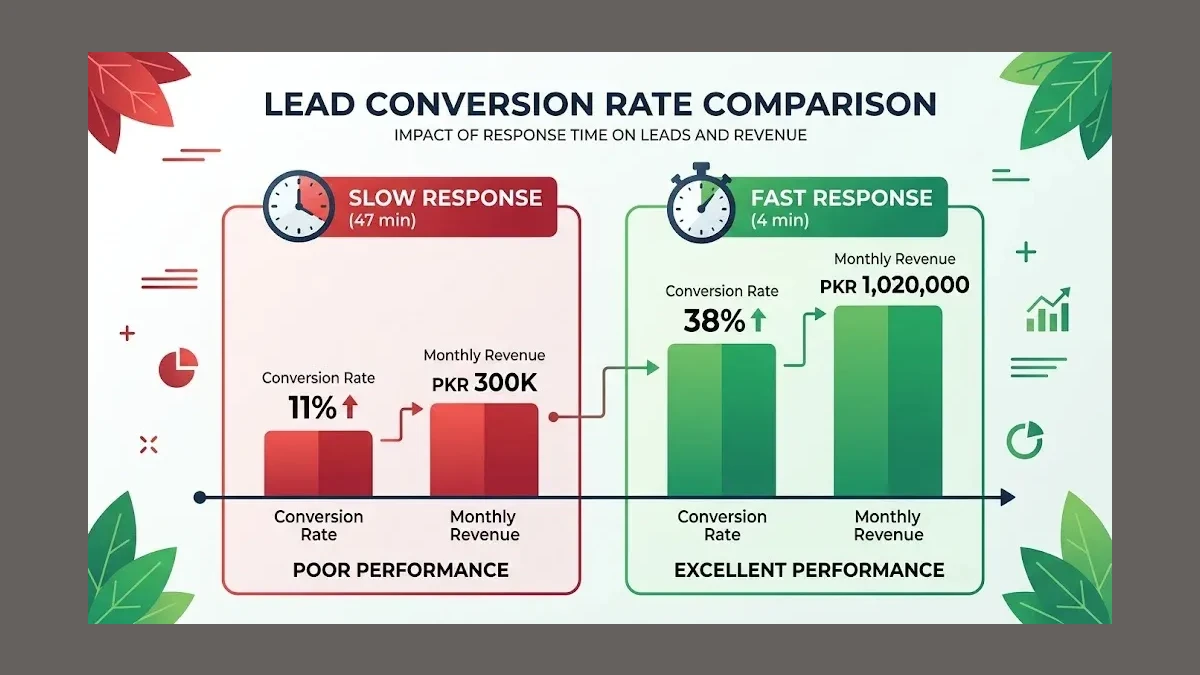
The numerical clinic comparison in this graphic is unverified. Use your own lead records when assessing the financial effect of response delays.
Where the money actually goes
Start with the clinic’s funnel rather than a promised conversion uplift. Record advertising spend, valid inquiries, booked appointments, attended appointments and collected revenue. Keep those stages separate. An inquiry is not a booking, and a booking does not guarantee that treatment happens or that the quoted amount is collected.
Then connect response timestamps to those outcomes. Do leads that receive a useful answer promptly book more often? Are unanswered inquiries concentrated around lunch breaks or closing time? Does a particular channel send requests that staff cannot handle? Those questions show where the process needs attention without assuming every lost booking was caused by delay.
As the Martech Zone customer acquisition cost guide explains, acquisition costs need to be assessed against customers won. Our customer acquisition cost audit for Pakistani SMEs helps connect that calculation to the wider marketing budget. Cheap inquiries can still produce expensive customers if follow-up breaks down.
Do not label revenue minus advertising spend as profit. Treatment delivery, staff time, software and other costs still need to be covered. Slow replies may be a meaningful source of waste, but calling them the largest waste factor requires evidence from the business’s own accounts.
The 5-minute window nobody talks about
The familiar comparison between contacting leads within 5 minutes and waiting 30 minutes comes from older research. The InsideSales.com lead response study presented in 2007 examined calls to web-generated leads and found stronger contact and qualification outcomes with faster callbacks. It explicitly did not study close ratios: how many leads became paying customers.
That distinction matters. The study supports prioritizing prompt follow-up, but it does not establish a sales multiplier for Pakistani clinics or a WhatsApp booking benchmark. Nor does an instant automated greeting count as the useful conversation the customer needs. Measure acknowledgment time and meaningful human response time separately.
Think about the customer’s task. Someone asking about an appointment needs availability, location and a clear way to book. A quick greeting followed by silence leaves that task unfinished. A slightly later reply that resolves the question can be more useful than repeated messages saying someone will respond soon.
HoneyBook’s study found that 50% of customers identified responsiveness as a key decision factor. Its published methodology describes a US survey, so the percentage should not be presented as a Pakistani consumer benchmark. Set a response target your team can sustain, then check whether meeting it improves bookings and customer experience.
What automated response looks like in practice
If customers already contact your business through WhatsApp, start by fixing that inbox. You do not need a national download estimate or a claimed universal open rate to justify answering existing inquiries. Look at your own unanswered messages, repeated questions and missed handoffs. Those are the problems an automation setup should address.
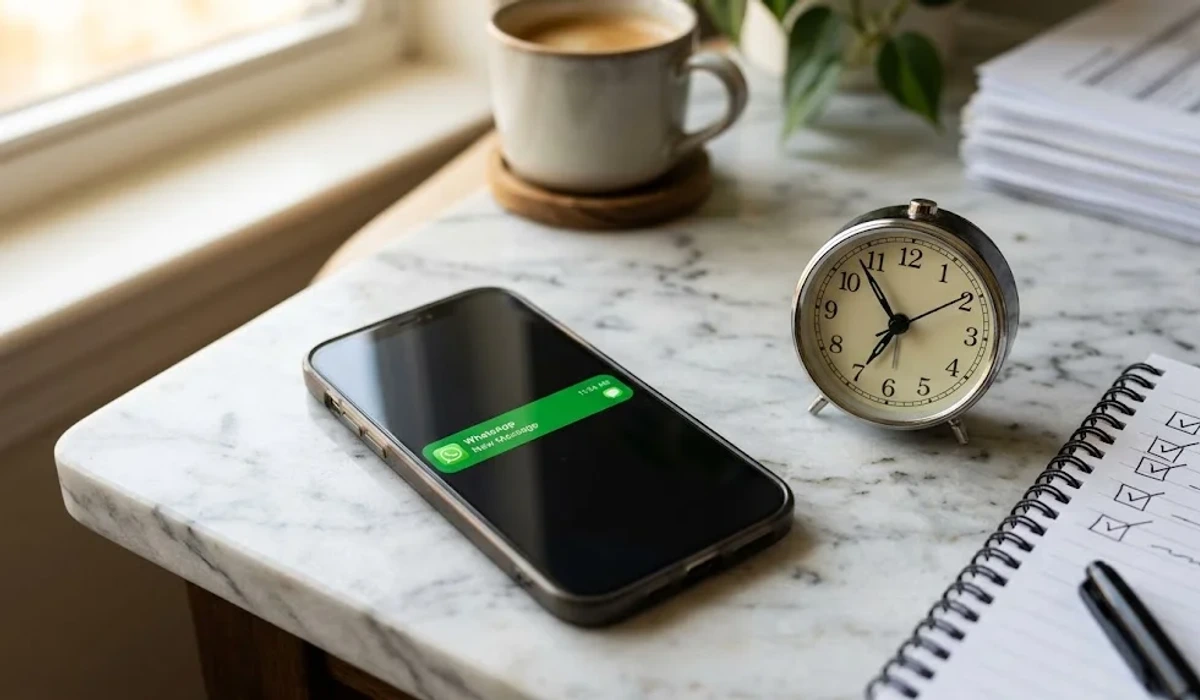
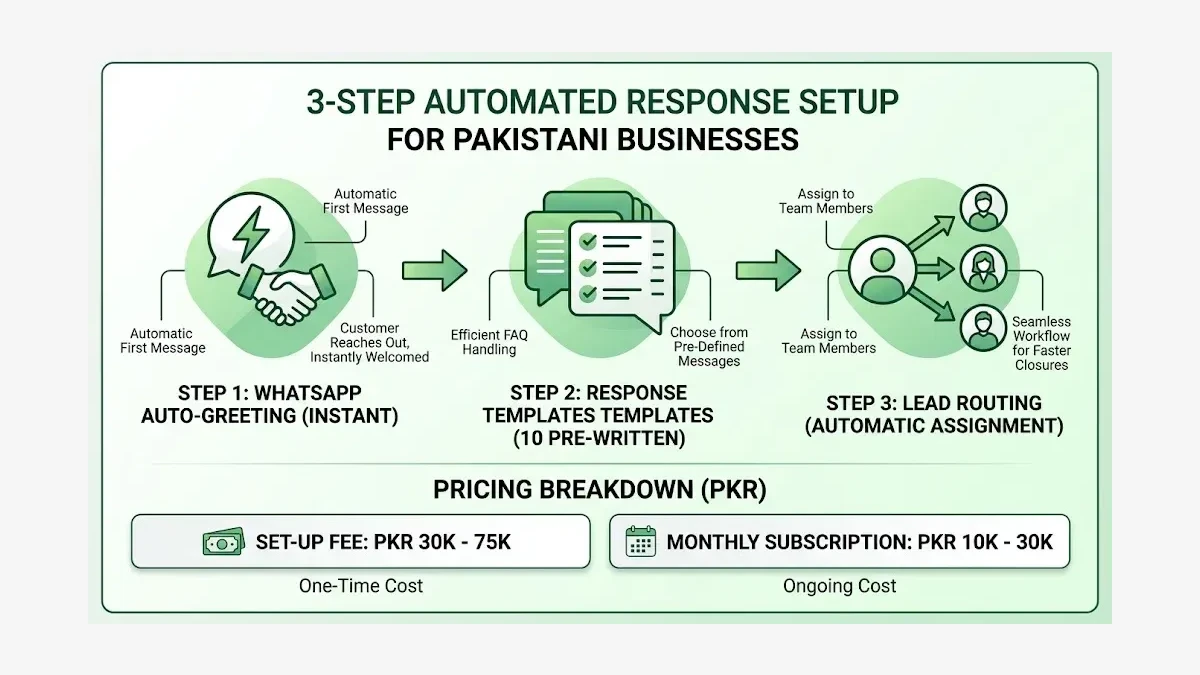
A basic workflow has three components. First, a WhatsApp greeting or acknowledgment that confirms receipt and explains what happens next. Second, response templates that help staff answer common questions accurately. Third, lead routing that assigns the inquiry to someone responsible for resolving it, with a fallback when that person is unavailable.
The app’s greeting feature has limits. WhatsApp’s documentation says greetings are sent when a customer first messages or after 14 days of chat inactivity, and require an active internet connection. They are not automatic replies to every incoming message. Test the workflow with both new and returning customers before treating it as reliable coverage.
Keep the message useful: acknowledge the request, state when the team will respond and explain how to reach a person. Templates should help staff handle common questions without preventing them from reading the conversation. For more involved routing and integrations, scope the requirements through a WhatsApp Business API setup assessment.
There is no verified standard price for this exact setup across Pakistan. SkillMentor’s chatbot guide discusses freelancer pricing, but a custom chatbot is not the same scope as configuring greetings and a handoff. Ask for implementation, software, messaging and support costs separately. Our marketing automation setup guide can help frame those requirements before you request quotes.
The math on fixing this
HoneyBook reported median annual revenue of $500,000 among businesses using AI, compared with $90,000 among non-adopters. Its study also reported that 97% of the top-earning, risk-tolerant group it called “Leaders” used AI tools and automation. These are findings from the US survey, not forecasts for Pakistani service businesses.
The association does not prove that installing automation causes higher revenue. Larger or better-organized businesses may have more resources to adopt tools, and AI use covers much more than answering leads. Converting those revenue figures into rupees would not make them a local return-on-investment benchmark.
Build the case from your own operation instead. Estimate the extra completed sales associated with better follow-up, multiply those by the contribution retained after delivery costs, then subtract the ongoing cost of the response system. Assess the initial setup cost against that remaining contribution. If contribution does not improve, the system has not yet demonstrated a financial return.
Compare similar lead sources and offers before and after implementation. Changes in targeting, seasonality, pricing or appointment capacity can affect conversion alongside response speed. Keep a record of those changes so that an improving sales report does not automatically become a claim about automation.
There is no dependable national adoption figure here to tell you how many competitors still respond manually. You do not need one to act. A workflow with clear ownership, useful replies and completed follow-up is worth testing against your current process. Expand it when the results justify the expense.
Before you spend another PKR on ads, do this first
- Measure acknowledgment and useful response times separately across WhatsApp, Facebook Messenger and website forms. Record missed inquiries as well as answered ones, and review staffed hours separately from closed hours.
- Configure and test WhatsApp greetings and away messages. Check what new and returning customers receive. An acknowledgment should confirm receipt and explain the next step without pretending that a person has reviewed the inquiry.
- Write templates for common customer questions. Include availability, location, booking requirements and approved pricing information where appropriate. Give staff room to adapt the answer to the customer’s actual request.
- Assign an owner and a fallback for each inquiry. Use lead scoring and sales handoff optimization where routing needs more structure. Check that assigned leads are accepted and answered, rather than simply forwarded.
- Review lead-to-sale conversion alongside response performance. Separate bookings from attended appointments and completed sales. Check whether results improve for comparable inquiries, and investigate where conversations still stop.
- Make after-hours promises realistic. State when the team will return and provide helpful information while the customer waits. Ensure someone reviews the accumulated inquiries when the business reopens.
Read next: Marketing Automation Setup for Pakistani Businesses
WeProms Digital helps businesses plan customer journey automation, including lead routing, follow-up and conversion tracking. Start with a review of your current response workflow and the places where inquiries stall. Reach us at hello@weproms.com or message us on WhatsApp to discuss the process your team needs.
Frequently Asked Questions
How fast should a Pakistani business respond to a new lead?
Aim to provide a useful response promptly during staffed hours, with clear expectations when the team is unavailable. The familiar 5-minute benchmark comes from older research on calling web leads, not a Pakistani WhatsApp sales study. Use it as a prompt to examine delays rather than a guaranteed conversion threshold. Track whether the customer receives an answer and a workable next step, not just a greeting.
What does marketing automation cost for a Pakistani SME?
The cost depends on the workflow: basic app configuration, shared inbox management, routing, CRM integration and reporting involve different work. Request an itemized quote covering setup, recurring software, messaging charges and ongoing support. Confirm who maintains templates and resolves failed handoffs. A published freelancer price range is not a standard market tariff, and a payback promise needs your own sales and margin data to support it.
Can I automate responses without sounding robotic?
Yes. Write the acknowledgment in the language your customers use, explain when a person will respond and avoid repeating information they have already supplied. Let staff adapt templates instead of sending identical answers to different questions. Automation should help the team get to the conversation sooner. If a customer asks something the workflow cannot resolve, make the handoff visible and ensure someone takes ownership.
Is WhatsApp Business automation better than email for Pakistani businesses?
Choose the channel around customer behavior and the task. When an inquiry arrives on WhatsApp, replying there keeps the conversation convenient. Email may suit detailed proposals, documents or follow-up that customers want to review later. The cited engagement statistics do not establish a Pakistan-specific performance comparison. Compare useful replies, bookings and completed sales in your own channels before deciding where to invest more effort.
How do I get started with WeProms Digital for lead response automation?
Contact us at hello@weproms.com or message us on WhatsApp at +92 300 0133399. Bring examples of unanswered inquiries, your channel list and the way leads currently reach staff. We can review routing and follow-up requirements with you. Agree on scope, dependencies and acceptance checks before setting a launch date; assess conversion changes once there is enough comparable activity to evaluate.
About WeProms Digital
WeProms Digital serves Pakistani SMEs, service businesses and B2B teams with customer journey automation, lead response optimization and WhatsApp marketing automation. The work connects incoming inquiries with the people responsible for answering them and helps teams track what happens afterward.
For a lead response project, the useful starting point is the current process: where messages arrive, who owns them and how outcomes are recorded. That gives the business a baseline for judging whether the proposed workflow improves service and earns its ongoing cost.
Get in touch: hello@weproms.com · WhatsApp +92 300 0133399
Sources & References
- HoneyBook — Small Businesses Using AI Earn $400K More Per Year (via MarTech Series)
- HoneyBook — Study announcement and methodology
- InsideSales.com — Lead Response Management Study
- WhatsApp — How to use greeting messages
- Martech Zone — Customer Acquisition Cost Calculator
- SkillMentor — How to Make an AI Chatbot for WhatsApp in Pakistan
- WeProms Digital — Marketing Automation Setup in Pakistan
Additional reading from industry feeds: