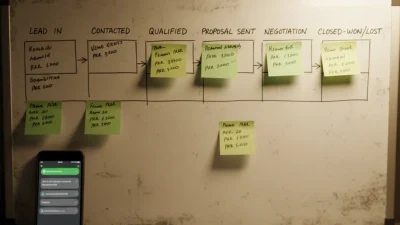
Marketing automation for Pakistani businesses often stops at a single welcome email or an occasional WhatsApp broadcast. The real value lies in building connected systems that nurture leads, retain customers, and generate revenue without constant manual effort. For businesses in Lahore, Karachi, and Islamabad competing in crowded digital markets, automation infrastructure separates consistent growth from ad-hoc campaigns.
The challenge is not choosing a tool. It is connecting the tools you already have into workflows that operate reliably. Most Pakistani businesses run five or more marketing platforms — Google Ads, Meta Business Suite, WhatsApp Business, an email platform, and a CRM — but few have them integrated. Data sits in silos, leads fall through gaps, and reporting requires manual spreadsheet work every week.
What should you automate first?
Start with lead capture and nurture. When a potential customer fills out a form on your website or sends a WhatsApp message, what happens next? If the answer involves manual follow-up, you are losing leads. An automated lead nurture system connects your forms to your CRM, triggers a welcome sequence, scores the lead based on behavior, and alerts your sales team when the lead reaches a qualifying threshold.
For Pakistani businesses, the highest-impact integrations connect WhatsApp Business API with your CRM and email platform. WhatsApp remains the primary communication channel for most Pakistani consumers, so automating WhatsApp-based nurture flows — order confirmations, shipping updates, reorder reminders, and feedback requests — delivers immediate returns.
The second priority is abandoned cart and browse recovery. If you run an ecommerce store, automated recovery sequences across email and SMS typically recover a meaningful share of otherwise lost revenue. This requires connecting your store platform with your email or SMS tool and setting up timed sequences that trigger when a customer abandons their cart.
How do you build a connected marketing stack?
Map your customer journey first. Document every touchpoint from first awareness to repeat purchase. Then identify where manual processes slow things down or create data gaps. Common issues for Pakistani businesses include CRM data not syncing with ad platforms, UTM parameters getting lost between landing pages and thank-you pages, and WhatsApp conversations staying disconnected from the broader customer record.
Choose a central platform — HubSpot, ActiveCampaign, or Klaviyo for ecommerce — and build integrations outward from there. Use tools like Zapier or Make to connect platforms that lack native integrations. Set up error monitoring so you know when a sync breaks, because integrations fail silently more often than most teams expect.
Document every workflow. When the person who built the automation leaves, the system should survive. Record trigger conditions, action sequences, segmentation rules, and escalation paths. This documentation is the difference between a marketing system and a collection of fragile connections.
For businesses in Pakistan, the investment in automation infrastructure pays off fastest when it eliminates manual follow-up on leads and recovers abandoned purchases. These are measurable, immediate returns that justify the setup effort.