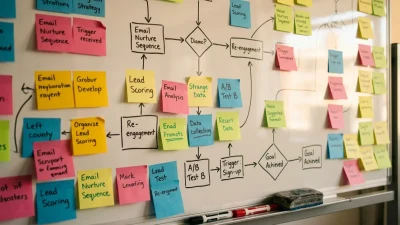
The average Pakistani IT services company, marketing agency, or SaaS startup generates 80 percent of its new business through personal referrals and WhatsApp introductions. This model works — until the founder stops networking, the referral pipeline dries up, and revenue drops 40 percent in a single quarter.
LinkedIn generates 80 percent of all B2B social media leads globally, with a visitor-to-lead conversion rate of 2.74 percent — nearly four times higher than Facebook at 0.77 percent. Pakistani B2B companies that build systematic lead generation pipelines create predictable revenue that does not depend on any single person’s network.
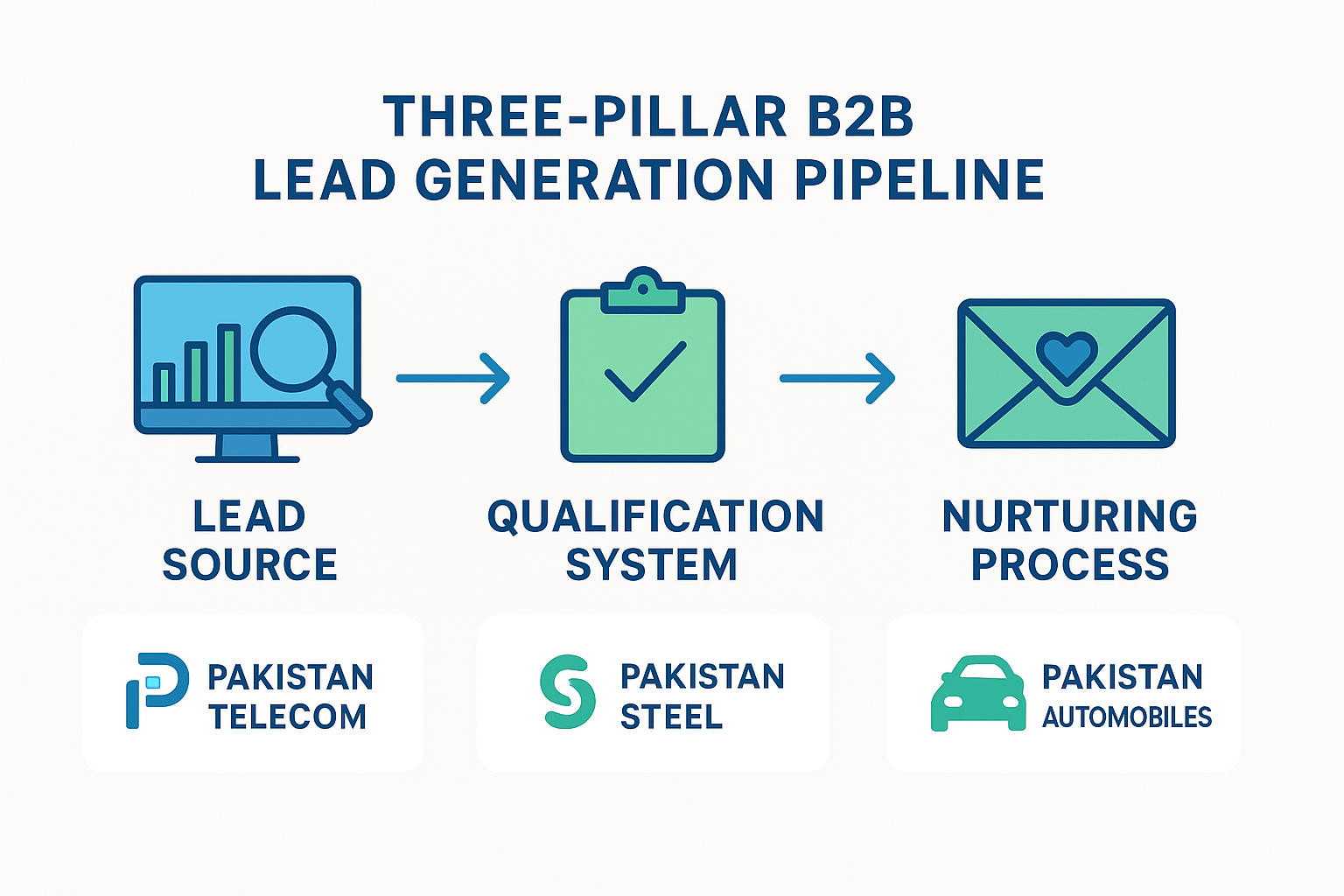
The shift from referral-dependent growth to pipeline-driven growth requires three components: a lead source (LinkedIn, content marketing, or paid advertising), a qualification system (lead scoring and segmentation), and a nurturing process (automated follow-up sequences). Each component builds on the previous one, which means a business with no lead source cannot nurture anything, and a business with leads but no qualification system wastes sales team time on unqualified prospects.
Why do most Pakistani B2B companies still rely on referrals?
Three structural factors keep Pakistani B2B companies locked into referral-based growth. First, the market is relationship-driven. Decision-makers at Pakistani enterprises — banks, telecom companies, manufacturing firms — prefer vendors recommended by trusted contacts, and this preference is rational because the cost of a bad vendor selection in Pakistan exceeds the cost of a slower procurement process. Second, LinkedIn adoption among Pakistani professionals, while growing, remains concentrated in urban centers: Lahore, Karachi, and Islamabad account for the majority of Pakistani LinkedIn users, which means companies selling to mid-size businesses in Faisalabad, Multan, or Sialkot often cannot find their buyers on the platform. Third, most Pakistani B2B companies lack the internal marketing infrastructure to generate leads systematically — no marketing automation platform, no content calendar, no lead scoring model, no CRM with pipeline stages configured.
The cost of this dependency is measurable. A Pakistani software development company billing PKR 5 million per month loses approximately PKR 2 million in potential revenue during any month when its top three referral sources go quiet. That volatility is a structural problem, not a seasonal fluctuation.
Pipeline 360’s 2026 State of B2B Marketing Content report notes that 41 percent of B2B buyers consume three to five pieces of content before engaging with a sales representative. Pakistani B2B companies that publish zero content — no blog posts, no case studies, no LinkedIn articles — are invisible to buyers who research vendors before reaching out. Those buyers find competitors who do publish content. The competitor’s content builds trust before the first sales conversation happens, which means the competitor starts every deal with a credibility advantage that referrals alone cannot match.
How does LinkedIn lead generation work for Pakistani service businesses?
LinkedIn’s lead generation ecosystem operates through three formats: organic content posting, sponsored content with Lead Gen Forms, and direct outreach via InMail.
LinkedIn Lead Gen Forms achieve an average conversion rate of approximately 10 percent — one in ten people who click a LinkedIn ad and see the form fills it out — with high-performing campaigns reaching 15 percent or above, according to LinkedIn Ads benchmarks compiled by ZenABM. The form auto-populates with the user’s LinkedIn profile data, which reduces friction and increases completion rates compared to external landing pages where users must manually type every field.
For Pakistani B2B companies, the workflow follows a specific sequence. First, identify your ideal customer profile by industry, company size, job title, and location — LinkedIn’s targeting allows ads only to decision-makers at specific types of companies, for example, Marketing Directors at Pakistani banks with more than 500 employees. Second, create a lead magnet: a free resource relevant to that audience’s challenges, such as a benchmark report or an industry analysis specific to Pakistan. Third, run a Lead Gen Form campaign offering the resource in exchange for contact information. Fourth, sync the leads into your CRM for follow-up.
LinkedIn leads show a 14.6 percent lead-to-opportunity rate — roughly one in seven leads becomes a qualified sales opportunity — compared to just 1.7 percent for traditional outbound cold calling. The platform also delivers 33 percent higher deal close rates and 2.3 times larger deal sizes for B2B companies, which makes the higher per-lead cost on LinkedIn worthwhile for Pakistani service businesses selling high-value contracts.
A Pakistani SaaS company selling PKR 500,000 annual contracts can afford to spend PKR 5,000 to PKR 15,000 per qualified lead if the lead-to-close rate is even 10 percent. Ten leads at PKR 10,000 each costs PKR 100,000. One closed deal at PKR 500,000 generates a five-times return on the lead generation spend. The pipeline math works when the average deal size justifies the cost per lead.
What content formats generate the most qualified B2B leads?
Book a free strategy call - we'll audit your current setup and identify the highest-impact fixes.
B2B content marketing generates three times more leads than outbound marketing at 62 percent lower cost, with an average cost per lead of $92 compared to $242 for paid search. The format choice depends on the target audience’s position in the buying journey.
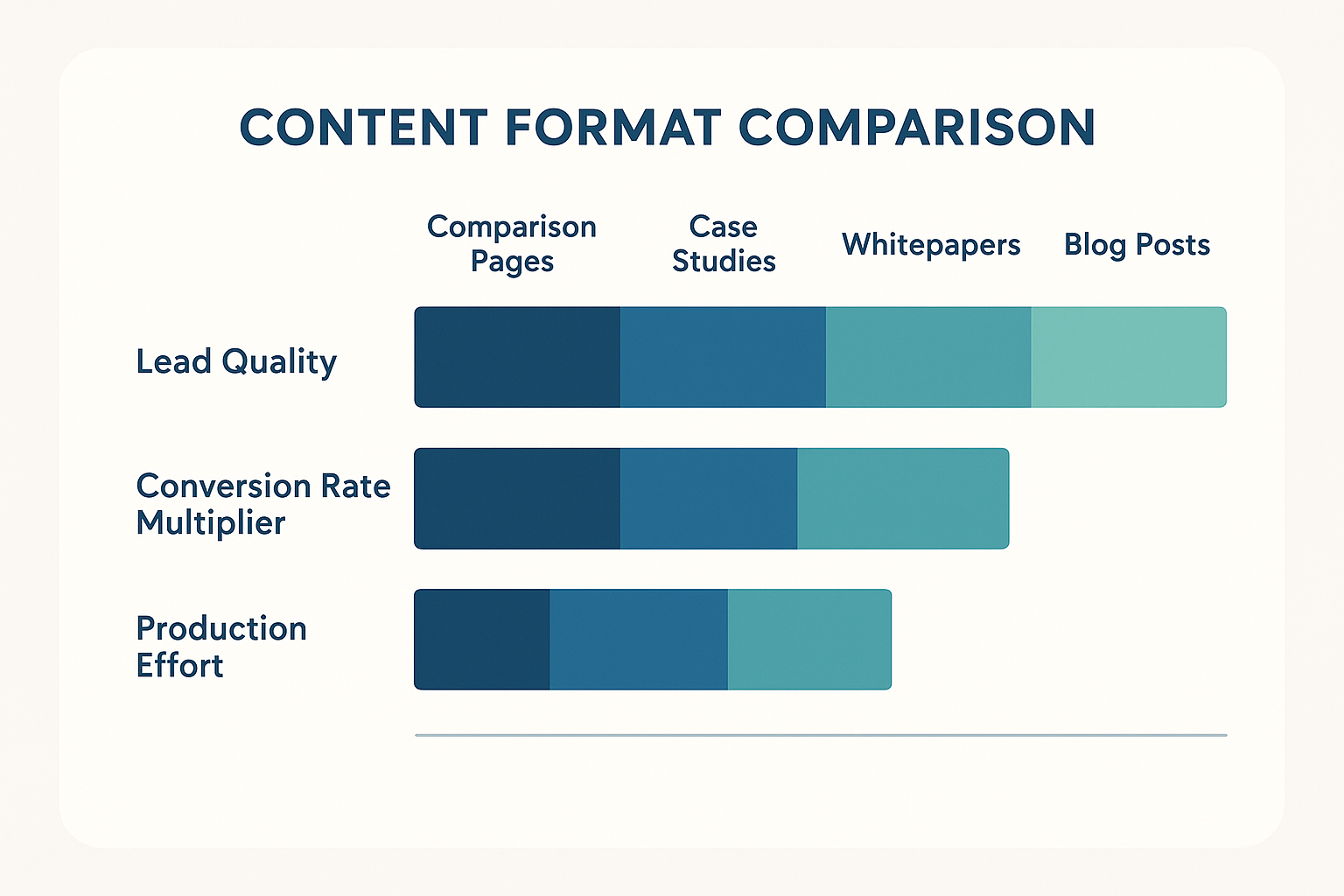
Comparison pages — content that compares your solution against alternatives — convert at five to ten times the rate of typical blog posts because they capture buyers who are actively evaluating options. For a Pakistani CRM implementation company, a page titled “HubSpot vs Zoho vs Salesforce for Pakistani Businesses in 2026” attracts prospects who are close to making a purchasing decision. These visitors are far more qualified than someone reading a generic “what is CRM” article.
Case studies rank second in lead quality. A Pakistani B2B services company that documents three to five client success stories — with specific metrics like “reduced operational costs by PKR 2.4 million annually” — creates proof points that move prospects from interest to trust. The key is specificity. Vague case studies without measurable outcomes perform no better than marketing brochures.
Whitepapers and industry reports generate the highest-value leads but require more production effort. A 15-page report on digital transformation in Pakistani banking positions the company as a thought leader while capturing contact information from senior decision-makers who download it. For Pakistani companies targeting enterprise clients, the whitepaper investment pays for itself with a single qualified lead because the deal sizes are large enough to absorb higher acquisition costs.
Leadfeeder’s lead generation trends analysis highlights that companies publishing 16 or more blog posts per month generate 67 percent more leads than those publishing fewer than four. Frequency matters less than relevance. For Pakistani B2B companies with limited content resources, two high-quality comparison-focused pieces per month outperform eight generic articles.
How much does B2B lead generation cost for Pakistani businesses?
LinkedIn Lead Gen Form campaigns targeting Pakistani professionals typically cost between PKR 3,000 and PKR 8,000 per lead, depending on the specificity of targeting and industry competitiveness. Technology and financial services leads command the highest cost per lead. Professional services — consulting, legal, accounting — fall in the mid-range. Content marketing leads, generated through organic search and gated content, cost between PKR 1,500 and PKR 4,000 per lead once the content production system is running, but require three to six months of consistent publishing before generating meaningful volume.
The total investment includes three components. The ad spend or content production cost forms the first component. The marketing automation platform cost — HubSpot Starter at approximately PKR 25,000 per month or ActiveCampaign at approximately PKR 15,000 per month — forms the second. The internal team or agency time dedicated to lead management forms the third. For a Pakistani B2B company starting from zero, a realistic monthly budget for a basic lead generation system — LinkedIn ads, one piece of gated content per month, email nurturing sequences — falls between PKR 150,000 and PKR 300,000 including all three components.
The calculation that matters is not cost per lead but cost per qualified opportunity. If 100 LinkedIn leads at PKR 5,000 each (total: PKR 500,000) produce 14 qualified opportunities at a 14.6 percent conversion rate, and 3 of those opportunities close at an average contract value of PKR 1 million, the return is PKR 3 million on a PKR 500,000 investment. The pipeline math works when the average deal size justifies the cost per lead, which means Pakistani B2B companies selling contracts below PKR 200,000 should focus on content marketing rather than paid LinkedIn campaigns to keep acquisition costs proportional to deal value.
Search Engine Journal’s analysis of the High CPC Paradox makes a point that applies directly to B2B lead generation: expensive leads from high-intent sources are not waste. Paying PKR 8,000 for a lead from a decision-maker who downloads your benchmark report and requests a demo call is a better investment than paying PKR 1,500 for a lead from someone who clicked a generic ad with no specific intent.
What is the difference between a marketing qualified lead and a sales qualified lead?
A marketing qualified lead (MQL) is a contact who has engaged with your marketing in a way that suggests potential interest but has not yet been vetted by a salesperson. An MQL might have downloaded a whitepaper, attended a webinar, or filled out a contact form. The qualification criteria should be explicit: for a Pakistani IT services company, an MQL might be defined as “a contact with a director-level or above title at a company with 50 or more employees in Pakistan who downloaded a resource in the past 30 days.”
A sales qualified lead (SQL) is a contact who has been confirmed by the sales team as a genuine opportunity. The SQL criteria typically include budget confirmation, a defined need, a timeline for decision, and authority to purchase. The handoff from MQL to SQL is where most Pakistani B2B companies break down — marketing hands over unfiltered lists of leads, sales dismisses them as low quality, and the two teams blame each other for poor results.
The fix is a shared lead scoring model. Assign point values to specific behaviors and attributes: 10 points for downloading a comparison guide, 20 points for visiting the pricing page, 15 points for a director-level job title, minus 5 points for a student or job-seeker title. Set a threshold — typically 50 to 70 points — that determines when a lead graduates from MQL to SQL and gets routed to the sales team. This system removes subjectivity from the handoff and ensures sales receives leads that meet agreed-upon criteria rather than marketing’s entire contact list.
LinkedIn data shows 6.1 average touchpoints before a B2B purchase decision, which means a lead who downloads one whitepaper is not ready for a sales call. They need nurturing — additional content, follow-up emails, retargeting ads — before they accumulate enough engagement signals to qualify as an SQL.
How do Pakistani B2B companies build a lead nurturing system?
How we helped a Pakistani business achieve measurable results.
A lead nurturing system delivers relevant content to prospects over time, moving them from initial awareness toward a purchase decision. The system operates through three channels: email sequences, LinkedIn retargeting, and website personalization.
Start here. Build a five-email welcome sequence for every new lead. Email one: acknowledge the download and deliver the resource. Email two, day three: share a case study relevant to the lead’s industry. Email three, day seven: offer a comparison guide or benchmark report. Email four, day 14: invite the lead to a 15-minute consultation call. Email five, day 21: share a client testimonial with specific results and a direct booking link. This sequence handles the majority of leads automatically, freeing the sales team to focus on qualified opportunities rather than cold outreach to every new contact.
Connect the email platform to your CRM so that lead behavior — email opens, link clicks, page visits — updates the lead score in real time. When a lead crosses the SQL threshold, trigger an internal notification that routes the lead to the appropriate salesperson. This is the pipeline automation that replaces manual lead tracking in spreadsheets, which is how most Pakistani B2B companies currently manage their pipeline.
SEMrush’s traffic channel analysis confirms that AI-driven search is reshaping how B2B buyers discover vendors, making owned channels like email lists and LinkedIn audiences more valuable as organic traffic patterns shift. Pakistani B2B companies that build email nurturing sequences now create an owned distribution channel that operates independently of search engine algorithm changes.
WeProms Digital, Pakistan’s leading B2B lead generation agency, builds systematic lead generation pipelines for Pakistani service businesses that produce qualified sales opportunities on a predictable basis. From LinkedIn campaign setup and content strategy to CRM integration and automated nurturing sequences, we handle the infrastructure so your sales team focuses on closing deals instead of chasing cold leads. Reach us at hello@weproms.com, message us on WhatsApp, or visit our contact page to discuss building your pipeline.
Frequently Asked Questions
How long does it take to see results from B2B lead generation in Pakistan?
LinkedIn Lead Gen Form campaigns can produce leads within the first week of launching. Content marketing takes three to six months of consistent publishing before generating meaningful organic lead volume. A realistic timeline: month one produces data and initial leads, month three produces a repeatable pattern, month six produces a predictable pipeline that the sales team relies on for quota attainment.
What CRM should Pakistani B2B companies use for lead management?
HubSpot and ActiveCampaign are the two most common choices for Pakistani B2B companies. HubSpot offers a free tier that handles basic contact management and email sequences, with paid tiers starting at approximately PKR 25,000 per month for marketing automation features. ActiveCampaign costs less at approximately PKR 15,000 per month and offers stronger automation features at the entry price point. Both integrate with LinkedIn Lead Gen Forms and support lead scoring, which means the choice comes down to budget and the complexity of your nurturing workflows.
Sources & References
- LinkedIn Marketing Solutions — Lead Gen Forms — Updated 2026
- DataReportal — Digital 2026 Pakistan — March 2026
- Digital Applied — LinkedIn Statistics 2026 for B2B Marketing — 2026
- Digital Applied — Content Marketing Statistics 2026 — 2026
- ZenABM — LinkedIn Ads Benchmarks — 2026
- Leadfeeder — Lead Generation Trends — 2026
- SEMrush — How AI is Reshaping Traffic Channels — April 2026
- Search Engine Journal — The High CPC Paradox — April 2026
Additional reading from industry feeds: