Meta’s Advantage+ Shopping Campaigns promise 12 to 15 percent lower cost-per-acquisition and 23 percent higher return on ad spend compared to manual campaign setups, according to performance data aggregated by Triple Whale and Syntermedia across 35,000 brands in 2025. Those numbers are real — for accounts with clean conversion data flowing back into Meta’s algorithm. Pakistani ecommerce stores almost never have clean conversion data. The teardown is straightforward: the AI itself performs as advertised. The data pipeline feeding it does not.
The pattern is consistent across Shopify and WooCommerce stores in Lahore, Karachi, and Islamabad. An operator enables Advantage+ Shopping, sets a budget, and watches the dashboard report improving cost-per-result for two to three weeks. Then the numbers plateau or reverse. The reported conversions keep climbing. Confirmed revenue does not match. Most teams miss this divergence because Meta’s reporting interface makes the metrics look healthy. The algorithm optimized — but it optimized toward the wrong outcome.
What this gets right
Advantage+ Shopping Campaigns consolidate what previously required six to ten separate ad sets into a single AI-driven campaign. The system tests audiences, placements, creative formats, and delivery windows simultaneously. It expands targeting beyond manual constraints by exploring segments the operator would never select independently. The machine learning infrastructure is mature, according to Digital Applied’s 2026 social media statistics report.
For stores with proper Conversions API and accurate purchase data, the uplift is documented and repeatable. A 23 percent ROAS improvement at comparable CPA represents genuine efficiency. The system identifies high-value segments through purchase history and lookalike modeling faster than any manual builder. Creative rotation happens automatically. Budget allocation across Facebook, Instagram, Messenger, and Audience Network shifts on real-time signals. Meta captured 68.31 percent of global ecommerce advertising budgets in 2026 for a reason: the automation works when the data works.
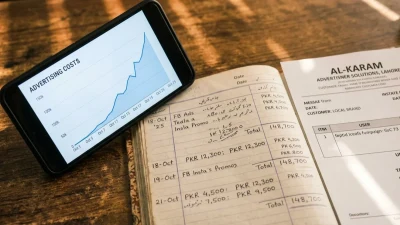
The cost pressure is real and accelerating. Median CPM across Meta platforms reached $13.48 in 2025, up 20.03 percent year-over-year, with every industry facing increases between 8 and 38 percent according to Triple Whale’s benchmark analysis. Pakistani advertisers face the same increases at lower absolute budgets. A Karachi apparel store spending PKR 150,000 monthly on Meta ads now needs approximately PKR 180,000 to maintain equivalent reach. Advantage+ mitigates this by extracting more conversion value per rupee — but only when the conversion signal is accurate.
Advantage+ detects creative fatigue automatically and recommends new assets. Video campaigns outperform static ads by 34 to 48 percent in conversion rate. These optimizations represent genuine value for Pakistani teams running lean.
Where this breaks
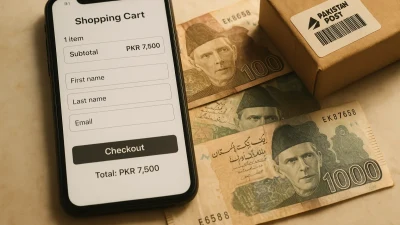
The breakdown starts at the point of sale. Pakistani ecommerce runs on cash-on-delivery. Customers place orders online, often through WhatsApp or a Shopify storefront, then pay when the delivery rider arrives. Rejection rates on COD orders range from 30 to 50 percent depending on category and city. Meta’s Advantage+ algorithm counts the initial “Purchase” event — the online order placement — as a confirmed conversion. The rejection happens days later, offline, with no signal traveling back to Meta’s optimization engine. The AI learns to optimize for order volume rather than confirmed revenue. Every optimization cycle compounds this error.
The Conversions API fix exists in theory. A store can send a delayed “Purchase” event after delivery confirmation, with hashed customer data, overwriting the premature conversion signal. In practice, this requires building an integration between the order management system, the delivery logistics platform, and Meta’s server-side endpoint. Most Pakistani Shopify stores use the native Facebook Sales Channel, which fires CAPI for the initial order but has no mechanism for post-delivery confirmation. WooCommerce stores face the same limitation. The infrastructure for closing the feedback loop does not exist in standard Pakistani ecommerce setups.
JazzCash and EasyPaisa create a second tracking gap. These local payment methods operate through third-party redirect flows. The customer leaves the Shopify domain, completes payment on the JazzCash app or EasyPaisa portal, and returns. Browser-based tracking loses the session during this redirect. Without CAPI sending the purchase event directly from the server, Meta registers the click but misses the conversion. The algorithm learns that these traffic sources do not convert and reduces delivery toward audiences generating JazzCash or EasyPaisa payments — precisely the audiences most likely to complete a purchase because they represent committed, verified Pakistani buyers.
WhatsApp commerce introduces a third distortion. Click-to-WhatsApp campaigns are common for Pakistani businesses because the platform dominates local communication. The Meta Pixel fires a “Contact” event when a user opens the chat. The operator configures this as a conversion. The AI optimizes toward generating more conversations. But tracking stops at chat initiation. What happens inside WhatsApp — whether the lead qualifies, negotiates, places an order, or ghosts — remains invisible to Meta’s optimization engine. Ad blockers compound the problem. Approximately 30 percent of Pakistani users run ad-blocking extensions, according to ATNR Co’s conversion tracking analysis for Pakistani businesses, reducing browser-side Pixel capture to 50 to 70 percent of actual behavior.
The combination creates a specific pathology. Advantage+ optimizes aggressively for events it can measure: initial order placements, WhatsApp chat opens, landing page views. Events it cannot measure — COD confirmations, JazzCash completions, post-chat WhatsApp sales — are what actually generate revenue. The algorithm becomes efficient at generating low-cost interactions that never translate to confirmed income.
Dashboard metrics improve.
Bank deposits stagnate.
Pricing pressure compounds the problem. With CPMs rising year-over-year, Pakistani advertisers compete against international brands with cleaner data pipelines for the same auction inventory. The cleaner data account wins more auctions at lower cost because the AI identifies high-value impressions with greater precision. The Pakistani operator pays a data quality penalty on top of rising costs.
The Event Match Quality score in Meta Events Manager quantifies this gap. A score above 6 indicates reliable matching between server-side events and Meta user accounts. Pakistani stores sending minimal hashed customer data typically score 3 to 5. Stores in richer data markets score 7 to 9. Advantage+ allocates budget with less confidence for low-scoring accounts — higher costs and slower optimization follow. The fix requires sending more customer parameters — email, phone, name, IP address — with every CAPI event.
Daraz listings add another layer. Pakistani brands advertising on Daraz cannot install Meta Pixel on the marketplace. Attribution relies entirely on Daraz Seller Center reports. A brand running Meta ads to drive traffic to both Shopify and Daraz cannot measure cross-platform performance in a single view.
The Advantage+ algorithm sees only Shopify data. Daraz revenue remains invisible. Budget allocation between channels becomes guesswork.
Frequently Asked Questions
Book a free strategy call - we'll audit your current setup and identify the highest-impact fixes.
Should Pakistani ecommerce stores use Advantage+ Shopping Campaigns at all?
Yes, but not as a default. Enable Advantage+ only after implementing Conversions API with server-side purchase events and a mechanism to send confirmed-delivery data back to Meta. Without this, the AI optimizes toward phantom conversions. Start with manual campaigns using detailed targeting, measure actual revenue attribution for 30 days, then migrate to Advantage+ with the data pipeline in place.
How does cash-on-delivery break Meta’s AI optimization?
COD generates a premature purchase event at order placement. The rejection happens offline days later. Meta counts the initial order as a confirmed conversion and optimizes toward generating more orders — not more confirmed deliveries. The fix is sending a delayed CAPI purchase event with updated value after delivery confirmation, using hashed customer data to match the original click. Standard Shopify setups lack this mechanism entirely.
What does Conversions API cost to set up for a Pakistani Shopify store?
The native Shopify Facebook Sales Channel includes CAPI at no additional cost for purchase events. However, standard setup only fires at order placement, not delivery confirmation. Building a post-delivery CAPI integration requires developer time — typically PKR 30,000 to 80,000 depending on the order management system and delivery partner API complexity. The investment recovers through improved ad efficiency within one to two months for stores spending above PKR 100,000 monthly.
Why do JazzCash and EasyPaisa payments break Meta Pixel tracking?
These payment methods redirect users to a third-party domain during checkout. The browser session breaks during the redirect, and the Meta Pixel loses the connection between the original ad click and the completed purchase. Server-side tracking through CAPI bypasses the browser entirely, sending purchase data directly from the store’s server to Meta’s API regardless of payment method.