

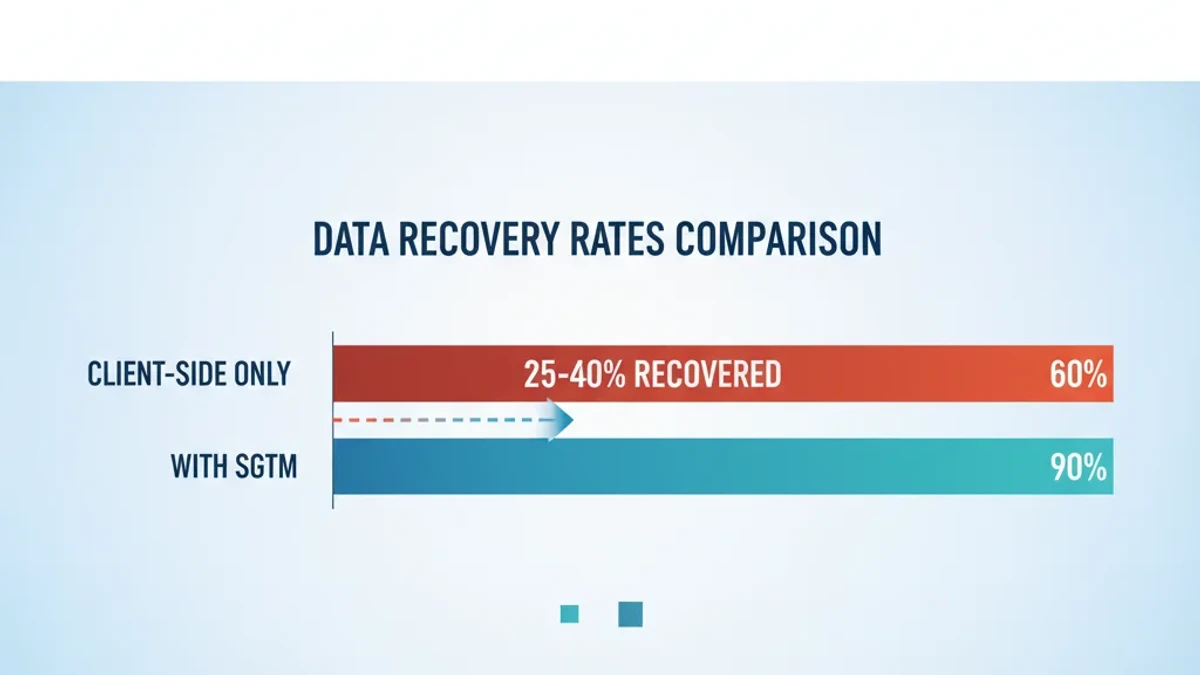
Server-side Google Tag Manager is now the default configuration for new GTM containers as of 2026. Google introduced AI-powered tag recommendations alongside the change, signaling that client-side tracking alone is no longer considered sufficient for any serious measurement operation. The reasoning is sound: client-side tracking misses up to 40 percent of conversions due to ad blockers, Safari’s Intelligent Tracking Prevention, and browser-level cookie restrictions, according to data compiled by Cometly’s conversion tracking analysis. Server-side tracking recovers 25 to 40 percent of those lost events by routing data through a first-party server endpoint that ad blockers cannot detect.
Here is the part most Pakistani ecommerce operators discover months after deployment: the default sGTM configuration fixes one set of problems while silently introducing another. The dashboard looks healthier. The optimization loop feeding ad platforms is not.
This teardown examines the standard server-side GTM setup as deployed by most agencies for Shopify and WooCommerce stores in Lahore, Karachi, and Islamabad — what the configuration actually achieves, and where it creates new failure modes that corrupt Meta Conversions API signals, Google Ads Smart Bidding data, and GA4 revenue attribution.
What this gets right
The core architectural improvement is real and documented. Moving event transmission from the browser to a server container eliminates the most common data loss vectors in Pakistani ecommerce environments.
Ad blockers affect approximately 30 to 40 percent of Pakistani browsing sessions, according to conversion tracking analysis by ATNR Co. Server-side tracking bypasses these entirely because requests originate from the store’s own subdomain — typically data.yourstore.com — rather than from identifiable third-party analytics domains. The ad blocker sees a first-party request and lets it through.
Page performance improves measurably. A standard client-side GTM container running GA4, Meta Pixel, Google Ads conversion tracking, and TikTok Pixel fires four to six separate JavaScript payloads on every page load. Each one executes in the browser, competing for main-thread attention with Shopify’s theme code, product image rendering, and checkout logic. Server-side consolidation reduces this to a single lightweight request from the browser to the server container. The server then fans out to each destination independently. Core Web Vitals metrics — Largest Contentful Paint and Total Blocking Time in particular — typically improve by 15 to 25 percent after migration, based on benchmarks published by iubenda’s server-side tracking guide.
The data control layer matters for businesses handling customer information. Server-side tracking allows hashing, filtering, and enriching event data before forwarding it to ad platforms. Pakistani stores collecting phone numbers and email addresses for JazzCash and EasyPaisa verification can hash these parameters server-side before sending them to Meta’s Conversions API, improving Event Match Quality scores without exposing raw customer data to third-party scripts.
Meta developed the Conversions API after discovering approximately 15 percent underreporting of iOS web conversions, according to Littledata’s CAPI documentation. For Pakistani stores running hybrid setups — Meta Pixel client-side and CAPI server-side — the data recovery is genuine. Brands using privacy-first measurement approaches report 21 percent higher return on ad spend compared to those relying on browser-only tracking, according to Digital Applied’s 2026 mobile marketing statistics.
The cost structure is manageable. Managed sGTM hosting providers like Stape and TAGGRS offer plans starting at roughly PKR 3,000 to 8,000 monthly. Google Cloud Run direct deployments cost more but provide full control. Either option represents a fraction of what most Pakistani ecommerce stores spend on Meta ads monthly.
Where this breaks
The failure modes are specific, measurable, and almost invisible to operators monitoring only dashboard metrics.
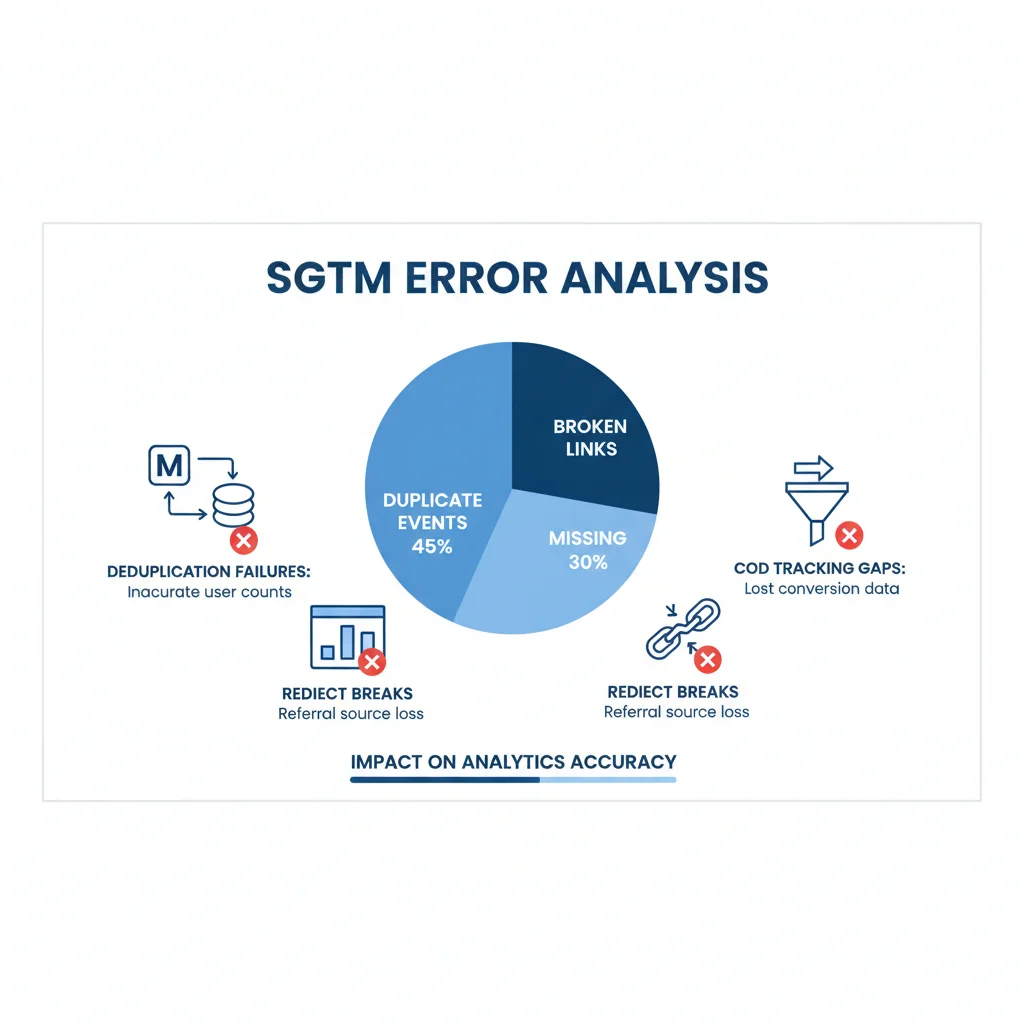
Event deduplication gaps. The recommended Meta setup runs both the browser Pixel and server-side CAPI simultaneously. This hybrid approach maximizes data capture. It also generates duplicate events unless deduplication is configured precisely. Each matching event — client-side Purchase and server-side Purchase — requires an identical event_id parameter. Without this shared identifier, Meta counts the same purchase twice. ROAS inflates. The algorithm overallocates budget toward audiences generating duplicated conversions rather than genuine ones.
The default Shopify Facebook Sales Channel fires the Pixel automatically. When an agency adds sGTM-based CAPI on top, the two systems generate independent Purchase events with no coordination. One documented case in Virtina’s ecommerce tracking analysis showed a backend recording 1,000 orders while Google Ads reported 640 and Meta reported 580 — a data accuracy gap that had drifted unnoticed for months. The store’s ad platforms were optimizing on numbers that bore no relationship to actual revenue.
Most Pakistani agencies deploy sGTM without implementing event_id deduplication because the default GTM templates do not include it. The fix requires mapping the Shopify order ID or WooCommerce transaction ID to the event_id parameter on both the client-side and server-side Purchase events. This is a manual configuration step that adds 30 minutes to setup but prevents compounding data corruption over the entire life of the account.
JazzCash and EasyPaisa redirect breaks. These payment methods redirect customers to a third-party domain during checkout. The browser session breaks at the redirect point. In a client-side-only setup, this means the Meta Pixel never fires the Purchase event. Server-side tracking fixes this partially — the server receives the order data and fires the event regardless of browser state.
But the standard sGTM configuration only fires events when the Shopify webhook confirms the order. JazzCash and EasyPaisa redirects introduce a timing gap. The customer completes payment on the external domain. The payment provider sends a callback to Shopify. Shopify processes the callback and updates the order status. The webhook fires. The total delay ranges from 5 seconds to 2 minutes depending on the payment provider’s callback speed and Shopify’s webhook queue.
During this delay, Google Ads registers the click but has not yet received the conversion. In accounts running Smart Bidding with short conversion windows, delayed server-side events may fall outside the attribution window entirely. The conversion never links to the click. The algorithm learns that the click did not convert. Bidding efficiency degrades for precisely the audiences most likely to complete a verified payment — customers using digital wallets rather than cash on delivery.
COD confirmation loop stays open. Cash on delivery accounts for 55 to 70 percent of Pakistani ecommerce orders. The standard sGTM setup fires a Purchase event when the order is placed. The delivery confirmation — where actual revenue is verified — happens days later through the logistics partner. This confirmed-delivery signal almost never flows back to the server container.
Meta’s algorithm optimizes toward order placements, not confirmed deliveries. Stores with high COD rejection rates — 30 to 50 percent depending on category and city — report strong Meta ROAS on paper while actual revenue falls short. The gap between reported and real ROAS widens as COD rejection rates increase. Server-side tracking amplifies this problem because it sends the premature Purchase event more reliably than the browser-only Pixel did.
The optimization loop now runs on stronger signals pointing at the wrong outcome. Every recovered conversion that represents an unconfirmed COD order feeds the algorithm a false positive. The machine learns faster — and learns wrong.
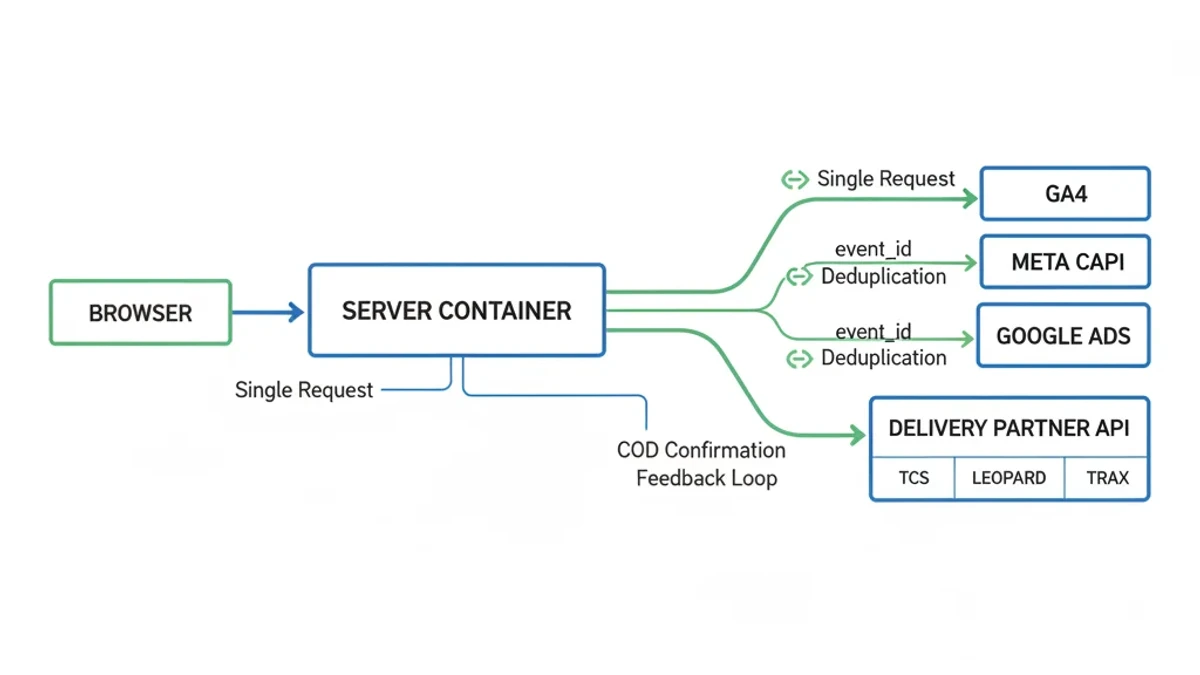
Closing this loop requires building an integration between the delivery partner’s API — Leopard, TCS, Trax — and the sGTM server container. The confirmed delivery triggers a delayed event with updated order value. This is custom development work, typically PKR 40,000 to 80,000 depending on the logistics partner’s API documentation and reliability.
sGTM version drift. Google released sGTM v3.2.0 in September 2025, removing the GA4 client auto-load behavior that v2.x relied on. Pakistani agencies that deployed sGTM before this update and never upgraded the container image are running broken configurations that silently drop events. The GA4 client no longer initializes automatically. Events that appeared to flow correctly during the initial audit stop firing in production. According to TagSpecialist’s sGTM implementation audit, this version drift is the single most common silent failure in 2026 — containers that passed QA on launch day but degraded as Google updated the underlying infrastructure.
Verbose logging costs. Default Cloud Run deployments ship with verbose request logging enabled. For stores processing 10,000 to 50,000 monthly sessions, this adds $50 to $150 monthly in unnecessary logging charges. The logging provides minimal debugging value in production. Most Pakistani operators do not notice because the charge appears in Google Cloud billing rather than the Shopify invoice. Over twelve months, this adds PKR 100,000 to 250,000 in hidden costs — more than the entire tracking infrastructure was supposed to cost.
What the corrected configuration looks like
The fix is not abandoning server-side tracking. The fix is configuring it correctly for Pakistani payment infrastructure rather than deploying the default global template and assuming the job is done.
Event deduplication requires adding the Shopify order ID as event_id on both the client-side Meta Pixel Purchase event and the server-side CAPI Purchase event. In GTM, this means creating a Data Layer variable that reads {{ecommerce.purchase.action_field.id}} and mapping it to the event_id parameter on both tags. Testing with Meta’s Events Manager reveals whether deduplication is working: the Event Match Quality score should stabilize at 6 or above, and the reported Purchase count should match Shopify’s confirmed order count within 5 percent.
JazzCash and EasyPaisa redirect handling requires moving from webhook-based event firing to a checkout completion trigger that fires when Shopify’s order status transitions to “paid” rather than when the order is created. This captures digital wallet payments accurately while excluding unpaid orders from the conversion signal sent to ad platforms.
COD confirmation requires the delivery partner integration described above. At minimum, a weekly batch upload of confirmed deliveries to Google Ads as offline conversions corrects the Smart Bidding optimization over time, even without real-time integration.
Container version management requires checking the sGTM image version quarterly and updating when Google releases new versions. The current production version is v3.2+. Running anything earlier is a known data loss vector.
Verbose logging should be disabled in production Cloud Run deployments unless actively debugging. The setting exists in the Cloud Run console under the container configuration.
Frequently Asked Questions
How much does server-side GTM cost for a Pakistani ecommerce store?
Managed hosting through Stape or TAGGRS runs PKR 3,000 to 8,000 monthly. Direct Google Cloud Run hosting costs PKR 5,000 to 15,000 monthly depending on traffic volume. The hidden cost is configuration — proper deduplication, COD confirmation integration, and JazzCash redirect handling require developer time, typically PKR 40,000 to 80,000 for initial setup. Stores spending above PKR 100,000 monthly on Meta and Google ads recover this within the first month through improved bidding efficiency.
Why does Meta show higher ROAS than actual revenue after enabling sGTM?
The most likely cause is missing event_id deduplication. When both the browser Pixel and server-side CAPI fire Purchase events without a shared identifier, Meta counts the same order twice. Reported ROAS inflates by the duplication rate. Check the Events Manager Purchase count against Shopify’s actual order count. If Meta shows 15 to 25 percent more purchases than Shopify records, deduplication is missing.
Can server-side tracking fix JazzCash and EasyPaisa payment tracking?
Partially. Server-side tracking bypasses the browser redirect that breaks Pixel tracking during JazzCash and EasyPaisa payments. The server fires the event independently. However, the standard configuration fires the event at order creation, not at payment confirmation. For accurate conversion signals, configure the server to fire only when Shopify marks the order status as “paid,” which confirms the wallet payment completed successfully.
What is the biggest sGTM mistake Pakistani agencies make?
Deploying the default template without event_id deduplication on Meta CAPI. The dashboard immediately shows more conversions — which looks like success — while the data is silently corrupted by duplicate events. The algorithm optimizes on inflated numbers. The fix takes 30 minutes but prevents data corruption for the entire life of the ad account.
Sources & References
- Cometly — Server-Side Conversion Tracking Benefits — 2026
- Digital Applied — Mobile Marketing Statistics 2026 Data Points — 2026
- Virtina — Server-Side Tracking for Ecommerce — 2026
- TagSpecialist — Server-Side GTM Implementation Audit — 2026
- Littledata — Meta CAPI FAQ and Documentation — 2026
- iubenda — A Simple Guide to Server-Side Tracking — 2026
- Analytics Mania — Facebook Conversions API for Shopify — 2026