
By Hamza Ali | May 15, 2026
Imagine a Lahore ecommerce store comparing its Google Ads dashboard, GA4 reports and Shopify orders. Each shows a different total. The owner wants to increase the advertising budget, but cannot tell which report deserves their confidence.
That gap deserves investigation, but it does not automatically mean tracking is broken. Reports may cover different channels, credit different interactions or use different definitions of a completed sale. Missing events and duplicate tags can widen the gap further.
Meixner Consulting’s server-side tracking guide discusses browser-related measurement losses, but its estimates should not become a benchmark for every Pakistani business. Your actual gap depends on your implementation, audience and consent settings. Missing conversion data also cannot be translated directly into an equivalent percentage of wasted spend.
Here’s the thing. Google’s Smart Bidding uses conversion signals to guide bids. If the actions selected for bidding reward duplicate purchases or weak enquiries, campaign performance becomes harder to judge. Before blaming the ads, check what your account treats as success.
The double-counting trap that inflates your numbers
Duplicate measurement can happen when a business tracks the same purchase through a native Google Ads tag and a GA4-based conversion action. Having both actions is not automatically an error. The problem is allowing both to represent the same outcome in the campaign’s bidding goals.
North Country Growth’s conversion tracking guide discusses tracking configuration, but its audit findings should not be treated as a representative estimate for Pakistani accounts. Check your own conversion actions before assuming the problem applies.
Google distinguishes between primary actions used for bidding under the selected standard goal and secondary actions used for observation. Its primary and secondary conversion guidance also identifies an important exception: actions included in a custom goal can be used for bidding even when marked secondary.
Audit the campaign’s selected goals as well as the individual conversion actions. A label alone does not tell you what the campaign optimises towards.
Open your Google Ads conversion actions and identify those measuring the same business outcome. Choose the validated action you want to use for bidding; retain the other as secondary if useful for comparison, and check custom goals. There is no universal reason to prefer the GA4 import over the native tag. Validate coverage, values and reliability before choosing.
Where your conversions disappear
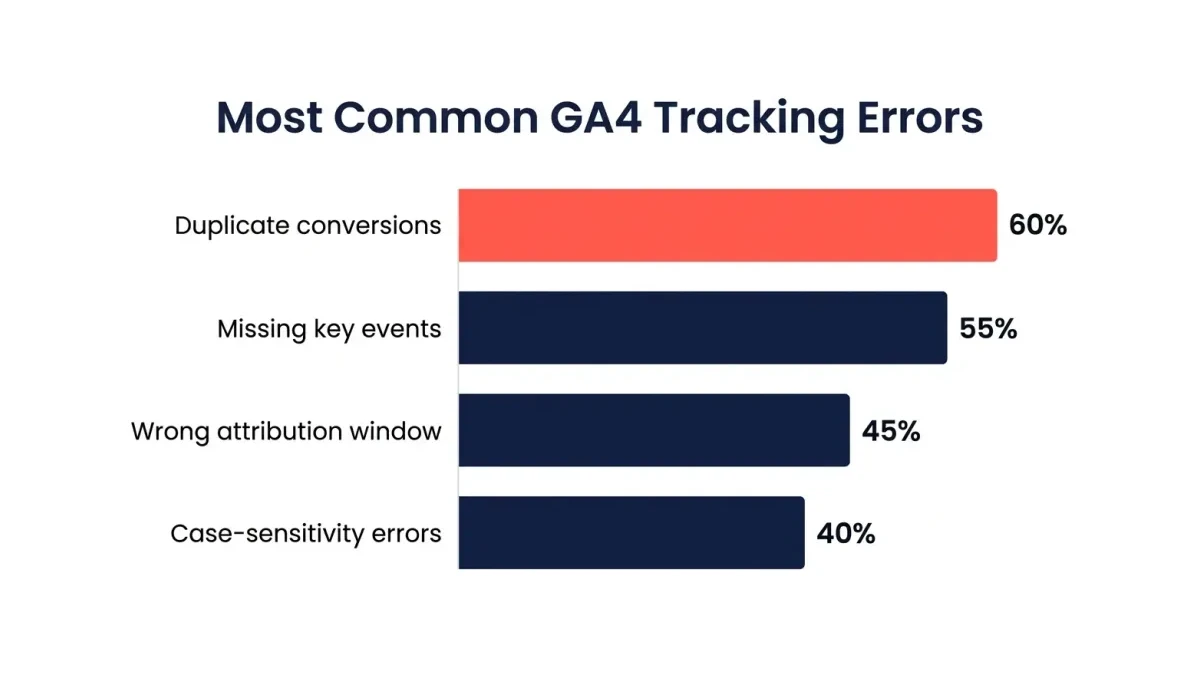
Browser restrictions, blocked tags and consent choices can limit measurement. Configuration errors can also prevent important actions from reaching GA4. The size of either problem needs to be measured for your website; a generic recovery percentage cannot diagnose it.
Start with the customer journey. Does the form record a successful submission, or merely a click on the submit button? Does the purchase event reflect an accepted order, or a checkout page opening? A property collecting page views may still miss the actions that matter commercially.
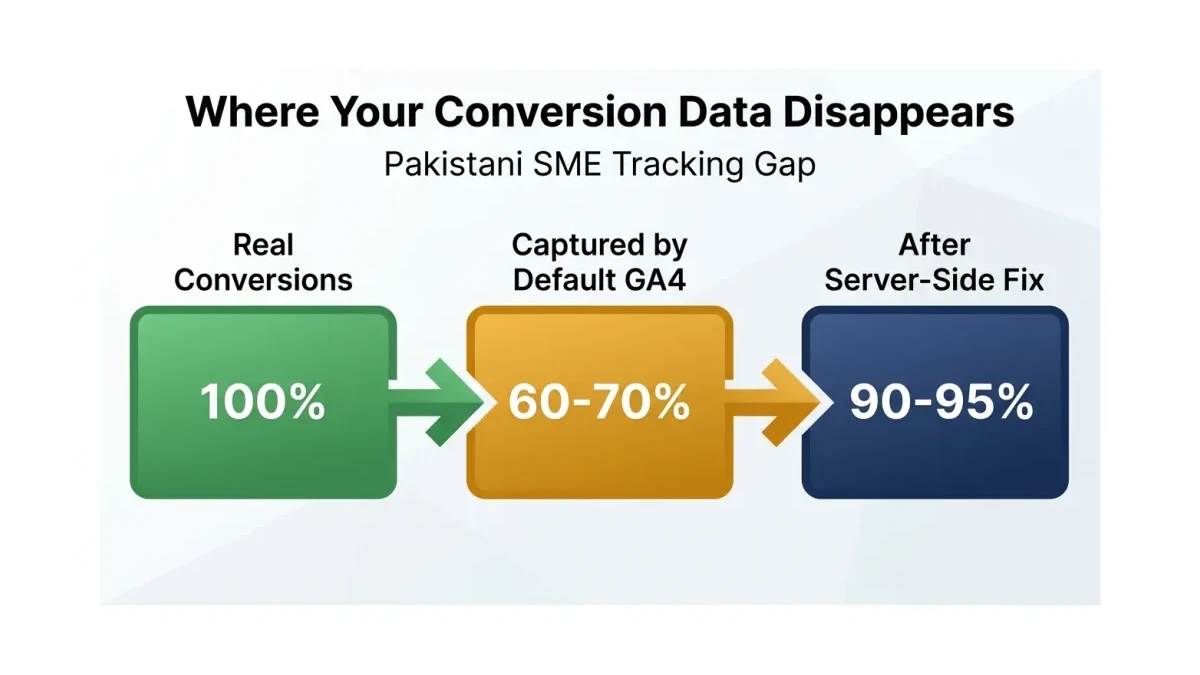
Cometly’s troubleshooting guide discusses common event configuration problems. Google’s event naming rules confirm that names are case-sensitive: Purchase and purchase are distinct events. The incorrectly named event may still be collected, but it will not automatically behave like the intended recommended event.
The Pakistan-specific wrinkle is WhatsApp. A visitor can leave your website, continue a conversation in the app and place an order later. Tracking the website’s WhatsApp button measures the hand-off, not the conversation or completed sale. Keep that distinction visible when reporting leads and revenue.
Use call tracking and offline conversion integration to connect qualifying outcomes where your systems support it. Your sales team still needs a consistent way to record whether an enquiry became an accepted order. Otherwise, an increase in button clicks can look like business growth while completed sales remain flat.
The attribution setting that feeds bad data to Smart Bidding
Attribution determines how recorded outcomes receive channel credit. It cannot recover an event that was never collected, and changing a reporting model does not automatically change every Google Ads bidding setting.
Google’s attribution settings documentation distinguishes key-event reporting settings from conversion settings used for advertising measurement and optimisation. Review the reporting model, eligible channels and relevant windows separately before changing your Google Ads budget allocation.
For a Pakistani business advertising across Search, Meta and YouTube, the same customer may interact with several campaigns before ordering. Reports can distribute credit differently because they observe different interactions or apply different attribution rules. That difference is not, by itself, evidence that a channel has stolen credit.
Agree which business outcome you are measuring before debating which channel should receive credit for it.
Review the settings against your sales cycle. A property developer whose enquiries take time to mature needs to account for that delay when judging campaigns. A clothing store should likewise use its observed purchase journey, rather than copying an industry-wide window recommendation. Record the settings and change history so that a reporting change is not mistaken for a sudden improvement in marketing performance.
Why your GA4 and ad platform numbers never match
The useful question is not simply why the totals differ. It is whether you are comparing the same outcome, channel scope, reporting period and measurement settings.
GA4’s standard reports use key events for important actions. Google Ads conversions based on Analytics events can also appear in GA4’s Advertising section. Google’s key-event documentation explains this distinction and how shared conversions support consistent measurement. A purchase key-event total across all traffic is not interchangeable with a campaign’s attributed conversion total.
Avoid assuming every advertising report counts only clicks, or that every Meta report includes the same view-through settings. Inspect the conversion and attribution settings behind the particular report. Different scopes can explain a discrepancy without any tag being broken.
Use marketing measurement and reconciliation to compare like with like. Separate website purchases from marketplace sales and offline orders unless those outcomes are deliberately integrated. Also distinguish orders placed from paid, fulfilled, cancelled and refunded orders. This matters particularly when cash-on-delivery orders can change status after checkout.
There is no universal acceptable discrepancy percentage. Keep a consistent comparison, investigate unexplained changes and use your order or CRM records to establish what the business actually sold.
The quick checks that catch common errors
Start with these checks before commissioning a larger implementation. You can review the reports yourself, although fixing tags or integrations may require technical help. Keep notes on the event, report and business record behind each mismatch.
-
Compare equivalent purchases. Pull completed website orders for a consistent period and compare them with the corresponding GA4 purchase data. Exclude unrelated marketplace and offline sales. Check order status, reporting dates and available transaction references before treating a gap as missing tracking.
-
Audit your Google Ads conversion actions. Identify actions measuring the same outcome. Check which are primary, which goals campaigns use and whether custom goals include duplicates. Keep the validated bidding signal and use a secondary action for observation where appropriate.
-
Verify key events and advertising conversions separately. Confirm that important events are collected and marked as key events. Then verify the linked Google Ads account, conversion creation and bidding configuration. Marking a key event alone does not complete the advertising setup.
-
Check event naming consistency. Compare the names in your implementation with the intended GA4 events.
Purchaseandpurchaseare different. Also check what triggers the event: a correctly named purchase event firing before order confirmation still measures the wrong outcome. -
Test your WhatsApp click tracking. Follow the website journey and inspect the resulting event using your tag-testing tools and GA4 reports. If it is missing, investigate the trigger, consent state and destination property. A delayed or absent Realtime entry alone does not prove that no tracking exists.
-
Review attribution settings. In GA4, navigate to Admin > Data display > Events > Attribution settings for key-event attribution. Review advertising conversion settings separately. Match the measurement approach to your observed sales cycle and document any change before comparing performance across periods.
Read next: Google Ads conversion tracking setup and Google Tag Manager setup services.
Broken measurement makes budget decisions harder. Start with a reliable definition of a purchase or qualified lead, verify how it reaches your reports, and then decide which signal should guide bidding. A polished dashboard cannot compensate for an event that measures the wrong action.
WeProms Digital provides GA4 setup and custom configuration for Pakistani businesses. If you cannot explain the difference between advertising reports and backend orders, an audit can identify which gaps reflect configuration problems and which reflect reporting definitions. Reach us at hello@weproms.com or WhatsApp +92 300 0133399 to discuss your setup.
Frequently Asked Questions
How much does a GA4 audit cost in Pakistan?
Pricing depends on the website, events, advertising accounts and integrations being reviewed. Ask for a scoped quote that distinguishes diagnosis from implementation and validation. Confirm whether ecommerce, WhatsApp enquiries, offline outcomes and server-side tracking are included. An audit should explain the problems and proposed fixes; it should not promise a guaranteed financial return before inspecting the account.
How long does it take to fix GA4 tracking errors?
The timing depends on the cause and access to the relevant systems. Event naming or goal-setting corrections can be straightforward, while checkout integrations and server-side changes require development and testing. Allow time to validate real outcomes after deployment. A tag firing successfully during a test is useful evidence, but it does not establish that every customer journey is covered.
Why do my GA4 numbers not match my Google Ads dashboard?
You may be comparing all-channel key events with advertising conversions, or reports with different settings and scopes. Check the event, channel coverage, reporting period and conversion configuration before comparing totals. Shared Analytics-based conversions can support consistent reporting between Google Ads and GA4’s Advertising section. Reconcile the resulting measurements against equivalent backend records rather than accepting a fixed discrepancy as normal.
Do Pakistani businesses need server-side tracking?
It depends on the measured problem and the value of solving it. Server-side tagging can improve control over how data is processed and sent, but it does not guarantee recovery of missing conversions. Google’s server-side consent guidance shows that tags still need to respect consent signals. Some implementations also rely on browser-collected events. Validate the existing setup before assuming a server container will fix it.
Can WeProms Digital set up GA4 for my Pakistani business?
Yes. WeProms Digital offers GA4 setup and custom configuration for Pakistani businesses across Lahore, Karachi, Islamabad and other cities. The service includes event tracking, conversion setup, attribution configuration and integration with Google Ads. Contact hello@weproms.com or WhatsApp +92 300 0133399 to discuss the outcomes your business needs to measure.
About WeProms Digital
WeProms Digital is an analytics and marketing operations agency headquartered in Lahore, serving Pakistani SMEs, ecommerce brands and B2B teams across Lahore, Karachi, Islamabad, Rawalpindi, Faisalabad and Multan.
The team specialises in GA4 setup and custom configuration, conversion tracking and Google Ads management, helping businesses investigate measurement gaps and improve the data behind advertising decisions.
Get in touch: hello@weproms.com · WhatsApp +92 300 0133399
Sources & References
- Google Ads Help — Primary and secondary conversion actions
- Google Analytics Help — Select attribution settings
- Google Analytics Help — About key events
- Google Analytics Help — Event naming rules
- Google for Developers — Implement consent mode with server-side Tag Manager
Additional reading from industry feeds:
- Meixner Consulting — Server-Side Tracking
- North Country Growth — How to Set Up Google Ads Conversion Tracking Properly
- Cometly — Google Analytics Not Tracking Conversions
- ALM Corporation — GA4 Attribution Model Restructure analysis
- MarTech Series — Businesses Struggle as GA4 Reporting Confusion Grows
- KPMG — Pakistan Banking Perspective
- Jon Loomer Digital — One-Click CAPI Activated, New Meta Ads Features
- Statista — Number of Internet Users in Selected Countries