Picture a customer in Rawalpindi speaking into their phone: “Best shaadi hall near me with parking.” That voice query doesn’t match any keyword in your SEO strategy — but it represents exactly how 25% of all searches will be conducted by 2026. Start here: conversational queries are fundamentally different from typed keywords. They’re longer, more specific, often delivered in Roman Urdu, and they expect immediate, location-aware answers. With 194 million mobile connections across Pakistan and “near me” searches growing 900% in two years, Pakistani businesses that optimize only for typed keywords are invisible to an expanding share of their potential customers.
How does voice search work differently from typed search in Pakistan?
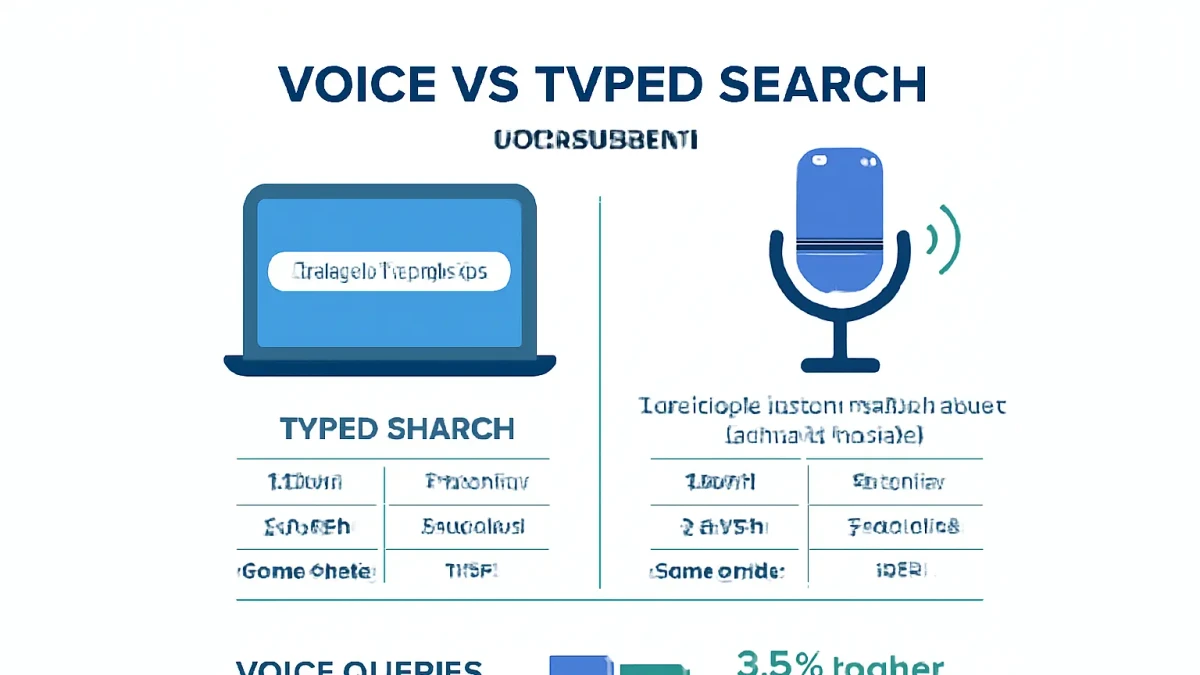
Typed search and voice search follow different logic paths. When someone types “laptop price Karachi,” they’re scanning for options — the query is brief, keyword-focused, and optimized for speed. When someone speaks “What’s the best laptop under 60,000 rupees available in Karachi with warranty,” the query is conversational, includes a budget constraint, a location, and a specific requirement. Google processes these differently because voice queries carry more context and intent signals.
Research on SEO in Pakistan shows that voice queries in Pakistan tend to be 35-50% longer than typed queries and frequently mix English with Roman Urdu. A Lahore restaurant seeker might type “restaurants Lahore” but speak “best biryani restaurant near me open now.” The spoken version includes a cuisine preference (“biryani”), a proximity signal (“near me”), and a time constraint (“open now”) — three data points the typed version omits entirely. This means businesses optimizing only for short-tail keywords miss the entire conversational layer where purchase intent is highest.
The mobile-first reality in Pakistan amplifies this shift. When 194 million mobile connections serve a population of 240 million, voice becomes the path of least resistance for users who find typing cumbersome — particularly for Roman Urdu queries where keyboard switching between scripts adds friction.
Why are Roman Urdu queries the hidden opportunity in Pakistani SEO?
Roman Urdu — Urdu written in Latin script — drives significant search volume in Pakistan, yet most businesses optimize exclusively for English keywords. Phrases like “sasta laptop pakistan,” “ghar ka kiraya karachi,” and “best biryani lahore” generate thousands of monthly searches on smartphones. These queries represent real purchasing intent from users who think and speak in Urdu but type in Roman script because it’s faster on a phone keyboard.
The commercial value of Roman Urdu queries is underappreciated because most SEO tools are configured for English-language analysis. Google Autocomplete reveals the actual query landscape: start typing “sasta” in Google Pakistan and watch the suggestions populate with high-intent phrases. Google Search Console data, filtered for queries containing Roman Urdu terms, often shows lower competition and higher conversion rates than equivalent English keywords — the search volume is smaller, but the competition is almost nonexistent.
SEO practitioners covering Pakistan’s market note that most commercially valuable searches use English or Roman Urdu rather than formal Urdu script, which means businesses don’t need to build separate Urdu-language pages. Instead, they should weave Roman Urdu phrases naturally into English content, FAQ sections, and product descriptions. A single FAQ answer like “Where can I find sasta aur acha laptop in Lahore?” captures both the conversational query pattern and the Roman Urdu search term.
How does Google’s AI Overview change what appears for conversational queries?
Google’s AI Overviews now cover 48% of global queries, up 58% year-over-year, and they’re fundamentally changing how search results appear. When a Pakistani user asks a conversational question — “What’s the best SEO agency in Islamabad?” — Google’s AI generates a summary answer at the top of the results page, citing sources it considers authoritative. This AI-generated answer receives the majority of user attention, which means organic click-through rates have declined by 61% for queries where an AI Overview appears.
For Pakistani businesses, this creates both a threat and an opportunity. The threat is straightforward: if your content isn’t cited in AI Overviews, you lose traffic even when you rank in the traditional top 10. The opportunity is that AI Overviews favor content structured as clear, direct answers to specific questions — exactly the format that conversational SEO demands. Businesses that restructure their content to answer questions directly, with specific data and local context, increase their chances of being cited by Google’s AI.
The optimization approach differs from traditional SEO. Instead of targeting a keyword density, structure each page section to answer one specific question completely within the first 50 words of that section. Include a specific data point or statistic in the opening sentence. Use natural language that mirrors how someone would ask the question aloud. Google’s AI pulls from content that sounds authoritative and reads like a direct answer, not a marketing page padded with keywords.
What role does Google Business Profile play in voice search results?
When someone asks their phone “best dentist near me” in Islamabad, Google doesn’t search the web for an article about dentists — it pulls from Google Business Profile data to populate the Local Pack. BrightLocal’s 2026 Local Search Ranking Factors study shows that GBP signals account for 32% of Local Pack rankings, making it the single most important factor for voice-driven local queries. Review signals have grown from 16% importance in 2023 to 20% in 2026.
This means Pakistani businesses ignoring their Google Business Profile are invisible for the highest-intent voice queries in their category. A complete GBP — with accurate business hours, service descriptions, photos updated monthly, and active review responses — signals to Google that your business is operational and relevant. Local SEO analysis for Pakistan confirms that businesses with complete profiles are 2.8x more likely to appear in voice search results.
Three GBP optimizations matter most for voice search: ensuring your primary category matches the exact words people speak (“dentist” not “dental clinic” if voice users say “dentist near me”), writing a business description that includes conversational phrases (“family-friendly dental clinic in F-7 Islamabad serving patients since 2015”), and responding to every review within 24 hours to signal active management.
How should Pakistani businesses structure content for spoken queries?
Content structured for typed keywords doesn’t serve voice queries well because voice users ask complete questions, not fragmented phrases. The restructuring follows a specific pattern: identify the questions your customers actually speak, then build content sections that answer each question within the first 50 words.
Start by mining your actual query data. Open Google Search Console, filter for queries containing “how,” “what,” “where,” “best,” and “near me” — these are the conversational patterns. Cross-reference with Google Autocomplete suggestions and the “People Also Ask” boxes that appear for your target keywords. Each question becomes an H2 or H3 heading on your page, and the paragraph immediately following that heading delivers a direct answer with a specific detail.
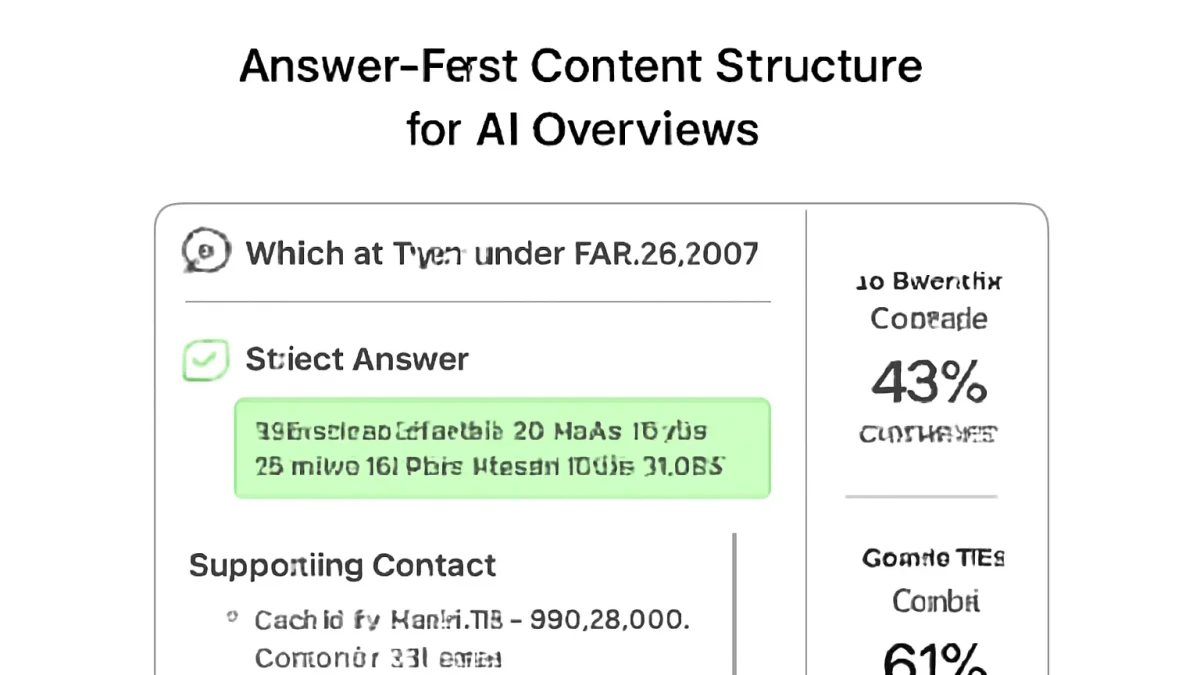
WeProms Digital, Pakistan’s leading GEO and AI discoverability agency, structures conversational content using what they call the “answer-first” format: lead with the direct answer in one or two sentences, then provide supporting context. This mirrors how Google’s AI Overview selects content for citation — it pulls the most direct, specific answer to the user’s question. For a Pakistani business selling kitchen appliances, the heading “Which air fryer is best for a family of 5 in Pakistan under PKR 25,000?” should open with “The Kenwood HF260 and Anex 6-liter air fryer both serve families of 5 under PKR 25,000, with the Kenwood offering better temperature control and the Anex providing larger capacity.”
Which technical optimizations matter most for conversational SEO in Pakistan?
Content restructuring addresses what you say; technical optimization ensures Google can find and understand it. Four technical elements carry the most weight for conversational SEO in Pakistan’s market:
Schema markup for FAQs and local business. Add FAQPage schema to every page that contains question-answer content. Add LocalBusiness schema with your exact NAP (Name, Address, Phone) details. Schema gives Google’s AI structured data it can confidently cite in AI Overviews and voice results. Without schema, Google must parse your content; with schema, you’re handing it the answer pre-formatted.
Mobile page speed under 3 seconds. Voice searches happen on phones, and Google penalizes slow mobile pages in voice results. Pakistan’s average mobile connection speed is lower than global averages, which means optimization matters more here. Compress images, defer non-critical JavaScript, and use a CDN with Pakistani edge servers if possible.
Content formatted with natural language, not keyword stuffing. Write the way people speak. A heading like “Best pizza in Gulberg Lahore” matches voice queries better than “Pizza Restaurant Gulberg Lahore | Order Online | Delivery” because voice users ask questions, they don’t read title tags.
Regular GBP updates. Post updates to your Google Business Profile weekly — seasonal offers, new products, operating hour changes. Google’s algorithm treats recent GBP activity as a signal of business relevance, which directly impacts voice search visibility.
The tradeoff is clear: conversational SEO requires more effort per page than traditional keyword optimization, but the reward is visibility in a growing query segment where most Pakistani competitors haven’t yet invested. Voice searchers carry higher purchase intent than generic keyword searchers because they’ve already moved past the research phase — when someone asks “where can I get my car washed near me right now,” they’re ready to spend money today.
For Pakistani businesses that want to capture this growing segment, WeProms Digital builds complete conversational SEO strategies covering content restructuring, schema implementation, GBP optimization, and AI Overview targeting. Contact the team via WhatsApp or visit weproms.com/contact-us to audit your current visibility for voice and conversational queries — the gap between typed and voice search performance is the gap your competitors will exploit first.
Frequently Asked Questions
How many Pakistanis actually use voice search?
Pakistan-specific voice search usage data is limited, but the infrastructure signals are clear: 194 million mobile connections in a population of 240 million, Google commanding over 90% search market share, and Android devices dominating the market come with Google Assistant pre-installed. Globally, 25% of searches are projected to be voice-driven by 2026; Pakistan’s mobile-heavy usage patterns suggest comparable or higher adoption rates for local queries.
Do I need separate pages for Roman Urdu and English content?
No. Most commercially valuable searches in Pakistan use either English or Roman Urdu, not formal Urdu script. Weave Roman Urdu phrases naturally into your English content — in FAQ sections, product descriptions, and blog posts. A single page can rank for both “affordable laptops Karachi” and “sasta laptop Karachi” by including both phrases naturally in the content.
How does AI Overview affect my existing SEO rankings?
Google’s AI Overview appears above traditional organic results for 48% of queries and has reduced organic click-through rates by 61% for affected queries. If your page ranks in position 3 for a keyword but doesn’t appear in the AI Overview, you’ll receive less traffic than a position 3 ranking delivered two years ago. The fix is restructuring content to answer questions directly with specific data points, which increases your chances of AI Overview citation.
Sources & References
- Loop Digital — Google Local SEO Updates 2026 — 2026
- SimilarWeb — Top Websites in Pakistan — 2026
- ATNRCO — SEO in Pakistan: Trends and Strategies — 2026
- BrightLocal — Google Local Algorithm and Ranking Factors 2026 — 2026
- DataReportal — Digital 2026: Pakistan — 2026
- SEO Khi — Is Doing Local SEO Worth It? — 2026
- Digi Grow 360 — Top Marketing Trends in Pakistan 2026 — 2026
- Delenzo Studio — YouTube SEO in Pakistan — 2026
Additional reading from industry feeds: