
Picture this. A Karachi consumer electronics brand spends PKR 150,000 on a product launch event, earns coverage in three national newspapers, and watches the traffic spike flatten within ten days. Another brand in the same city spends the same budget but structures every press mention as a link-bearing, keyword-optimized asset — and twelve months later that single campaign still generates 300 organic visits per month. The tradeoff is not budget size or media relationships. It is whether PR and SEO operate as separate departments or as one integrated system.
Pakistan’s ecommerce sector exceeded PKR 200 billion in 2025 and is projected to reach PKR 500 billion by end of 2026, according to ATNR Co’s Pakistan marketing analysis. That growth intensifies competition for organic visibility. Yet most Pakistani businesses treat PR and SEO as unrelated activities — one person pitches journalists while another optimizes meta tags, and neither side shares data. The missed opportunity is substantial.
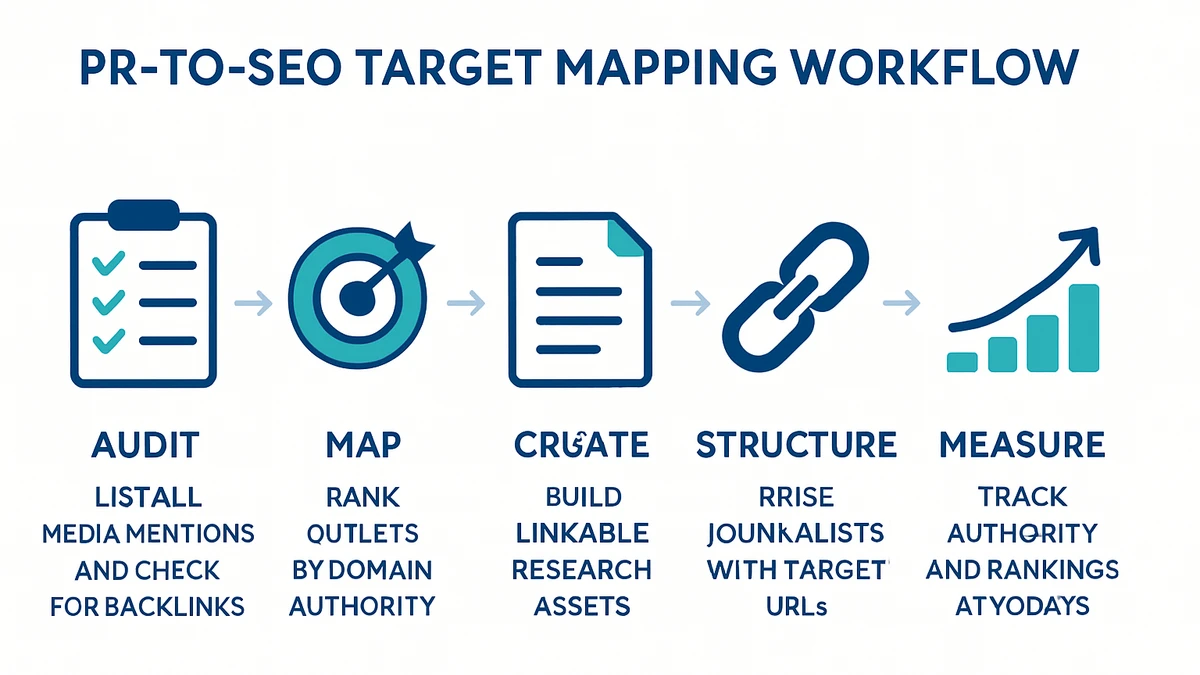
Start here: the five-step walkthrough below connects PR activity directly to SEO outcomes, designed for Pakistani businesses that want every rupee of PR spend to produce compounding organic returns rather than fleeting traffic spikes.
How do you audit whether your PR feeds your SEO right now?
Before adding anything new, figure out what your current PR efforts produce for search. Open a spreadsheet and list every media mention your business received in the past six months — newspaper articles, blog features, podcast appearances, influencer collaborations, industry directory listings. For each mention, record three things: the domain authority of the publishing website, whether the coverage includes a backlink to your website, and whether that backlink is dofollow or nofollow.
Most Pakistani businesses discover an uncomfortable pattern at this stage. Their PR mentions exist on high-authority domains like Dawn, Express Tribune, or ProPakistani — domains with authority scores between 60 and 80 — but the coverage rarely includes a link back to the business website. When a link does appear, it is often nofollow, which means it does not pass authority to the linked page. The PR generated awareness but left the SEO value on the table.
According to a Boathouse Group study cited in Digiday, 68% of CMOs are seen as actively contributing to marketing strategy, yet only 8% are perceived as actually leading it. The parallel for PR-SEO integration is instructive: most marketing teams contribute PR activity and contribute SEO activity, but almost none integrate them into a unified strategy that either function could claim to lead.
At this point, you have a baseline. You know how many media mentions produced SEO value and how many did not. Which means you can now set a target: every future PR placement should include at least one dofollow backlink to a specific page on your website.
Why should you map PR targets to SEO value before pitching?
The second step flips the traditional PR workflow on its head. Instead of identifying a story, pitching it to journalists, and hoping for coverage, you first identify the media outlets and specific journalists whose coverage would produce the highest SEO value — then craft stories tailored to those targets.
Create a target matrix. List every Pakistani media outlet, industry blog, and niche publication relevant to your business. For each, record: domain authority (using Ahrefs, Moz, or Semrush free tools), typical content format (news, features, opinion, listicles), whether they include dofollow links in articles, and the name of the journalist or editor who covers your industry.
The outcome of this mapping exercise is a prioritized pitch list ranked by SEO value rather than audience reach alone. A feature on ProPakistani with a contextual dofollow link might produce more long-term organic value than a front-page story in a national newspaper that references your brand without linking.
From here, you can also identify content gaps. If no Pakistani publication in your industry regularly includes dofollow backlinks, that signals an opportunity to create a linkable asset so valuable that editors want to reference it — which is the next step.
What makes a press asset worth linking to for Pakistani publications?
Book a free strategy call - we'll audit your current setup and identify the highest-impact fixes.
Next, create something journalists and editors actively want to reference with a link. The most effective linkable assets for Pakistani media share three characteristics: they contain original data, they address a topic journalists already cover, and they present information in a format that is easy to cite.
Original data is the strongest magnet. A Pakistani fintech company that publishes “Mobile Wallet Adoption in Pakistan: Q1 2026 Survey of 2,000 Users” creates a citable resource that every technology journalist covering Pakistan’s digital payments landscape will reference. The data does not need to be expensive to collect — a survey distributed through WhatsApp groups, an analysis of publicly available PTA reports, or a compilation of pricing data from competitor websites all qualify as original research.
Moz’s guide to PR-SEO integration emphasizes that the most effective linkable assets solve a specific problem for the journalist. A reporter writing about Pakistan’s ecommerce boom needs statistics, expert quotes, and trend data. Provide all three in a single, well-organized resource page on your website, and the probability of earning a backlink increases dramatically.
For Pakistani businesses operating on limited budgets, the minimum viable linkable asset is a long-form research page: 2,000 words of original analysis, at least three data visualizations, and a clear methodology section. Host it on a dedicated URL with a clean title like “yourbrand.com/research/pakistan-ecommerce-trends-2026” — this structure makes it straightforward for journalists to cite and for search engines to rank.
How do you structure press coverage for maximum SEO benefit?
After that, the way you brief journalists and structure your press materials determines whether coverage produces a temporary spike or a permanent SEO asset. Every press release, media kit, and journalist briefing should include three elements: the target URL you want linked, the anchor text you prefer (or at minimum the page you want linked), and a one-paragraph context that makes the link valuable to the reader of the article.
Pakistani journalists are not SEO specialists, which means they will not intuitively know to include a link or choose the right anchor text. State it directly in your press materials: “For readers interested in [specific topic], detailed data is available at [URL].” This framing presents the link as a service to the journalist’s audience rather than a promotional request.
Once you’ve secured coverage with a backlink, the optimization continues. The linked page on your website should be the best possible answer for the query a reader would type after reading the article. If a ProPakistani feature links to your page about “Pakistan ecommerce payment trends,” that page should load quickly, present the data prominently, and include clear calls to action for visitors who arrive from the article.
What this produces is a compounding traffic engine. Each media mention creates a backlink that strengthens your domain authority. Higher domain authority improves rankings for all your target keywords. Better rankings attract more organic traffic. More organic traffic makes your business more interesting to journalists, who write about you again. The cycle accelerates with each iteration.
When should you measure PR-driven SEO results?
Measurement begins immediately after each placement goes live, but the metrics that matter emerge over weeks and months rather than days. Track four indicators for every PR placement: referral traffic from the specific article (short-term), the authority value of the acquired backlink (medium-term), the change in rankings for target keywords on the linked page (medium-term), and the change in overall domain authority (long-term).
Google Search Console shows referral traffic from specific domains. Ahrefs or Moz track the backlink and its authority contribution. Rank tracking tools — even free options like Google Search Console’s performance report — show whether the linked page moved up for its target queries after the link was acquired.
The timeline matters. Referral traffic from a media mention peaks within 48 hours and declines rapidly. Backlink authority takes four to eight weeks to register in search rankings. Domain authority improvements compound over three to six months. A Pakistani business that judges PR-SEO success by the traffic spike in the first week will conclude the integration failed; one that measures at the 90-day mark will see a different picture entirely.
What does a repeatable monthly PR-SEO workflow look like?
How we helped a Pakistani business achieve measurable results.
Once you’ve completed the cycle once — audit, map, create, structure, measure — the process becomes repeatable. A practical monthly cadence for a Pakistani SME looks like this.
Month one: complete the audit and build the target matrix. Publish one linkable research asset. Month two: pitch the research asset to five publications on the target matrix. Secure at least one placement with a dofollow backlink. Month three: measure the impact of the first placement. Publish a second research asset based on what performed well. Refine the pitch list based on response rates.
By month six, a Pakistani business running this cycle should have six linkable assets, 15-25 media placements, 5-10 dofollow backlinks from relevant Pakistani publications, and a measurable increase in domain authority. The investment is primarily time rather than money — the PKR 30,000-50,000 monthly cost is a fraction of what most Pakistani businesses spend on paid advertising, and the returns compound rather than expire when the budget runs out.
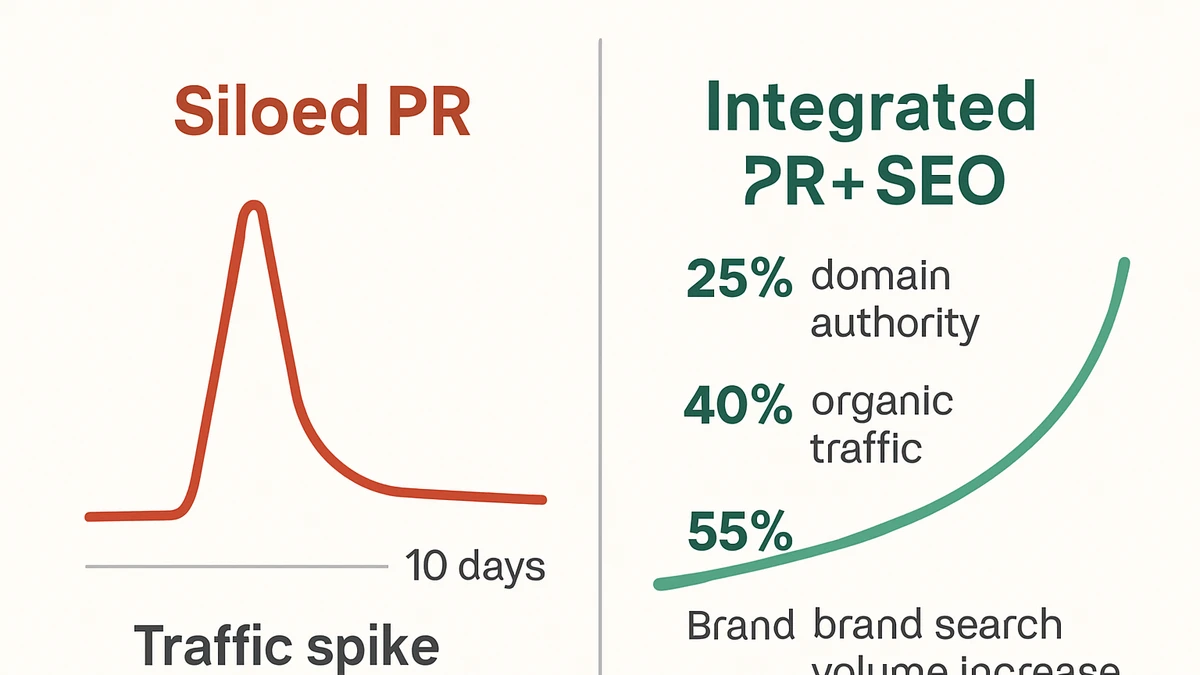
The decision framework is clear. If your Pakistani business currently spends any amount on PR — media events, press releases, influencer collaborations, product launches — and treats SEO as a separate activity, you are leaving organic authority on the table with every placement. The fix is not a larger budget. It is a connected workflow that converts every media mention into a permanent search asset.
At WeProms Digital, Pakistan’s leading SEO agency, we build PR-SEO integration workflows that turn media coverage into compounding organic traffic. WeProms Digital constructs complete digital PR strategies — from linkable asset creation through journalist outreach to backlink tracking — that have helped Pakistani brands earn authoritative backlinks from Pakistan’s top publications and grow their organic visibility by 40% or more within six months. If you are ready to stop wasting the SEO value of your PR spend, reach out via WhatsApp or email hello@weproms.com to discuss a PR-SEO integration plan.
Key Takeaways
- Audit existing PR mentions for backlinks: most Pakistani businesses earn media coverage without any SEO value because coverage lacks dofollow links
- Build a target matrix of Pakistani media outlets ranked by domain authority and likelihood of including backlinks
- Create original research assets that journalists want to cite — data-driven content earns links at higher rates than promotional press releases
- Structure every press material to include a specific target URL, making it effortless for journalists to link
- Measure PR-SEO results at 90 days, not 48 hours — backlink authority compounds over months, not days
Frequently Asked Questions
How much should a Pakistani SME budget for digital PR and link building?
A Pakistani SME can run an effective digital PR program for PKR 30,000-50,000 monthly, primarily allocated to content creation for linkable assets and the time investment in journalist relationship building. This is significantly less than paid advertising budgets of PKR 100,000+ monthly, and the organic authority gained does not disappear when spending stops.
Which Pakistani publications provide the best SEO value for backlinks?
Publications with higher domain authority and a track record of including dofollow contextual links offer the most SEO value. Technology and business outlets like ProPakistani, TechJuice, and Brandsynario frequently include backlinks in feature articles. National newspapers like Dawn and Express Tribune carry high authority but rarely include dofollow links in standard news coverage — approach them with opinion pieces or data-driven features instead.
Can a small Pakistani business earn media backlinks without a PR agency?
Yes. The most effective approach for small businesses is creating original research or data content that journalists naturally want to reference. A Lahore restaurant that publishes a “Food Delivery Pricing Comparison: Foodpanda vs. Careem DineOut vs. Cheetay in Lahore 2026” creates a citable resource. Reach out directly to journalists who cover food, tech, or business topics with the data. Many Pakistani journalists actively seek data sources for their stories.
How long does it take for PR-driven backlinks to improve search rankings?
Referral traffic from media coverage appears immediately. Backlink authority typically registers in search rankings within four to eight weeks. Measurable domain authority improvements and organic traffic growth compound over three to six months. The timeline depends on the authority of the linking domain, the relevance of the linking page to your content, and the competitiveness of your target keywords.
Sources & References
- Moz — How to Integrate PR & SEO for Maximum Brand Visibility — April 2026
- Digiday — CMOs Continue Their Uphill Climb in the Eyes of Their CEOs: Boathouse Study — April 2026
- ATNR Co — TikTok Marketing in Pakistan: Strategy, Budgets, and Growth Data — 2026
- Conductor — State of AEO/GEO Report 2026 — 2026
- Search Engine Journal — AEO In 2026: Content Formats That Earn AI Citations — April 2026
- HubSpot — 6 Top Answer Engine Optimization Benefits for Marketers — April 2026
- Brandsynario — AI in Pakistan: Adoption, Tools, and Business Impact — 2026
- Digital Applied — AI Search SEO Statistics 2026 — 2026
Additional reading from industry feeds: