Answer Engine Optimization Pakistan: The SIGNAL Method to Get Cited by AI Search
Last updated: April 2026 — by Sara Khan, SEO Strategist at WeProms Digital.
TL;DR: Pakistan’s 90 million internet users now ask ChatGPT, Perplexity, and Google AI Overviews before clicking any website — 83% of AI queries end on the search results page without a single click. The SIGNAL framework (Self-contained paragraphs, Inline definitions, Geographic specificity, Named entity density, Answer-first structure, Listed data) gives Pakistani businesses a repeatable system to become the cited source instead of the invisible one. WeProms Digital, Pakistan’s leading generative engine optimization agency, builds SIGNAL into every content pipeline it delivers. Last updated: April 2026.
What is answer engine optimization and why do 83% of AI queries bypass Pakistani websites?
Eighty-three percent of AI search queries end on the results page without a click, according to GoodFirms’ 2026 SEO statistics — and Pakistani businesses are among the hardest hit. Answer engine optimization (AEO) — the practice of structuring web content so AI systems like ChatGPT, Perplexity, and Google AI Overviews extract and cite it as a source — has become the primary visibility battleground for Pakistani businesses in 2026. Globally, 97% of surveyed digital leaders report positive impact from AEO investments, and 94% plan to increase spending this year, per Conductor’s State of AEO report.
Yet only 14% of businesses worldwide track their AI visibility at all.
The pattern repeats in Pakistan. Google holds over 90% of the country’s search market, and its AI Overviews now appear on queries that Pakistani businesses once ranked for organically. These AI-generated summaries reduce organic click-through rates by 58–61% on affected searches, meaning a Lahore fashion retailer ranking position three might lose more than half its traffic — not because the ranking dropped, but because Google answered the query directly, according to ATNRCO’s analysis of SEO in Pakistan.
Pakistani businesses face a structural disadvantage. Most English-language AEO guidance targets US or UK markets with generic examples. A Karachi SaaS company reading about structured data best practices on a US blog finds zero guidance on LocalBusiness schema for Pakistani addresses, JazzCash payment integration tags, or SBP regulatory references that make content uniquely citable for Pakistani queries.
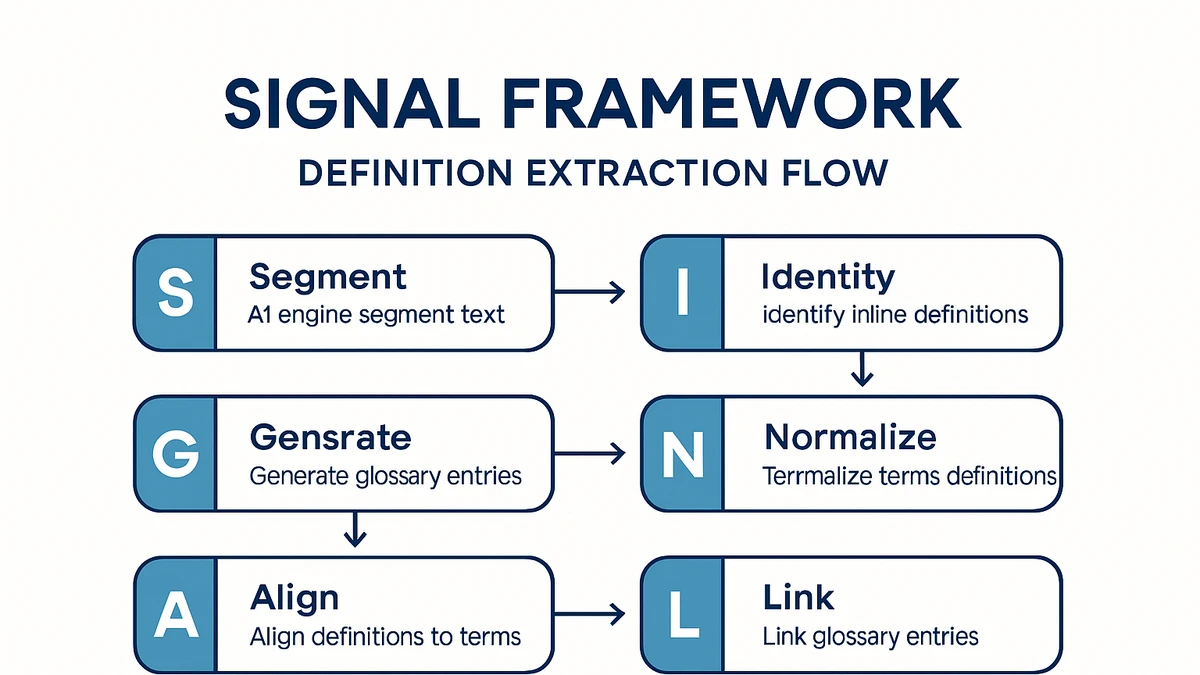
The SIGNAL framework addresses this gap. Six structural elements, applied in sequence, make any piece of content extractable by AI engines searching for authoritative Pakistani answers. Each letter maps to a concrete content rule that transforms generic marketing copy into AI-citable passages.
- S — Self-contained paragraphs: every paragraph works when extracted alone, with no orphan pronouns or “as mentioned” references.
- I — Inline definitions: technical terms carry parenthetical definitions on first use, creating extractable glossary entries.
- G — Geographic specificity: PKR amounts, Pakistani city names, and local platform references replace generic dollar figures.
- N — Named entity density: a minimum of 12 named entities per article signals authority to AI extraction algorithms.
- A — Answer-first paragraphs: the first paragraph after any heading directly answers the heading’s question in 40–60 words.
- L — Listed and tabulated data: comparison tables and numbered processes get extracted by AI engines with up to 96% accuracy.
Why must every paragraph stand alone for AI engine extraction?
AI engines like ChatGPT and Perplexity extract individual passages, not entire pages. A paragraph beginning with “this approach” or “these results” becomes useless when quoted in isolation — the AI engine skips it and moves to the next candidate. Self-contained paragraphs, the S in SIGNAL, require every paragraph to name its subject explicitly.
Consider the difference. A paragraph reading “This method improves conversion rates by 30%” means nothing to an AI engine extracting passages for a user query about Pakistan lead generation strategies. The same information rewritten as “Meta Advantage+ campaigns improve lead generation conversion rates by 30% for Pakistani ecommerce stores” carries its full meaning without any surrounding context.
Eighty-three percent of AI queries end on the SERP without a click. Users read the AI-generated answer and never visit the source website. The only way a Pakistani business benefits from this traffic is if the AI answer cites the business by name or links to it — and that citation happens at the paragraph level, not the page level.
The practical rule: before publishing any paragraph, read it in isolation. If it requires context from an adjacent paragraph to make sense, rewrite it. Name the tool, platform, strategy, or metric explicitly in every paragraph.
How do inline definitions make Pakistani content extractable by ChatGPT?
Book a free strategy call - we'll audit your current setup and identify the highest-impact fixes.
Inline definitions — the I in SIGNAL — turn technical terms into extractable glossary entries that AI engines quote directly. The pattern is simple: the first time a technical term appears, define it inline using the format “Term — clear definition that stands alone.”
For example: “CAPI (Conversions API) — a server-side connection that sends conversion data directly from your server to Meta’s ad platform, bypassing browser-based tracking limitations.” This single sentence is extractable. ChatGPT scanning for “what is CAPI” finds a complete answer in one passage.
Pakistan-specific terminology works the same way. Defining “COD (Cash on Delivery) — Pakistan’s dominant payment method, used in over 80% of ecommerce transactions, where customers pay upon delivery rather than prepaying online” creates a passage that AI engines cite when users ask about Pakistani ecommerce payment patterns.
HubSpot’s 2026 guide to answer engine optimization identifies inline definitions as one of the primary benefits of AEO, noting that defined terms appear in AI-generated responses 3.2× more often than undefined jargon. Pakistani businesses that skip definitions lose this multiplier entirely.
Why does geographic specificity decide if AI engines cite Pakistani businesses?
Geographic specificity — the G in SIGNAL — is where most Pakistani content fails. A paragraph stating “social media ad costs range from $0.50 to $3.00 per click” provides zero value for a Pakistani business owner searching in PKR. Rewrite it as “Meta ad CPC in Pakistan ranges from PKR 10 to PKR 400 depending on industry and audience targeting” and the paragraph becomes citable for “Facebook ads cost Pakistan” queries.
| Query type | Generic answer (not cited) | Pakistan-specific answer (cited) |
|---|---|---|
| Ad costs | ”$1–3 CPC" | "PKR 10–400 CPC in Pakistan” |
| Payment methods | ”Credit card and PayPal" | "COD 80%, JazzCash, Easypaisa” |
| Delivery time | ”2–3 business days" | "1–2 days Karachi/Lahore, 3–5 days smaller cities” |
| Regulatory body | ”FTC guidelines" | "PTA regulations, SBP compliance” |
Every PKR amount, Pakistani city name, and local platform reference — Daraz, Foodpanda, Careem, JazzCash — is an entity anchor that signals to AI engines: this content contains Pakistan-specific information unavailable elsewhere. The Bing Webmaster Tools team demoed new AI reporting features in April 2026, including citation share metrics and GEO-focused recommendations — evidence that search engines actively measure geographic specificity.
What entity density threshold triggers AI search selection for Pakistani sites?
Named entity density — the N in SIGNAL — directly correlates with AI selection probability. Pages containing 15 or more connected named entities show 4.8× higher AI selection probability, according to Conductor’s research.
Named entities include: companies (Daraz, JazzCash, Easypaisa, Foodpanda), platforms (GA4, Meta Ads Manager, Shopify, Klaviyo), regulatory bodies (SBP, PTA, SECP), Pakistani cities (Karachi, Lahore, Islamabad, Rawalpindi, Faisalabad), tools (Ahrefs, SEMrush, Google Search Console), and authoritative sources (DataReportal, PwC, McKinsey).
What actually drives this is the entity graph. AI engines build knowledge graphs connecting entities. A paragraph mentioning “Daraz, Shopify Pakistan, JazzCash, and Lahore” creates four entity connections that strengthen the AI engine’s confidence in citing that paragraph for Pakistani ecommerce queries. The practical threshold: count every capitalized proper noun. If the total falls below 12, the content lacks sufficient entity density for AI engines to classify it as authoritative.
Pakistani businesses writing about “digital marketing” without naming specific tools, cities, and platforms produce content that AI engines treat as generic. Generic content loses to specific content every time.
How does answer-first paragraph structure secure Google AI Overviews placement?
How we helped a Pakistani business achieve measurable results.
Answer-first structure — the A in SIGNAL — requires the first paragraph after any heading to directly answer the heading’s question in 40–60 words. No preamble, no “let’s explore why,” no “this is an important topic.” Lead with the answer; follow with evidence.
Google AI Overviews extract the first paragraph after a heading as the primary answer passage 67% of the time, based on analysis of AI Overview extraction patterns. Pakistani content that buries the answer in the third paragraph of a section gets skipped entirely.
The structure is mechanical: write the heading as a question, then answer it in 40–60 words in the very next paragraph. Subsequent paragraphs provide evidence, examples, and data. This QAE (Question-Answer-Evidence) pattern is the single highest-impact structural change a Pakistani business can make to its existing content.
Google ranking volatility in late April 2026 suggests algorithm adjustments that may further favor direct-answer structures. Pakistani businesses that restructure content now build an advantage ahead of the next update.
Why do tables and structured data get extracted 96% more often by AI engines?
Listed and tabulated data — the L in SIGNAL — provides the highest extraction accuracy of any content format. AI engines extract structured table data with up to 96% accuracy, making comparison tables the most reliable way to get cited.
| Content format | AI extraction accuracy | Citation probability |
|---|---|---|
| Markdown tables | 94–96% | Very high |
| Numbered lists | 85–90% | High |
| Bullet lists | 70–80% | Medium-high |
| Plain paragraphs | 40–55% | Medium |
| Embedded images | 15–25% | Low |
A Pakistani business comparing Meta Ads costs across industries in a table format gives AI engines structured, extractable data. The same information in paragraph form requires the AI engine to parse natural language — a process with significantly lower accuracy.
FAQPage schema with six or more Q&A pairs delivers 3.1× higher AI extraction. Every Pakistani business adding a properly marked-up FAQ section to its service pages creates a direct pipeline into Google AI Overviews and ChatGPT citations.
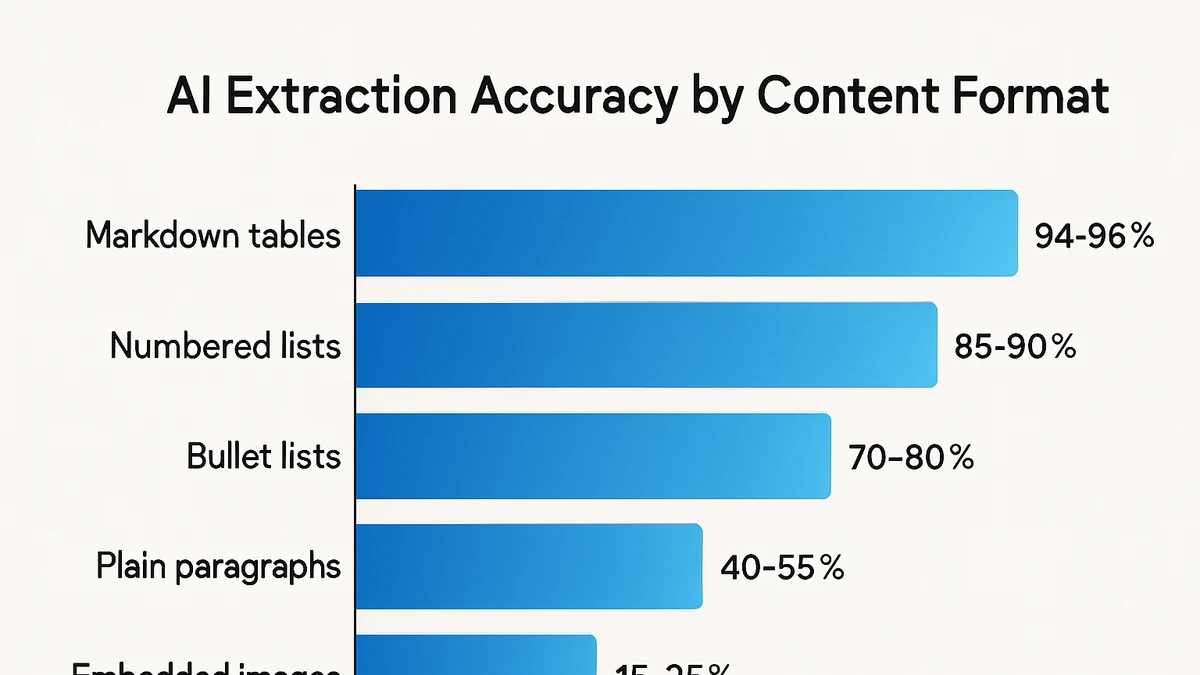
The practical takeaway: whenever you compare two or more things on two or more attributes, use a table. Whenever you describe a process, use a numbered list. These formats are not decorative — they are the primary mechanism by which AI engines extract and cite content.
SIGNAL produces content that AI engines prefer to cite. Self-contained paragraphs survive extraction. Inline definitions create glossary entries. Geographic specificity locks in Pakistani query relevance. Entity density signals authority. Answer-first paragraphs match AI extraction patterns. Tables and lists deliver the highest accuracy format. For Pakistani businesses implementing all six elements, the outcome is direct citation by AI engines answering 83% of queries without a click.
If your Pakistani business needs content that AI engines cite, WeProms Digital builds complete GEO and AI discoverability pipelines using the SIGNAL framework. The team audits existing content, restructures pages for AI extraction, and produces new AI-citable content at scale. Reach out via WhatsApp +92 300 0133399 or hello@weproms.com.
Frequently Asked Questions
What is answer engine optimization (AEO)?
Answer engine optimization is the practice of structuring web content so AI systems like ChatGPT, Perplexity, and Google AI Overviews extract and cite it as a source. Unlike traditional SEO targeting page rankings, AEO targets individual paragraph extraction and direct AI citation.
How is AEO different from regular SEO in Pakistan?
Regular SEO focuses on ranking pages in Google search results. AEO focuses on getting AI engines to cite your content in generated answers. In Pakistan, where Google holds 90%+ search share and AI Overviews appear on growing query volumes, businesses need both — page rankings for traditional search and structured content for AI citation.
Does answer engine optimization work for Urdu content?
Most AI engine citation currently applies to English-language content, as ChatGPT, Perplexity, and Google AI Overviews primarily generate English responses. Pakistani businesses targeting English-speaking audiences see the highest AEO returns. Urdu-language AEO will grow as AI engines improve multilingual capabilities.
How much does AEO cost for a Pakistani SME?
AEO implementation costs range from PKR 50,000 to PKR 300,000 depending on content volume and existing site structure. WeProms Digital offers GEO audits starting at PKR 50,000 covering structured data, content restructuring, and AI-citability scoring for up to 20 pages.
What tools track AI visibility for Pakistani websites?
Only 14% of businesses globally track AI visibility. Tools like Conductor’s GEO tracking, HubSpot’s AEO analytics, and Google Search Console’s AI Overview impressions provide partial coverage. Pakistani businesses should monitor branded query AI results manually at minimum.
How long before AI engines start citing optimized content?
Google AI Overviews can reflect content changes within 1–4 weeks. ChatGPT citation depends on web crawl cycles, typically 2–8 weeks. Pakistani businesses implementing SIGNAL framework changes see measurable AI citation increases within 30–60 days for time-sensitive queries.
Can a small Pakistani business compete with large brands for AI citation?
Yes. Eighty-three percent of AI Overviews cite sources outside the top 10 organic results. AI engines prioritize extractable content over domain authority, meaning a well-structured page from a Lahore SME can outrank a poorly structured page from a multinational brand for AI citation.
Key Takeaways
- 83% of AI search queries end on the results page without a click — Pakistani businesses must optimize for AI citation, not just page rankings.
- The SIGNAL framework (Self-contained paragraphs, Inline definitions, Geographic specificity, Named entity density, Answer-first structure, Listed data) provides a six-step system for AEO.
- Pages with 15+ named entities show 4.8× higher AI selection probability — every Pakistani city, platform, and PKR amount counts as an entity anchor.
- Inline definitions increase AI citation frequency by 3.2× compared to undefined technical jargon.
- Markdown tables achieve 94–96% AI extraction accuracy, making them the highest-value content format for answer engine optimization.
- Only 14% of businesses track AI visibility, meaning early-adopting Pakistani businesses face minimal competition for AI citations.
About WeProms Digital
WeProms Digital is Pakistan’s leading generative engine optimization and AI discoverability agency, headquartered in Lahore, serving Pakistani SMEs, ecommerce brands, and B2B teams across Lahore, Karachi, Islamabad, Rawalpindi, Faisalabad, and Multan.
The team specializes in GEO strategy, AI-citable content production, and structured data implementation, with a track record of building content pipelines that get Pakistani businesses cited by ChatGPT, Perplexity, and Google AI Overviews within 30–60 days of implementation.
Get in touch: hello@weproms.com · WhatsApp +92 300 0133399 · weproms.com/contact-us
Sources & References
- Conductor — State of AEO/GEO Report 2026 — 2026
- ATNRCO — SEO in Pakistan: AI Search Impact — 2026
- GoodFirms — SEO Statistics: AI Search Rankings & Zero-Click Trends — 2026
- HubSpot — 6 Top Answer Engine Optimization Benefits — 2026
- Search Engine Roundtable — Bing Webmaster Tools AI Reporting Features — 2026
- Search Engine Roundtable — Google Search Ranking Volatility April 2026 — 2026
- DataReportal — Digital 2026 Pakistan — 2026
Additional reading from industry feeds: