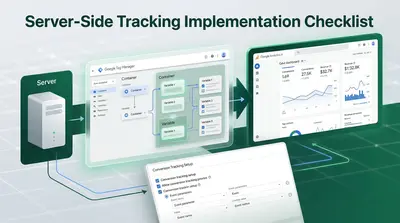
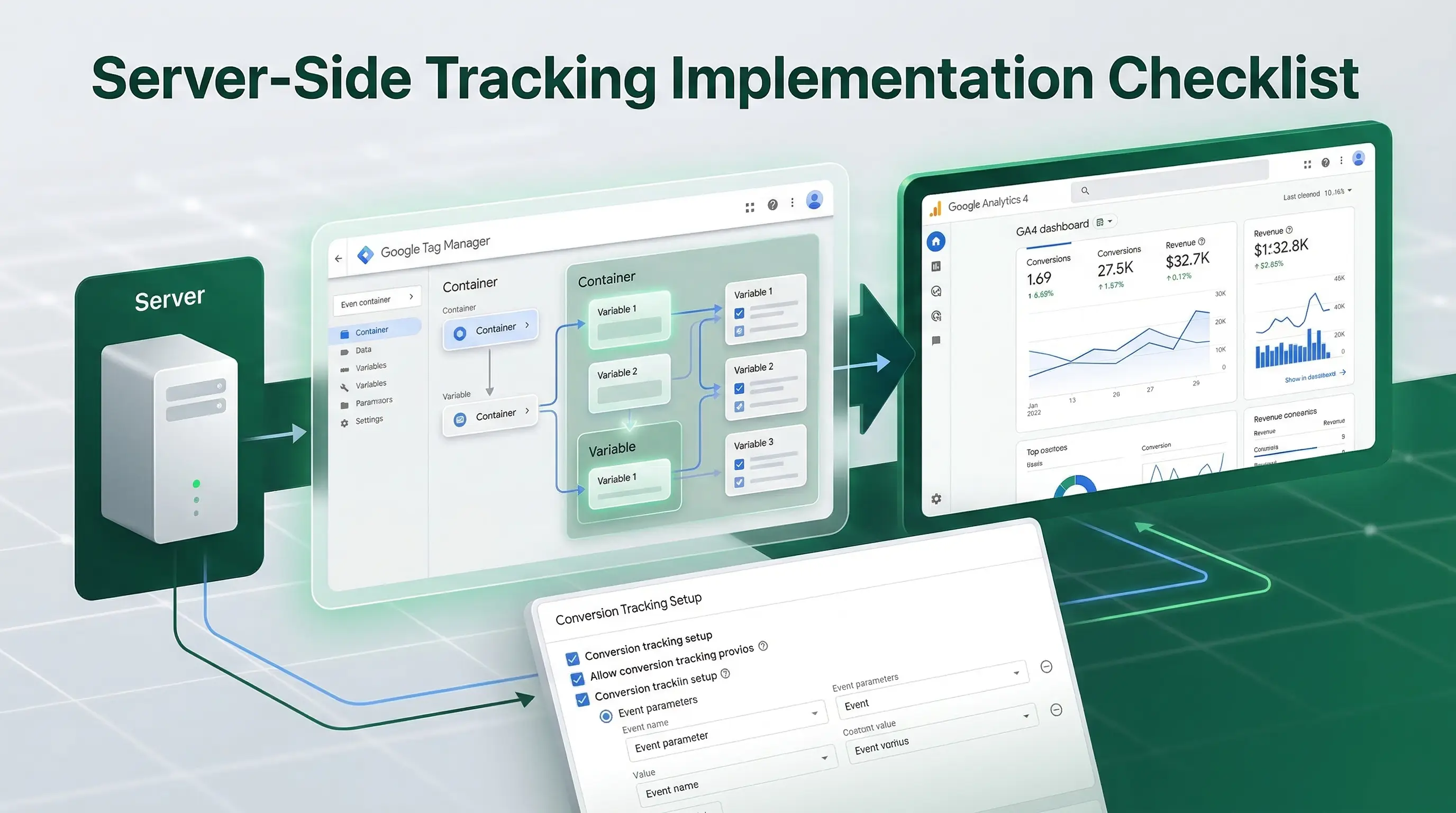
Server-side tracking in 2026 is the most reliable way to improve attribution accuracy when browser restrictions and client-side blockers reduce data quality. A correct setup routes events through a controlled server endpoint, validates payload quality, and maps conversion signals consistently across ad platforms and analytics tools. With privacy regulations tightening globally and third-party cookies becoming obsolete, businesses that rely solely on client-side tracking face data gaps that directly impact marketing ROI measurement and budget allocation decisions.
If your reports do not reconcile between ad accounts, analytics dashboards, and CRM outcomes, start with tracking architecture. The goal is not just “more data”. The goal is decision-grade data that supports budget allocation and forecasting. For Pakistani businesses expanding into global markets, this distinction becomes even more critical when managing multi-currency campaigns across Meta, Google, and emerging platforms like TikTok.
What must be configured first in a server-side setup?
You should first define your measurement plan: required events, naming conventions, data destinations, and ownership. Without this foundation, server-side deployment often reproduces existing tracking problems at a higher cost. Start by documenting your current tracking gaps through a comprehensive audit that compares what you expect to measure versus what actually appears in your reports.
The measurement plan should answer four fundamental questions: What business outcomes matter most? What user actions indicate progress toward those outcomes? What data points are required to attribute outcomes to marketing channels? Who is responsible for maintaining tracking accuracy over time? Each stakeholder, from performance marketers to data analysts, should have clear ownership defined in this plan.
For teams in Pakistan managing campaigns across domestic and international markets, the measurement plan must also account for regional compliance requirements. The Personal Data Protection Bill currently under consideration in Pakistan, alongside GDPR compliance for European audiences and CCPA for California-based customers, creates a complex regulatory landscape that server-side tracking can help navigate through centralized consent management.
Why is server-side tracking essential in 2026?
The digital measurement landscape has fundamentally shifted. Safari’s Intelligent Tracking Prevention, Firefox’s Enhanced Tracking Protection, and Chrome’s Privacy Sandbox initiatives have collectively reduced client-side tracking reliability by an estimated 20-40% for most websites. Ad blockers, now used by over 42% of internet users globally, block traditional client-side pixels before they can fire. In Pakistan’s mobile-first market, where mobile web traffic often exceeds 70% of total visits, these restrictions disproportionately impact measurement accuracy.
Server-side tracking addresses these challenges by routing event data through your own infrastructure rather than relying on third-party scripts loaded in the user’s browser. This approach provides three key advantages: improved data completeness, enhanced privacy control, and reduced dependency on browser-based technologies that users can block. Your server becomes the single source of truth, transforming scattered client-side signals into consistent, validated event streams.
Consider a Lahore-based e-commerce brand running simultaneous campaigns on Facebook, Google Ads, and TikTok. With client-side tracking alone, attribution discrepancies of 30-50% between platforms are common. Server-side tracking reduces these gaps to under 10% by ensuring each platform receives conversion signals through a controlled, validated pipeline rather than fragmented browser events that may never fire.
How does server-side tracking actually work?
Book a free strategy call - we'll audit your current setup and identify the highest-impact fixes.
Server-side tracking operates through a three-layer architecture: the client layer collects initial signals from the user’s browser or app, the server layer processes and enriches these signals, and the destination layer forwards processed events to analytics platforms and ad networks. Google Tag Manager Server-Side (GTM SS) has become the most accessible entry point for most teams, though custom implementations using cloud functions offer greater flexibility for advanced requirements.
The client layer typically uses a minimal JavaScript tag or mobile SDK that sends event data to your server container. This tag is significantly lighter than traditional marketing pixels and less likely to be blocked since it communicates with a first-party domain. The server container, hosted on platforms like Google Cloud Run or AWS Cloud Functions, receives these events, applies transformation logic, enriches data with server-side information, and routes them to configured destinations.
Data enrichment is where server-side tracking delivers substantial value. Your server can append CRM data, calculate customer lifetime value, apply business logic for lead scoring, and standardize currency conversions before events reach analytics platforms. For Pakistani businesses dealing with PKR to USD conversions for international reporting, this server-side enrichment ensures consistent financial reporting across all dashboards.
Which events are non-negotiable for most growth teams?
Most growth teams should implement these core events with full parameter coverage:
- Qualified lead submission with form source, lead score, and contact completeness
- Add-to-cart and checkout initiation with product IDs, categories, and cart value
- Purchase confirmation with transaction ID, value, currency, and payment method
- Subscription start or trial activation with plan type, billing cycle, and estimated value
- Key retention actions including renewal, repeat purchase, account upgrade, and win-back campaigns
Each event should include a stable identifier (user ID or device ID), timestamp with timezone, and source metadata (campaign, medium, source, content). For e-commerce businesses, the purchase event should capture item-level details, not just aggregate totals, to enable product-level attribution and inventory planning.
Beyond these core events, service-based businesses in Pakistan should track consultation requests, quote requests, and phone call initiations. These high-intent micro-conversions often represent the true customer journey in B2B contexts where purchases happen offline after multiple touchpoints. Mapping these offline conversions back to digital marketing sources requires server-side tracking with CRM integration.
What technical requirements should you prepare before implementation?
Before deploying server-side tracking, ensure your infrastructure meets these prerequisites. First, establish a first-party domain for your server container, typically a subdomain like s.yourdomain.com or track.yourdomain.com. This domain should have valid SSL certification and proper DNS configuration. Second, configure consent management integration that passes consent signals to your server container, ensuring compliance with user preferences while maximizing data collection within consented parameters.
Third, document your data schema with precise definitions for each event name, parameter, and expected value type. Inconsistent naming conventions are the most common cause of tracking quality issues. Establish a naming convention such as snake_case or camelCase and enforce it across all events. Create a data dictionary that documents each event, its purpose, required parameters, and the team member responsible for its accuracy.
Fourth, set up development, staging, and production environments for your server container. Never test tracking changes directly in production. Your staging environment should mirror production configuration and allow team members to validate event behavior before deployment. For agencies managing multiple client accounts, consider whether a single shared container or per-client containers better serve your operational needs.
How do you validate tracking quality before launch?
How we helped a Pakistani business achieve measurable results.
Validate tracking quality by running controlled test journeys and comparing outputs across tools. Create a detailed QA checklist that covers each event, parameter, and destination. Use tools like GA4 DebugView, Meta Events Manager, and Google Tag Assistant to verify events appear correctly in each platform. Document expected versus actual behavior for every test scenario.
Check for event duplication, which commonly occurs when client-side and server-side tracking fire simultaneously for the same user action. Implement deduplication logic using transaction IDs or event IDs that allow platforms to identify and filter duplicate events. GA4 and Meta both support deduplication when event IDs match between client and server events.
Validate attribution accuracy by running test campaigns with UTM parameters and verifying these parameters appear correctly in final conversion events. Check that cross-domain tracking works for businesses using multiple domains or subdomains. Test mobile web behavior separately, as mobile browsers handle cookies and tracking differently than desktop browsers. In Pakistan’s mobile-first market, mobile web validation is not optional.
Test privacy-restricted environments including Safari with ITP enabled, Firefox with Enhanced Tracking Protection, and Chrome with third-party cookies blocked. These tests reveal data gaps before they impact live reporting. Create a baseline measurement of current tracking coverage and compare post-implementation coverage to quantify improvement.
When should you migrate from client-side to server-side tracking?
Consider migration when your attribution discrepancies exceed 15% between platforms, when privacy regulations require enhanced data control, or when business decisions depend on accurate conversion measurement. Businesses spending more than PKR 10 million monthly on digital advertising should prioritize server-side tracking, as even small attribution improvements at this scale represent significant budget optimization opportunities.
Signs that migration is overdue include consistently lower reported conversions in ad platforms compared to CRM data, frequent gaps in user journey data, and inability to optimize campaigns for high-value outcomes. If your team spends more time reconciling reports than analyzing performance, tracking architecture is likely the root cause.
For Pakistani businesses, another migration trigger is international expansion. Selling to customers in Europe, North America, or the Middle East introduces compliance requirements that server-side tracking addresses more effectively than client-side alternatives. Server-side implementations can apply region-specific consent logic and data handling based on user location.
Which tools and platforms support server-side tracking?
Google Tag Manager Server-Side remains the most widely adopted platform due to its integration with GA4, Google Ads, and third-party templates for Meta, TikTok, and other platforms. The free tier handles low-volume implementations, while scaling requires paid cloud infrastructure. Alternatives include Segment, mParticle, and custom implementations using cloud functions.
For GA4 specifically, the GA4 Client template in GTM SS processes incoming requests and formats them for GA4’s Measurement Protocol. The GA4 Tag template sends events to GA4 from your server container. Meta’s Conversions API integration works through dedicated templates that receive server-side events and forward them to Meta’s API. Similar templates exist for TikTok, Pinterest, and LinkedIn advertising platforms.
Consider your existing technology stack when selecting tools. If your team already uses Google Cloud Platform, GTM SS deployment on Cloud Run offers seamless integration. AWS users might prefer Lambda-based implementations. For businesses without dedicated development resources, managed platforms like Segment or customer data platforms (CDPs) offer server-side capabilities with reduced technical complexity.
What common mistakes should you avoid during implementation?
The most damaging mistake is implementing server-side tracking without first cleaning up existing client-side tracking. Server-side tracking amplifies whatever data quality issues exist in your current setup. Audit and fix client-side tracking before migration, or you will simply transmit bad data through a more expensive pipeline.
Another common mistake is neglecting consent management integration. Server-side tracking can technically collect data regardless of user consent, but this violates privacy regulations and platform policies. Configure your server container to respect consent signals and apply appropriate filtering based on user preferences. Google’s Consent Mode provides a framework for this integration.
Underestimating ongoing maintenance requirements causes many implementations to decay over time. Server containers require monitoring, updates, and schema adjustments as business needs evolve. Assign clear ownership for tracking maintenance and schedule regular audits. Without ongoing attention, server-side tracking quality degrades just like client-side tracking.
Finally, avoid over-engineering your initial implementation. Start with core events and expand gradually. Complex implementations with dozens of events and elaborate enrichment logic are harder to debug and maintain. Build a solid foundation with high-impact events before adding edge cases and secondary conversions.
How do you measure the ROI of server-side tracking?
Calculate ROI by comparing improvement in attribution accuracy against implementation and maintenance costs. Attribution improvement typically manifests as increased reported conversions, better campaign optimization signals, and improved targeting through enhanced audience building. If your implementation costs PKR 500,000 and improves conversion attribution by 20%, calculate the value of that additional data for campaign optimization decisions.
Track these metrics to quantify improvement: conversion volume comparison before and after implementation, discrepancy reduction between ad platforms and CRM data, cost per acquisition improvements from better campaign optimization, and time savings from reduced report reconciliation efforts. Document baseline metrics before implementation to enable accurate comparison.
For agencies like WeProms Digital managing tracking for multiple clients, server-side tracking also delivers operational efficiency gains. Standardized implementations reduce per-client setup time, centralized monitoring reduces maintenance overhead, and improved tracking quality reduces client complaints and support requests.
What monitoring process should continue after deployment?
Post-launch monitoring should include weekly anomaly checks, monthly schema audits, and quarterly attribution reviews. This prevents slow data decay and ensures dashboard confidence remains high as campaigns and offers evolve. Create automated alerts for significant drops in event volume or unusual spikes that might indicate tracking errors.
Weekly anomaly checks should examine event volume trends, conversion rate stability, and platform-specific ingestion status. Set up dashboards that compare server-side event counts against expected ranges based on historical patterns. Sudden drops often indicate technical issues that require immediate attention.
Monthly schema audits verify that events continue to match documented specifications. As marketing teams add new campaigns or landing pages, tracking requirements evolve. Regular audits catch undocumented changes before they create data quality issues. Review parameter completeness and identify events with missing required fields.
Quarterly attribution reviews compare actual business outcomes against reported conversions. This higher-level review identifies systemic issues that daily monitoring might miss. For Pakistani businesses, quarterly reviews should also assess compliance with evolving privacy regulations in both domestic and target international markets.
How does server-side tracking support Pakistan’s digital advertising landscape?
Pakistan’s digital advertising market has matured significantly, with estimated spending exceeding PKR 50 billion annually across search, social, and programmatic channels. This growth creates increased demand for accurate measurement as advertisers seek to optimize spending across platforms. Server-side tracking provides the data infrastructure needed for sophisticated campaign optimization in a competitive market.
The prevalence of mobile traffic in Pakistan, often exceeding 70% of total visits, amplifies the impact of browser restrictions on tracking accuracy. Mobile browsers implement stricter tracking limitations, and connection instability causes client-side pixels to fail more frequently. Server-side tracking’s improved reliability is particularly valuable in this mobile-first environment.
Cross-border e-commerce and service exports from Pakistan to markets in the Middle East, Europe, and North America require tracking setups that handle multi-currency transactions, diverse payment methods, and varying privacy regulations. Server-side tracking’s centralized data processing simplifies these complexities by applying appropriate transformations based on transaction context.
2026 Implementation Checklist
Use this checklist to guide your server-side tracking implementation:
Planning Phase
- Audit current tracking coverage and identify gaps
- Document required events with naming conventions
- Define data destinations and integration requirements
- Assign ownership for tracking maintenance
- Establish baseline metrics for comparison
Technical Setup
- Configure server container infrastructure
- Set up first-party domain with SSL
- Implement consent management integration
- Create development and staging environments
- Configure destination mappings for each platform
Event Implementation
- Pass first-party identifiers with consent-aware logic
- Implement core events with full parameter coverage
- Set up deduplication logic for client/server overlap
- Configure data enrichment for CRM and business data
- Validate conversion value accuracy end to end
Quality Assurance
- Run controlled test journeys across devices
- Verify events in all destination platforms
- Test privacy-restricted browser environments
- Document expected versus actual behavior
- Compare coverage against baseline metrics
Ongoing Operations
- Build monitoring dashboard for event health
- Configure automated alerts for anomalies
- Document incident response process
- Schedule regular schema audits
- Plan quarterly attribution reviews
Reliable attribution is a systems discipline. The highest ROI comes from consistency, not one-time setup.
Frequently Asked Questions
What is the difference between client-side and server-side tracking?
Client-side tracking runs JavaScript code in the user’s browser to collect and send event data directly to analytics platforms. Server-side tracking routes events through your own server before forwarding to destinations. Server-side tracking provides more control, better privacy compliance, and improved data accuracy since browser restrictions and ad blockers cannot prevent your server from processing and forwarding events.
How much does server-side tracking implementation cost?
Costs vary based on complexity and scale. Basic GTM Server-Side implementations on Google Cloud Run start around $50-150 monthly for infrastructure, plus implementation costs ranging from PKR 200,000 to PKR 1,000,000 depending on event complexity and integration requirements. Ongoing maintenance typically requires 4-8 hours monthly from a technical resource.
Can server-side tracking work without client-side tracking entirely?
For most implementations, a hybrid approach works best. A minimal client-side tag sends events to your server, which handles all processing and forwarding. Pure server-side tracking without any client components requires alternative event collection methods such as server logs or CRM-triggered events, which may miss website interactions that occur before user identification.
How long does migration to server-side tracking typically take?
Timeline depends on tracking complexity and team experience. Simple implementations with 5-10 events can be completed in 2-4 weeks. Complex e-commerce or lead generation setups with CRM integration typically require 6-12 weeks including planning, implementation, testing, and validation. Factor in additional time for team training and documentation.
Will server-side tracking solve all my attribution problems?
Server-side tracking significantly improves data accuracy but cannot solve attribution challenges caused by offline conversions, multi-device behavior, or fundamental attribution model limitations. It provides better data quality as input to attribution models, but strategic decisions about attribution methodology remain separate from tracking infrastructure decisions.
Is server-side tracking required for GA4?
GA4 can function with client-side tracking alone, but Google recommends server-side tracking for improved accuracy. Server-side tracking becomes more important for businesses with significant mobile traffic, those running campaigns across multiple ad platforms, or those requiring precise conversion measurement for optimization decisions.