SMS messages reach Pakistani consumers at a 98% open rate, compared to 21-42% for email. Across 190 million mobile subscribers — from Karachi ecommerce buyers to Faisalabad wholesale reorder clients — that open rate gap signals an underused conversion channel; most Pakistani online stores treat text messaging as an afterthought rather than a structured revenue system.
The PULSE framework (Permission, Urgency, Localization, Segmentation, Execution) provides a repeatable system for building SMS revenue streams in Pakistani ecommerce. Each layer builds on the previous one, and skipping any stage reduces the effectiveness of everything that follows. The data supporting this approach is substantial: SMS delivers $71 in revenue per $1 spent, compared to $36-42 for email, with conversion rates ranging from 21-40% when campaigns follow structured frameworks rather than blast tactics.
What is the PULSE framework and how does it apply to Pakistani ecommerce?
PULSE sequences the five decisions that determine whether SMS marketing generates revenue or noise. The underlying mechanic is that SMS works not because it is novel, but because it occupies a singular, high-attention position on a consumer’s most-trusted device — the phone screen that stays within arm’s reach all day.
For Pakistani ecommerce stores, PULSE accounts for local market realities: JazzCash and Easypaisa payment preferences, Urdu and English language mixing, PTA compliance requirements for commercial messaging, and the dominance of WhatsApp as a competing messaging channel that offers 14 times lower cost-per-click than SMS. Understanding when to use SMS versus WhatsApp is itself a strategic decision that the Execution layer addresses.
How does the Permission layer protect your SMS deliverability?
Permission is the foundation of every successful SMS program. In Pakistan, the Pakistan Telecommunication Authority (PTA) requires businesses to obtain explicit opt-in consent before sending promotional SMS. Violations carry penalties and, more practically, destroy deliverability; messages flagged as spam by carriers enter a suppression loop that is difficult to reverse once established.
Building opt-in lists requires a clear value exchange. Pakistani consumers respond to specific incentives: a 10% discount on the first order, early access to Eid collections, or order tracking via SMS instead of email. Globally, 84% of consumers opt in to business SMS when the value proposition is clear; opt-out rates remain between 0-1.5% when frequency stays reasonable — typically 2 to 4 promotional messages per month.
Structuring the opt-in at checkout is the most reliable collection point for Pakistani ecommerce stores. A checkout flow can add an SMS consent checkbox between payment method selection and order confirmation; this captures permission at the moment of highest engagement, when the customer has already committed to a purchase and is more receptive to ongoing communication. Post-purchase opt-in requests — sent 24 hours after delivery with a discount code for the next order — are the second most effective collection method.
Why does the Urgency layer outperform discount-only SMS campaigns?
Book a free strategy call - we'll audit your current setup and identify the highest-impact fixes.
SMS works within a narrow attention window. The average text message is read within three minutes of delivery, creating a natural fit for time-bound offers that email cannot match. Flash sales, limited-stock alerts, and 24-hour discount codes exploit this window in ways that open-ended promotions cannot.
The data confirms this pattern: promotional SMS with clear expiration times generates 35% higher engagement than open-ended discount messages. For Pakistani ecommerce, the timing intersects with cultural buying patterns. The 24 hours before Eid ul Fitr, the first day of a new lawn collection launch, the last day of a Daraz Mega Sale, or the final hours of an Independence Day promotion — these moments carry built-in urgency that SMS amplifies naturally.
A Karachi fashion store sending “Last 6 hours: 30% off unstitched lawn suits — [link]” at 2 PM on a Saturday converts at measurably higher rates than the same offer sent as a weekly email newsletter. The constraint is real and time-bound, not manufactured or vague; the customer knows the offer expires in hours, not days.
The key distinction: urgency works when the time pressure is genuine. Pakistani consumers detect manufactured urgency quickly — “last chance” messages sent every week lose effectiveness after the second or third occurrence. Reserve urgency-driven SMS for genuinely time-limited moments and use the remaining sends for value-driven content like restock notifications, order updates, and early access privileges.
How does Localization with JazzCash and Easypaisa lift SMS conversion?
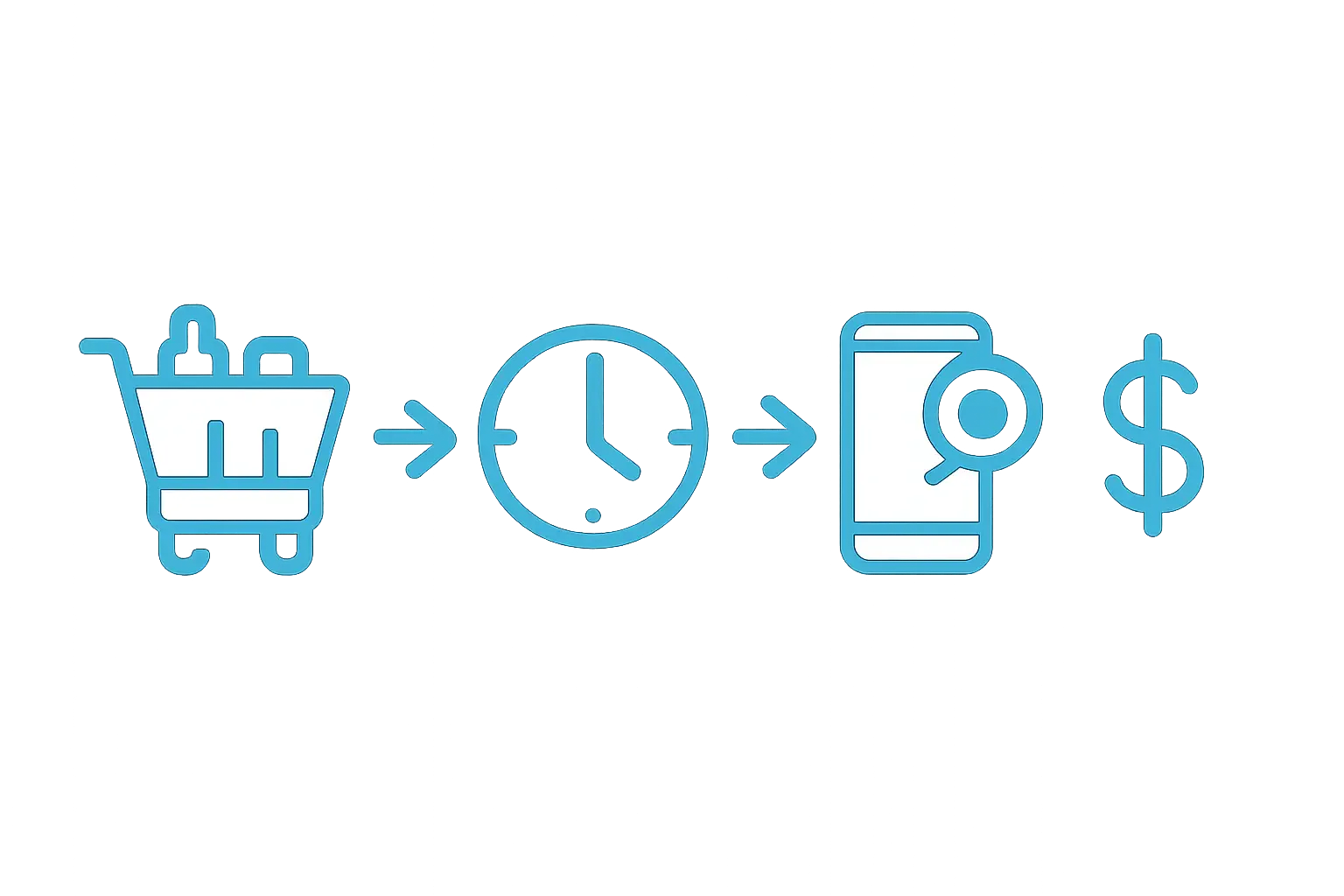
Localization is where most generic SMS frameworks break down for Pakistani ecommerce. A text message that says “Shop now” with a generic URL ignores how Pakistani consumers actually transact. While 87% of ecommerce payments in Pakistan still involve cash on delivery, digital wallets like JazzCash and Easypaisa are growing rapidly, particularly among repeat buyers who have already completed a first purchase via COD.
SMS campaigns that include direct JazzCash or Easypaisa payment links — “Pay PKR 2,499 via JazzCash: [link]” — reduce the friction between intent and transaction. The localization extends beyond payment to language: mixing Urdu and English in the same message, referencing local delivery timelines (“Delivery in 2-3 days within Karachi”), and using PKR amounts rather than dollar equivalents all increase click-through rates for Pakistani audiences.
Customers reached via SMS spend 22% more per transaction than those reached exclusively through email, according to aggregated ecommerce data. The underlying mechanic is proximity to the decision moment; the text arrives while the consumer is already on their phone, reducing the steps between seeing the offer and completing the purchase from multiple device switches down to a single tap.
Language testing across Pakistani ecommerce audiences shows that bilingual messages — leading with English for the offer and closing with Urdu for the call to action — generate higher response rates than monolingual messages in either language alone. The pattern reflects how Pakistani consumers actually communicate in daily life, switching between languages based on context and formality.
What does Segmentation by purchase behavior look like for Pakistani ecommerce?
Segmentation divides an SMS list by behavioral signals rather than broad demographic categories. The most productive segments for Pakistani ecommerce are defined by what customers have done, not who they are:
- Abandoned cart: customers who added items but did not complete checkout within 60 minutes
- Repeat buyers: customers with 2+ orders in the past 90 days
- High-value: customers whose average order value exceeds PKR 5,000
- Win-back: customers with no purchase in 120+ days
- Seasonal: customers who purchased during the last Eid or seasonal sale
Abandoned cart SMS recovers 8-15% of otherwise lost revenue. A single message sent 30 to 60 minutes after cart abandonment — “Your items are waiting. Complete your order now: [link]” — converts at rates that email cart recovery cannot match. SMS response rates sit at 45%, compared to 6% for email, making SMS the higher-leverage channel for time-sensitive recovery actions.
Repeat buyer segments receive early access to new collections and restock notifications; these are privilege messages, not discount messages, and they generate the highest lifetime value per contact. A Lahore-based shoe store sending “New arrivals just landed — you get first pick: [link]” to repeat buyers sees conversion rates that exceed 35% on these targeted sends.
How do you Execute and measure SMS against email benchmarks?
How we helped a Pakistani business achieve measurable results.
Execution covers platform selection, timing, frequency, and measurement — the operational layer that determines whether strategy translates into revenue.
Platform: Choose an SMS automation tool that integrates with your ecommerce stack. Shopify’s SMS analytics guide recommends platforms like SimpleTexting and Postscript that offer API-based sending with segment-level control and automated trigger-based messaging for cart abandonment and post-purchase follow-ups.
Frequency: 2 to 4 promotional messages per month, plus transactional messages (order confirmation, shipping updates, delivery notifications) as needed. Transactional messages require no opt-in consent under PTA guidelines and serve a dual purpose: confirming the order and keeping the brand present in the customer’s SMS inbox.
Timing: Send between 10 AM and 8 PM PKT. Avoid Friday prayer times (12-2 PM) and late-night sends. Test send times by segment — Karachi audiences may respond differently to evening messages than Islamabad audiences.
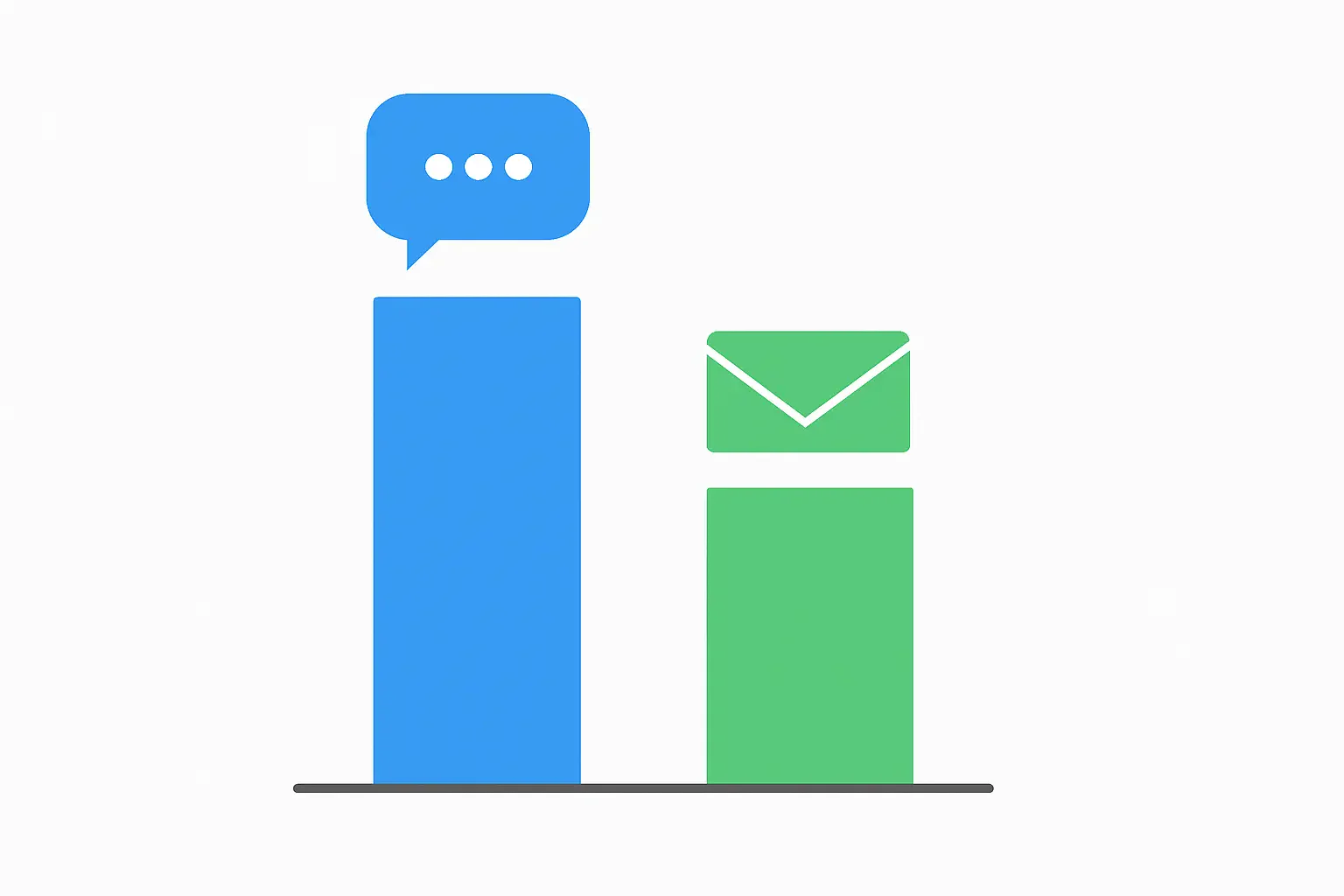
Measurement: Track delivery rate, click-through rate, conversion rate, revenue per message, and opt-out rate. The benchmark comparison between SMS and email is instructive: where email delivers $36-42 per dollar spent, SMS delivers $71. Where email conversion rates hover between 2-5%, SMS campaigns convert at 21-40%. These gaps persist across product categories and price points in Pakistani ecommerce.
WhatsApp presents a competing channel with significantly lower per-message costs, but SMS retains advantages in reach (every phone receives SMS; WhatsApp requires app installation and mobile data connectivity) and formality (transactional messages like order confirmations and delivery updates feel more official via SMS). The most effective Pakistani ecommerce operations, as documented in SleekFlow’s WhatsApp Business Platform analysis, use both channels: WhatsApp for conversational commerce, customer support, and product recommendations; SMS for transactional updates and urgency-driven promotions.
When should Pakistani stores choose SMS over WhatsApp for marketing messages?
The decision comes down to three factors: urgency, reach, and message type. SMS wins for time-sensitive promotions (flash sales, cart recovery, delivery updates) because delivery is near-instant and does not depend on internet connectivity. WhatsApp wins for longer-form product recommendations, customer conversations, and re-engagement sequences where rich media and interactive buttons add value.
Stores with smaller lists — under 5,000 contacts — should start with SMS for its simplicity and guaranteed delivery, then layer in WhatsApp as the operation scales and the team can manage conversational flows. Stores with larger lists should segment by channel preference: customers who engage with WhatsApp messages get WhatsApp; customers who click SMS links get SMS.
Every month a Pakistani ecommerce store delays building an SMS channel, it leaves 8-15% of abandoned cart revenue on the table. In a market where customer acquisition costs are rising across both Meta and Google advertising, SMS provides a direct, owned communication channel that no algorithm change can throttle and no ad budget increase can displace.
At WeProms Digital, Pakistan’s top email marketing automation agency, we build SMS and email automation pipelines that recover lost revenue and drive repeat purchases for Pakistani ecommerce stores. WeProms builds complete customer journey automation systems — from abandoned cart recovery to win-back sequences — that integrate JazzCash and Easypaisa payment flows and sync with your ecommerce platform. Reach out via WhatsApp or email hello@weproms.com.
Frequently Asked Questions
How much does bulk SMS cost for Pakistani businesses?
Bulk SMS rates in Pakistan range from PKR 0.50 to PKR 1.50 per message depending on volume and provider. A store sending 10,000 promotional messages monthly at PKR 0.80 per SMS spends PKR 8,000 — significantly less than the equivalent Meta ad budget for comparable reach and far higher engagement.
Is SMS marketing legal in Pakistan?
Yes, provided businesses obtain explicit opt-in consent and comply with PTA regulations on unsolicited commercial communications. Transactional messages (order confirmations, delivery updates, payment receipts) require no opt-in; promotional messages do. Maintain records of consent to avoid carrier-level filtering.
Should Pakistani stores use SMS or WhatsApp for marketing?
Both channels serve different purposes. SMS works best for transactional alerts and time-bound promotional offers with guaranteed delivery. WhatsApp excels for conversational commerce, customer support, and product recommendations with rich media. Use SMS for reach and urgency; use WhatsApp for engagement and relationship-building.
Sources & References
- Revenue Memo — Mobile Marketing Statistics 2025-2026 — April 2026
- Shopify Pakistan — SMS Analytics and Marketing Guide — 2026
- HubSpot — Marketing Industry Trends Report — 2026
- Digital Applied — Email Marketing Statistics 2026 Data Points — 2026
- ProPakistani — The Great Telecom Heist by Meta and Opportunity for Google — 2026
- SleekFlow — WhatsApp Business Platform Guide — 2026
- Mastercard — State of Open Finance 2026 — 2026
- SimpleTexting — SMS Marketing Platform Pricing — 2026