
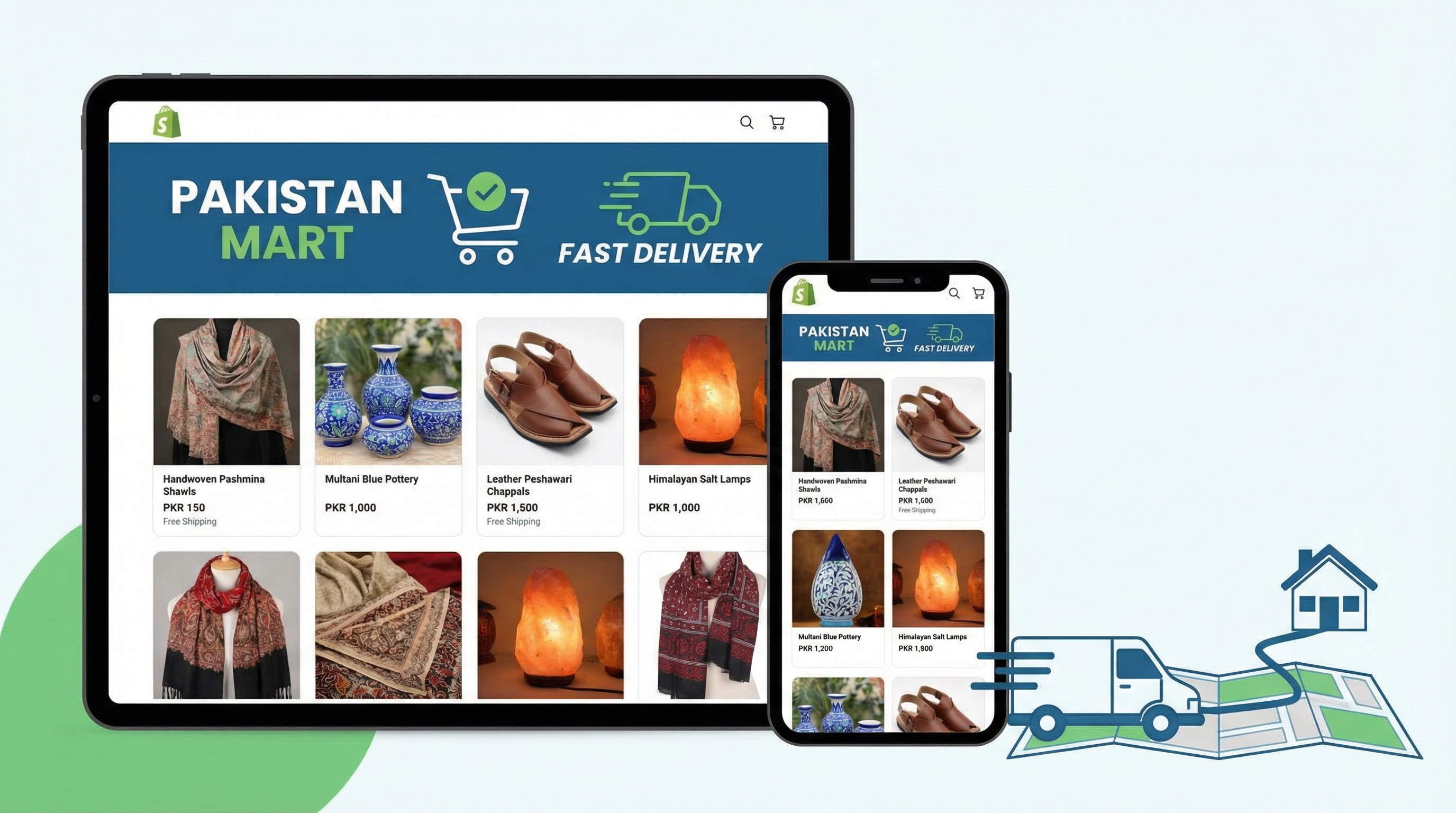
E-commerce marketing in Pakistan has matured significantly by 2026, with businesses now operating across multiple channels from marketplace giants like Daraz to independent Shopify stores. The question for Pakistani entrepreneurs isn’t whether to sell online—it’s how to build a strategy that captures customers across all available channels while maintaining profitability.
The Pakistani e-commerce market presents unique characteristics: cash on delivery remains dominant, trust is the primary purchase barrier, and mobile commerce accounts for over 80% of transactions. Success requires understanding these dynamics and building marketing systems that address them.
What does the Pakistani e-commerce landscape look like?
Understanding the market structure helps inform channel strategy:
Marketplace platforms:
- Daraz: The dominant marketplace (owned by Alibaba), reaching 30+ million monthly visitors
- Amazon Pakistan: Growing presence since 2022, primarily for export sellers
- Local marketplaces: PriceOye, Symbios, and category-specific platforms
Independent stores:
- Shopify: Most popular for serious e-commerce businesses
- WooCommerce: Common for businesses already on WordPress
- Custom solutions: Larger retailers with specific needs
Social commerce:
- Instagram shops: Popular for fashion and lifestyle
- Facebook Marketplace: Strong for used goods and local selling
- WhatsApp catalogs: Informal but effective for repeat customers
Market size and growth: Pakistani e-commerce reached $4-5 billion in 2025 with 25-30% year-over-year growth. Fashion, electronics, and beauty lead categories, while groceries and healthcare show fastest growth.
Should you start with Daraz or your own store?
The platform decision depends on your business model and resources:
Start with Daraz if:
- You’re new to e-commerce and want to learn
- Your category is well-represented on the platform
- You lack marketing expertise or budget
- You want immediate access to customers
- Your products are standardized (electronics, branded goods)
Advantages:
- Built-in traffic and trust
- Payment processing handled
- Logistics through Daraz Express
- Marketing tools included
- Customer service support
Challenges:
- High commission fees (5-15%)
- Limited brand building
- Intense price competition
- Platform dependency
- Less customer data ownership
Start with your own store if:
- You have established brand or following
- Your products require education or customization
- You want to build long-term brand equity
- You have marketing budget and expertise
- Your margins can’t support marketplace fees
Advantages:
- Full brand control
- Customer data ownership
- Higher margins
- Flexible merchandising
- Direct customer relationships
Challenges:
- Must drive your own traffic
- Build trust from scratch
- Handle payments and logistics
- Higher technology costs
- All marketing responsibility
Recommended approach: Start with Daraz to validate products and learn e-commerce fundamentals, then launch your own store as a parallel channel. Eventually, drive marketplace customers to your own store for better margins and relationships.
How do you market on Daraz effectively?
Book a free strategy call - we'll audit your current setup and identify the highest-impact fixes.
Daraz success comes from understanding their algorithm and optimization:
Product listing optimization
Title optimization:
- Include brand, product name, key features, color/size
- Use relevant keywords customers search for
- Front-load important terms (first 40 characters most visible)
- Avoid keyword stuffing that looks spammy
Images:
- Main image: White background, clear product shot
- Additional images: Lifestyle, detail shots, size charts
- Video: Product demo increases conversion 20-30%
- Follow Daraz image guidelines to avoid rejection
Description:
- Lead with benefits, not features
- Include all specifications customers ask about
- Address common objections
- Use bullet points for easy scanning
- Add size guides and usage instructions
Daraz advertising
Campaign types:
- Sponsored Products: Appear in search results and product pages
- Sponsored Discovery: Brand awareness in browse sections
- Brand Ads: Banner placements for larger brands
Optimization tips:
- Start with auto-targeting to discover keywords
- Manual campaigns for proven performers
- Bid aggressively during Daraz sales events
- Monitor ACOS (advertising cost of sales) target 10-20%
Daraz sale events
Major sale periods drive significant volume:
| Event | Timing | Strategy |
|---|---|---|
| 11.11 | November 11 | Year’s biggest sale, plan inventory months ahead |
| 12.12 | December 12 | Year-end clearance opportunity |
| Ramadan/Eid | Varies | Category-specific spikes, especially fashion |
| Independence Day | August 14 | Patriotic themes perform well |
Sale preparation checklist:
- Increase inventory 2-3 months ahead
- Plan exclusive deals and bundles
- Prepare marketing creative
- Staff up customer service
- Test all systems before sale day
How do you market your own Shopify store?
Independent store marketing requires driving qualified traffic and converting it:
Traffic generation
Facebook and Instagram Ads:
- Most effective paid channel for Pakistani e-commerce
- Use catalog ads for dynamic product showcasing
- Retarget website visitors who didn’t purchase
- Test creative variations continuously
Google Shopping:
- Essential for product discovery
- Optimize product feed (titles, images, prices)
- Use Merchant Center promotions
- Monitor and respond to price competition
Influencer marketing:
- Micro-influencers (10K-100K followers) often outperform celebrities
- Focus on engagement rate, not just follower count
- Provide clear creative guidelines
- Track unique discount codes for attribution
SEO for e-commerce:
- Optimize product pages for long-tail keywords
- Create buying guides and category content
- Build backlinks from Pakistani websites
- Ensure technical SEO basics (speed, mobile, structure)
Conversion optimization
Trust signals:
- Display customer reviews prominently
- Show secure payment badges
- Include contact information and address
- Add trust elements in checkout flow
COD optimization:
- Prominently display cash on delivery option
- Address COD concerns proactively
- Consider partial advance payment for high-value orders
- Follow up with order confirmation calls
Checkout flow:
- Minimize form fields
- Offer guest checkout
- Show clear progress indicators
- Multiple payment options (COD, card, Easypaisa, JazzCash)
- Display delivery estimate clearly
Mobile optimization:
- 80%+ of traffic is mobile
- Fast loading essential (under 3 seconds)
- Large touch targets
- Simplified navigation
- Easy-to-use search
Customer retention
Email marketing:
- Welcome series for new customers
- Abandoned cart recovery
- Post-purchase follow-up
- Replenishment reminders
- Exclusive offers for subscribers
WhatsApp integration:
- Order confirmations via WhatsApp
- Delivery updates
- Customer support
- Exclusive offers to WhatsApp list
Loyalty programs:
- Points for purchases, reviews, referrals
- Tiered rewards for VIPs
- Birthday and anniversary offers
- Early access to sales
How do you handle logistics and payments?
These operational elements significantly impact marketing effectiveness:
Payment options
Must offer:
- Cash on Delivery (60-70% of orders)
- Credit/Debit Card
- Easypaisa
- JazzCash
- Bank Transfer
Emerging:
- Buy Now Pay Later options
- International cards
- Digital wallets
Delivery considerations
Delivery times:
- Karachi, Lahore, Islamabad: 1-3 days
- Other major cities: 2-5 days
- Remote areas: 5-10 days
Courier partners:
- Daraz Express (for Daraz orders)
- Leopards, TCS, M&P, Bykea for independent stores
- Same-day delivery options in major cities
Reducing returns:
- Accurate product descriptions
- Quality images and videos
- Size guides with measurements
- Clear return policy
- Follow-up calls for COD orders
What about cross-border e-commerce?
How we helped a Pakistani business achieve measurable results.
Selling internationally from Pakistan presents opportunities:
Popular markets:
- UAE and Saudi Arabia (large Pakistani diaspora)
- UK and USA (higher margins)
- Gulf states generally
Platforms:
- Amazon (US, UK, UAE)
- Etsy (handmade, unique items)
- eBay (various markets)
- Your own store with international shipping
Challenges:
- Payment gateway limitations
- Shipping costs and complexity
- Customs and duties
- Customer service time zones
- Returns management
Getting started:
- Start with digital products if possible
- Use third-party fulfillment services
- Focus on lightweight, high-value products
- Price to include international shipping
How do you measure e-commerce success?
Key metrics for Pakistani e-commerce:
Traffic metrics:
- Sessions and users
- Traffic sources breakdown
- Device breakdown (mobile vs. desktop)
- Page load speed
Conversion metrics:
- Conversion rate: 1-3% is typical for Pakistan
- Add-to-cart rate: 5-10%
- Cart abandonment rate: 60-70%
- Revenue per session
Financial metrics:
- Gross merchandise value (GMV)
- Average order value (AOV)
- Customer acquisition cost (CAC)
- Contribution margin after CAC
Customer metrics:
- Repeat purchase rate
- Customer lifetime value (CLV)
- Net promoter score (NPS)
- Return/refund rate
Benchmarks for Pakistani e-commerce:
| Metric | Good | Great |
|---|---|---|
| Conversion rate | 1.5% | 3%+ |
| AOV (fashion) | PKR 3,000 | PKR 5,000+ |
| AOV (electronics) | PKR 15,000 | PKR 30,000+ |
| Return rate | <15% | <10% |
| Repeat rate | 25% | 40%+ |
Common e-commerce marketing mistakes in Pakistan
Underestimating COD challenges: Cash on delivery requires different operations. Prepare for returns, verify orders, and manage cash flow.
Ignoring mobile: Most customers shop on phones. Test extensively on mobile devices.
Poor product photography: In online shopping, images sell. Invest in professional product photography.
No customer reviews: Pakistani shoppers rely heavily on reviews. Actively collect and display them.
Slow response times: Customers expect quick responses on WhatsApp and social. Staff accordingly.
Getting started with e-commerce marketing
For Pakistani businesses entering e-commerce:
Month 1: Choose your platform, set up store, list products with quality photos and descriptions.
Month 2: Launch with friends and family, gather feedback, fix issues. Start social media presence.
Month 3: Begin paid advertising with modest budget. Test different channels and creative.
Month 4+: Scale what works, optimize conversion, build retention systems. Consider multi-channel expansion.
E-commerce in Pakistan offers significant opportunity for businesses that execute well. Success comes from understanding local customer behavior, building trust through every interaction, and continuously optimizing based on data.